Understanding car basics for beginners is one of the most important steps toward becoming a confident car owner. Whether you already own a vehicle or are planning to buy your first car, knowing how a car works, what its main parts do, and how to maintain it can save you money, prevent breakdowns, and improve safety.
For many beginners, cars can feel complicated and intimidating. Engines, warning lights, fuel types, and maintenance schedules often seem confusing. This is especially scary if you have never been taught these things before. This guide is designed to simplify everything. Instead of technical jargon, you’ll find clear explanations written in plain language.
In this beginner-friendly guide, you’ll learn:
- The basic parts of a car and what they do
- How a car works in simple terms
- Different fuel types and what they mean for U.S. drivers
- Essential car maintenance every owner should know
- Common mistakes new car owners make
By the end of this article, you’ll have a strong foundation of basic car knowledge that will help you make better decisions as a car owner.
Car Basics for Beginners: Basic Parts of a Car
Every car, regardless of brand or price, is made up of several crucial components. These components work together to move the vehicle safely and efficiently. Learning how different systems work together can help you a lot. You will not only be able to communicate better with mechanics but also recognize problems early on.
Engine
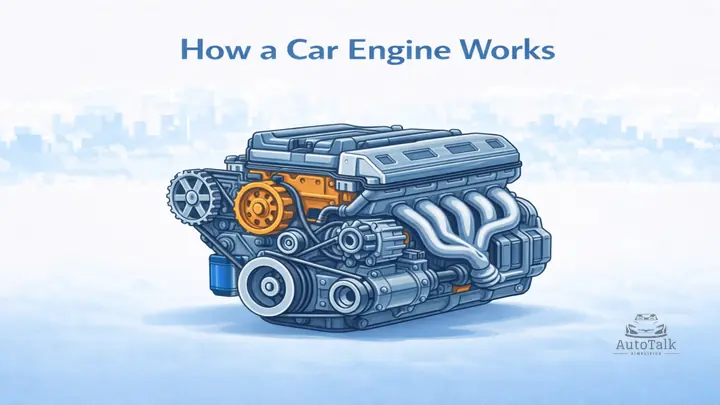
The engine is the heart of the car. It converts fuel into power that moves the vehicle. In most gasoline cars, the engine burns fuel inside cylinders. This process creates controlled explosions that generate energy, which helps turn the wheels and move the car forward.
Knowing how the engine works makes it easier to understand basic car care. It explains why oil changes, regular servicing, and proper maintenance are so important.
Transmission
The transmission is the gearbox of your car. It connects the engine to the wheels and transfers power so the vehicle can move. The transmission controls how much power is delivered based on speed and driving conditions. This allows the car to accelerate smoothly and run efficiently.
Most cars in the United States use automatic transmissions. These change gears on their own and require no input from the driver. However, some vehicles still offer manual transmissions, where the driver must change gears by hand.
The type of transmission you choose affects how the car feels to drive. That’s why understanding automatic vs. manual transmission differences is important. Even a basic understanding can help you choose a vehicle that suits your driving habits.
Brakes
Brakes are one of the most important safety systems in a car because they help you slow down and stop safely. When you press the brake pedal, the car uses friction to reduce wheel speed and bring the vehicle to a stop.
In simple terms, pressing the brake pedal sends pressure through brake fluid. This causes the brake pads to press against metal discs called rotors. This friction slows the spinning wheels and stops the car.
If you are new to driving, learning how car brakes work helps you understand how cars slow down and stop safely.
The main brake components are
- Brake pads: Create friction to slow the wheels
- Rotors (brake discs): Metal discs that slow down when pads press against them
- Brake fluid: Transfers pressure from the pedal to the brakes
Brake parts wear out over time. Worn brakes increase stopping distance and reduce safety. This is why regular brake inspections are important.
Suspension System
The suspension system connects the car’s body to its wheels. It also helps absorb bumps, potholes, and uneven road surfaces. When you drive over rough roads, the suspension helps keep the ride smooth and prevents the car from bouncing too much.
The suspension allows the wheels to move up and down while keeping the car stable and easy to control. This improves comfort, helps the tires stay in contact with the road, and makes steering feel more predictable.
A healthy suspension system:
- Keeps tires firmly on the road
- Improves handling and steering control
- Reduces stress and wear on other car parts
Battery
The car battery supplies electrical power to the vehicle. It helps start the engine. It also powers basic electronics such as lights, dashboard displays, and infotainment systems.
Most car batteries last between three and five years under normal driving conditions. Over time, batteries lose their ability to hold a charge. A weak battery is one of the most common reasons a car fails to start. Replacing it on time can prevent sudden breakdowns.
Tires
Tires are the only part of a car that actually touches the road. This makes them one of the most important safety components. Good tires help your car grip the road, stop efficiently, and use fuel more effectively when tire care basics are followed.
Tires might seem simple, but there are a few basics every car owner should know:
- Tire Pressure (PSI): The right tire pressure keeps your car safe and efficient. Too low or too high tire pressure can cause uneven wear and reduce fuel efficiency. It also affects handling. Check your car’s manual for the recommended PSI and measure it regularly.
- Tread Depth: The tread is the grooved surface of a tire. It helps water drain off the tire and keeps your car from slipping on wet roads. Worn-out tires increase the risk of accidents, especially in rain or snow.
- Tire Rotation: Tires wear unevenly over time. Rotating them ensures even wear and helps your tires last longer. Most cars need a rotation every 5,000 to 7,500 miles.
Keeping your tires in good condition is simple but essential. Regular checks of pressure, tread, and rotation can prevent problems, improve safety, and save money in the long run.
How Does a Car Work?
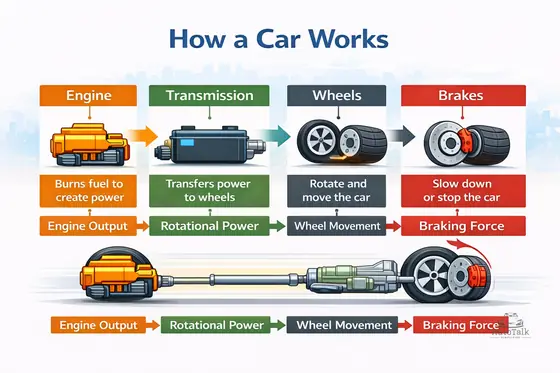
Understanding how a car works can seem complicated at first. But at a basic level, it’s easier than you might think. A car moves and stops through a few simple steps with multiple systems working together:
- The engine produces power.
- The transmission directs that power to the wheels.
- The wheels move the car forward.
- The brakes slow or stop the car.
Let’s break these steps down.
How the Engine Produces Power
The engine produces the energy your car needs to move. Most cars in the United States still use gasoline or diesel engines, though electric and hybrid cars are becoming more common. These engines mix fuel and air inside cylinders and ignite the mixture. The controlled explosions create energy that turns a part called the crankshaft, which helps move the wheels.
Knowing how the engine works helps you spot problems early. Strange noises, reduced performance, or warning lights can indicate engine trouble. If you know these basics, you can handle a problem before it becomes severe.
How Power Reaches the Wheels
The transmission acts like a messenger between the engine and the wheels. It controls how much power the engine sends to the wheels. It even adjusts it for different speeds and road conditions.
A working transmission allows your car to:
- Accelerate smoothly
- Maintain speed efficiently
- Handle hills and curves safely
Most cars in the U.S. use automatic transmissions, which shift gears on their own. Some cars have manual transmissions, where the driver changes gears by hand. Understanding this difference helps you choose the right car for your driving style.
How Brakes Work
Brakes are vital for safety. When you press the brake pedal:
- Brake pads press against metal discs called rotors.
- Friction slows the wheels.
- The car comes to a stop.
Many modern cars now come with anti-lock brakes (ABS). ABS prevents the wheels from locking during sudden stops. This helps you stay in control while braking.
Good brakes keep you safe in everyday driving and emergencies. Regular inspections ensure they work properly and last longer.
Different Types of Car Fuel and What They Mean for You
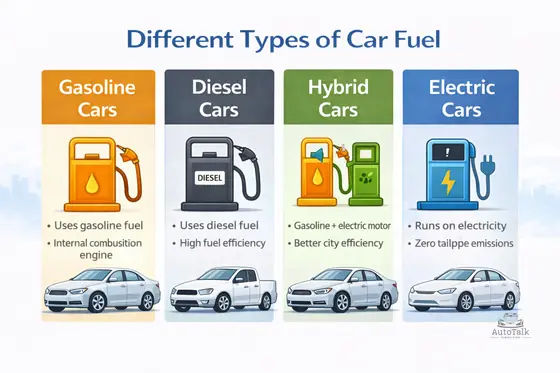
Choosing the right fuel for your car is one of the first decisions new drivers in the U.S. face. Gasoline, diesel, hybrid, and EVs each have their own advantages, costs, and maintenance needs. Knowing the differences can help you save money, reduce surprises, and pick a car that fits your lifestyle.
Let’s break down each fuel type so you can make an informed choice.
Gasoline Cars
Gasoline-powered cars are the most common choice for U.S. drivers. They are widely available, relatively affordable, and easy to maintain. For most beginners, gasoline cars offer the simplest ownership experience.
Why they work well for beginners:
- Fuel stations are everywhere, so refilling is easy.
- Most mechanics are familiar with gasoline engines.
- Repairs and maintenance are generally straightforward and affordable.
If you’re buying your first car, a gasoline vehicle is often the easiest and most convenient option.
Diesel Cars
Diesel cars are less common among beginners. However, they are known for strong torque and excellent fuel efficiency. Diesel engines are often used in trucks and vehicles that tow heavy loads because they handle power demands well.
Things to keep in mind:
- Diesel fuel can be more expensive than gasoline.
- Maintenance costs are generally higher.
- Best suited for drivers who travel long distances or need extra towing power.
While not as common as gasoline cars, diesel vehicles can be a smart choice for specific needs.
Hybrid Cars
Hybrid cars combine a gasoline engine with an electric motor. They are especially efficient in city driving. If you drive in stop-and-go traffic, the electric motor helps in saving fuel. Hybrids are popular among commuters who want to reduce fuel costs and lower emissions.
You should know that:
- Most hybrids do not require plugging in. They recharge their battery automatically while driving.
- Maintenance is similar to gasoline cars, with a few extra checks for the hybrid system.
- Great for city drivers who want better fuel efficiency without changing habits.
Hybrids can be a gentle step into electric vehicles while still offering the familiarity of a gasoline engine.
Electric Cars
Electric vehicles (EVs) run completely on electricity and produce zero tailpipe emissions. They require less routine maintenance. It is because they don’t have traditional engines, transmissions, or exhaust systems.
What beginners should know:
- Charging stations are becoming more common, but planning for charging access is important.
- Driving range varies by model, so consider how far you typically drive each day.
- EVs can save money on fuel and maintenance over time.
Electric cars are ideal for drivers who want an eco-friendly ride. You get clean, quiet, and efficient transportation.
Basic Car Maintenance Every Owner Should Know
Routine maintenance is one of the most important parts of car ownership. It keeps your car running smoothly and improves safety. It also prevents small problems from becoming costly repairs. Many beginners skip car maintenance because it seems complicated. But the basics are easy to understand and follow.
Let’s go through the essentials every car owner should know.
Oil Changes
Engine oil lubricates moving parts and prevents overheating. Over time, oil breaks down and becomes less effective.
Key points for beginners:
- Most cars in the U.S. need an oil change every 5,000–7,500 miles.
- Older cars or vehicles driven in extreme conditions, like stop-and-go city traffic or very hot weather, may need changes more often.
- Checking your oil level once a month is an easy way to prevent problems between changes.
Skipping oil changes can lead to engine damage, which is one of the most expensive repairs you can face.
Tire Pressure and Rotation
Tires are the only part of your car that touches the road, so taking care of them is critical. Proper tire pressure improves fuel efficiency, handling, and tire lifespan. Underinflated or overinflated tires wear unevenly and reduce safety.
Basic tire care:
- Check tire pressure at least once a month.
- Rotate tires every 5,000–7,000 miles to ensure even wear.
- Replace tires when tread depth is too low.
Keeping a simple maintenance checklist makes it easier to stay on top of tire care and other routine checks.
Brake Inspections
Brakes wear down gradually, and ignoring them can be dangerous. Warning signs include:
- Squealing or grinding noises
- Vibration while braking
- Longer stopping distances
Regular inspections help keep your brakes reliable and safe. This also complements your understanding of how brakes work, which we covered earlier.
Battery Care
The car battery powers your engine and all electrical systems, including the major safety features like electronic stability control, ABS. and others. Most batteries last three to five years. But exposure to extreme hot or cold temperatures can shorten their lifespan.
Signs of a weak battery:
- Slow engine cranking
- Dim headlights
- Dashboard warning lights
Replacing a battery before it fails can prevent unexpected breakdowns. Cleaning the battery terminals occasionally also helps avoid starting problems.
Car Safety Basics and Warning Signs
Learning basic car safety is important. It helps you protect not only yourself but also others on the road. Modern cars have advanced safety systems, making things easier. But knowing how to recognize warning signs can prevent accidents, reduce repairs, and keep your car running reliably.
Dashboard Warning Lights
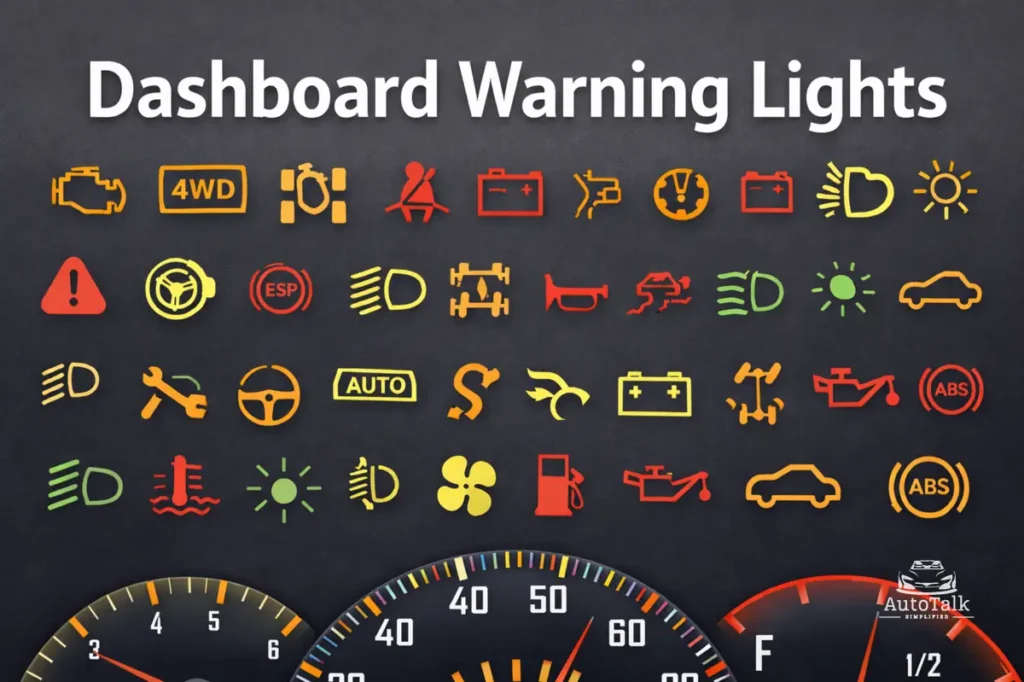
Dashboard warning lights alert you to potential problems in your car. Understanding the most common warning lights helps you handle an issue before it becomes serious.
Key warning lights for beginners:
- Check engine light: Signals engine or emissions problems.
- Battery warning light: Indicates a charging or battery issue.
- Brake system warning: Could mean low brake fluid, worn pads, or other brake issues.
Tip: If a warning light stays on, check your owner’s manual and address the problem immediately.
Brake and Tire Safety Signs
Your brakes and tires are critical for safety. Watch for these warning signs:
- Reduced braking performance
- Steering pulling to one side
- Vibrations at highway speeds
These symptoms often show brake or tire issues, which we discussed earlier. Addressing them immediately can prevent costly repairs and worst case scenarios like accidents.
Importance of Regular Inspections
Routine inspections help catch safety issues before they become serious. Many American states require annual or biennial vehicle inspections to ensure roadworthiness.
What inspections usually check:
- Brakes and tires
- Lights and signals
- Steering and suspension systems
- Fluid levels and warning systems
Scheduling inspections and staying on top of routine checks keeps your car safe and reliable.
Key Safety Takeaways
- Always pay attention to dashboard warning lights. Respond immediately to any alerts.
- Watch for unusual brake or tire behavior, like vibrations or reduced performance.
- Schedule regular inspections to catch issues early and maintain safety.
Cost of Owning a Car in the United States
Buying a car is just the first step of car basics for beginners. Understanding the full cost of ownership is important for budgeting. Many beginners forget about ongoing expenses like fuel, insurance, maintenance, and state fees. Knowing what to expect can help you plan ahead and avoid financial surprises.
Fuel Costs
Fuel is one of the most visible ongoing expenses for car owners. How much you spend depends on:
- Vehicle type: Gasoline, diesel, hybrid, or electric.
- Fuel efficiency (MPG): How far your car can go on a gallon of fuel.
- Driving habits: Longer commutes or frequent trips increase fuel usage.
Tip: Electric cars can lower monthly fuel costs, but you’ll need to consider charging options at home or in public stations.
Insurance
Car insurance is required by law in most U.S. states. Premiums depend on:
- Driver age and experience
- Vehicle type
- Coverage level
New drivers usually pay higher premiums at first. But costs often decrease as you gain experience. Comparing quotes and understanding coverage options can save money while keeping you protected.
Maintenance and Repairs
Routine maintenance keeps your car running safely and efficiently. This includes oil changes, tire care, brake inspections, and regular checkups. Unexpected repairs can happen, especially as cars get older. Planning for maintenance and repair costs helps prevent financial stress and keeps your car in good condition.
Registration, Taxes, and Fees
Vehicle registration, taxes, and fees vary by state. These are usually the annual costs that you should include in your budget when planning car ownership. Staying aware of these charges helps you avoid surprises and ensures your car remains legally on the road.
Key Cost Takeaways
- Fuel costs vary by vehicle type, efficiency, and driving habits.
- Insurance is mandatory, and premiums depend on age, experience, and coverage.
- Maintenance and repairs are ongoing expenses; planning ahead reduces stress.
- Registration, taxes, and state fees are recurring costs that vary by location.
Common Car Mistakes Beginners Make
Many first-time car owners make similar mistakes when it comes to common car problems. Most of them are not serious, but they can lead to extra costs or safety issues over time. Knowing what to watch out for helps you take better care of your car, avoid stress, and make smarter decisions early on.
Common mistakes include:
- Ignoring regular maintenance: Skipping oil changes, tire rotations, and inspections can lead to costly repairs.
- Delaying repairs: Small problems can become big issues if not addressed promptly.
- Driving with warning lights on: Dashboard alerts indicate something needs attention; ignoring them is risky.
- Underestimating ownership costs: Fuel, insurance, maintenance, and fees add up. Plan ahead to avoid surprises.
By learning the basics early, you can avoid these common mistakes and enjoy a safer, smoother car ownership experience.
Frequently Asked Questions About Car Basics
What are the most important car parts to understand as a beginner?
Engine, transmission, brakes, battery, tires, and suspension system are the key car components every beginner should know. Understanding these can make your life much easier than you can imagine. Even the basic knowledge helps you communicate with mechanics, spot problems early, and maintain your car safely.
How often should a car be serviced?
Most cars need a service every 6 to 12 months, depending on mileage, driving conditions, and the car’s age. Routine maintenance includes oil changes, tire rotations, brake inspections, and checking fluid levels. Staying on top of these prevents costly repairs.
Is owning a car expensive in the U.S.?
Car ownership involves ongoing costs like fuel, insurance, maintenance, and state registration fees. Usually the expenses vary by car type and driving habits. But budgeting for these costs helps avoid surprises and ensures smoother ownership.
How can beginners avoid common car mistakes?
To avoid typical beginner mistakes:
- Follow regular maintenance schedules and routine check-ups.
- Address repairs and dashboard warning lights immediately.
- Plan and budget for all ownership costs, including fuel, insurance, and state fees.
- Learn basic car care early to prevent frustration, safety issues, and unnecessary expenses.
Are electric cars cheaper to maintain than traditional vehicles?
Generally, yes. Electric vehicles (EVs) have fewer moving parts. No traditional engine, and fewer fluids reduce routine maintenance. However, it is wise to consider charging access, battery lifespan, and potential replacement costs when evaluating total ownership expenses.
Final Thoughts
Learning car basics for beginners doesn’t require mechanical expertise. You only need clear and reliable information. When you understand how your car works, how to maintain it, and what warning signs to watch for, you can make smarter decisions and avoid unnecessary costs.
Whether you drive every day or only occasionally, strong basic car knowledge improves safety and builds confidence. It also leads to a smoother and more satisfying ownership experience.