If you’re new to cars, the engine can feel confusing at first. Many people drive for years without really knowing what happens under the hood. Terms like cylinders, combustion, and fuel injection often sound complicated. This makes engine basics seem harder than they truly are.
In reality, understanding how an engine works doesn’t need technical knowledge. At its core, an engine is simply a machine that turns fuel into power. That power moves the car forward. Once this idea is clear, the rest starts to make sense.
Learning how a car engine works helps you become a more confident car owner. It allows you to:
- Understand why oil changes and servicing matter.
- Recognize early signs of engine problems.
- Make sense of dashboard warning lights.
- Communicate more clearly during repairs.
In this guide, we’ll explain how a car engine works step by step. Each section focuses on one concept at a time, making it easy to follow. By the end, you’ll have a clear picture of how the engine powers your car and why proper maintenance is important.
What Is a Car Engine?
A car engine is the part of the vehicle that creates power. Without an engine, a car cannot move on its own.
In simple terms, the engine turns fuel into energy. This energy is used to create motion, which eventually moves the car forward. The process happens inside the engine in a controlled and continuous way.
Most cars on the road today use an internal combustion engine. This means fuel burns inside the engine to produce power. The engine then passes this power to other systems, which help deliver it to the wheels.
At its core, the engine has one main job: to generate power reliably so the car can run smoothly under different driving conditions.
Basic Parts of a Car Engine (Beginner View)
A car engine is made up of several key parts that work together to create power. You don’t need to understand every component to grasp how an engine works. Knowing the main parts is enough to build a clear picture.
Below are the most important engine parts every beginner should know.
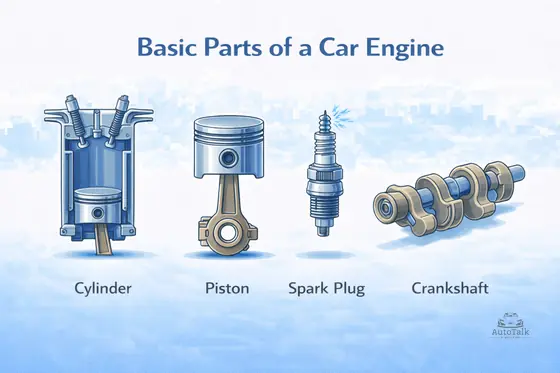
Cylinders
Cylinders are hollow spaces inside the engine. This is where fuel burns to create power. Most cars have four, six, or eight cylinders.
More cylinders usually mean more power. However, they can also use more fuel. For most beginner drivers, a four-cylinder engine is more than enough for daily driving. It offers a good balance of performance, fuel efficiency, and ease of maintenance.
The exact number of cylinders matters less than understanding what cylinders do and how they help the engine create power.
Pistons
Inside each cylinder is a piston. Pistons move up and down as fuel burns inside the cylinder. When fuel ignites, it pushes the piston downward. This movement is one of the first steps in creating power that moves the car.
Spark Plugs
Spark plugs are used in gasoline engines. Their job is to ignite the fuel inside the cylinder. They create a small spark that starts the fuel-burning process. Without spark plugs, a gasoline engine cannot run.
Crankshaft
The crankshaft converts the up-and-down movement of the pistons into rotating motion. This rotation is important because it allows the engine to send power to the rest of the vehicle. It is one of the key parts that helps move power toward the wheels.
Valves
Valves control how air and fuel enter the engine and how exhaust gases leave after fuel burns. They open and close at the right time to keep the engine running smoothly and efficiently.
Why These Parts Matter
All of these engine parts work together as one system. If even one component does not function properly, the engine may lose power or stop working efficiently.
Understanding these basic engine components helps you:
- Follow how the engine creates power.
- Understand why engine maintenance is important.
- Recognize early signs of engine problems.
How a Car Engine Works Step by Step
Now that you know the basic engine parts, it’s easier to understand how a car engine actually works. The process follows the same cycle again and again while the car is running.
Here’s how it happens, step by step.
Step 1: Air and Fuel Enter the Engine
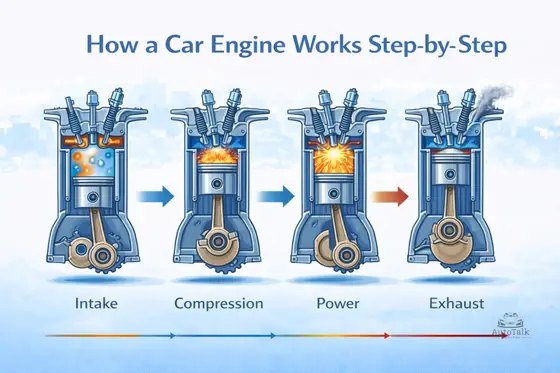
The engine pulls air from outside and fuel from the fuel tank. These two mix together inside the cylinder. This air-fuel mixture is needed to create power. Without the right amount of air or fuel, the engine cannot run properly.
Step 2: The Mixture Is Compressed
Once air and fuel are inside the cylinder, the piston moves upward. This squeezes the mixture into a smaller space. Compressing the mixture helps create a stronger and more efficient release of energy in the next step.
Step 3: Fuel Ignites and Creates Power
In gasoline engines, the spark plug creates a small spark. This spark ignites the compressed air-fuel mixture. The ignition causes a controlled explosion. This explosion pushes the piston downward with force. That force is what creates power inside the engine.
Step 4: Power Is Turned Into Motion
As pistons move up and down, the crankshaft converts this movement into rotation.
This rotating motion is what allows power to move out of the engine and toward other systems, which then help turn the wheels.
Step 5: Exhaust Gases Exit the Engine
After fuel burns, waste gases are left behind. The valves open to let these gases exit the cylinder. Once this happens, the cycle starts again. This entire process repeats many times per second while the engine is running.
Gasoline vs Diesel Engines (Basic Difference)
Most cars on the road use either gasoline engines or diesel engines. Both do the same basic job of turning fuel into power. But they do it in slightly different ways.
A gasoline engine uses spark plugs to ignite the fuel–air mixture inside the cylinder. This spark starts the controlled explosion that creates power. Gasoline engines are quieter, smoother, and more common in everyday passenger cars.
A diesel engine works differently. It does not use spark plugs. Instead, it compresses air so tightly that the fuel ignites on its own when injected. This process creates strong force. And makes diesel engines very efficient, especially for heavy loads.
Here’s the key difference in simple terms:
- Gasoline engines rely on spark plugs to ignite fuel.
- Diesel engines rely on high compression to ignite fuel.
For most beginner drivers, gasoline engines are more common and easier to live with. They are widely supported, simpler to maintain, and well suited for daily driving.
Diesel engines are often found in trucks and vehicles designed for long-distance driving or towing. They offer better fuel efficiency in certain conditions but can have higher maintenance costs.
Why Engine Maintenance Matters
A car engine has many moving parts that work together at high speed. Over time, heat, friction, and normal wear can affect how well these parts function. Regular engine maintenance helps keep everything working smoothly. Understanding basic car maintenance can also help prevent small issues from becoming serious problems.
One of the most important aspects of engine care is engine oil. Oil lubricates moving parts, reduces friction, and helps control heat, which is why regular oil changes are essential. Without clean oil, engine components can wear out faster and may even fail.
Another key factor is keeping the engine at the right temperature. The cooling system prevents overheating by regulating engine heat. If the engine overheats, it can cause long-term damage and reduce reliability.
Regular servicing also helps identify issues early. Problems like worn spark plugs, low fluid levels, or clogged filters can affect performance if ignored. Addressing them on time improves efficiency and extends engine life.
Proper engine maintenance helps:
- Keep the engine running smoothly.
- Improve fuel efficiency.
- Reduce the risk of engine problems.
- Extend the overall life of the vehicle.
Taking care of the engine is not about perfection. It’s about consistency. Small, regular checks and services go a long way in keeping your car reliable.
Common Engine Problems Beginners Should Know
Even a well-maintained car can develop engine issues over time. Knowing the common engine problems helps beginners recognize when something may be wrong and take action early.
You don’t need to fix these issues yourself. You just need to know when to pay attention.
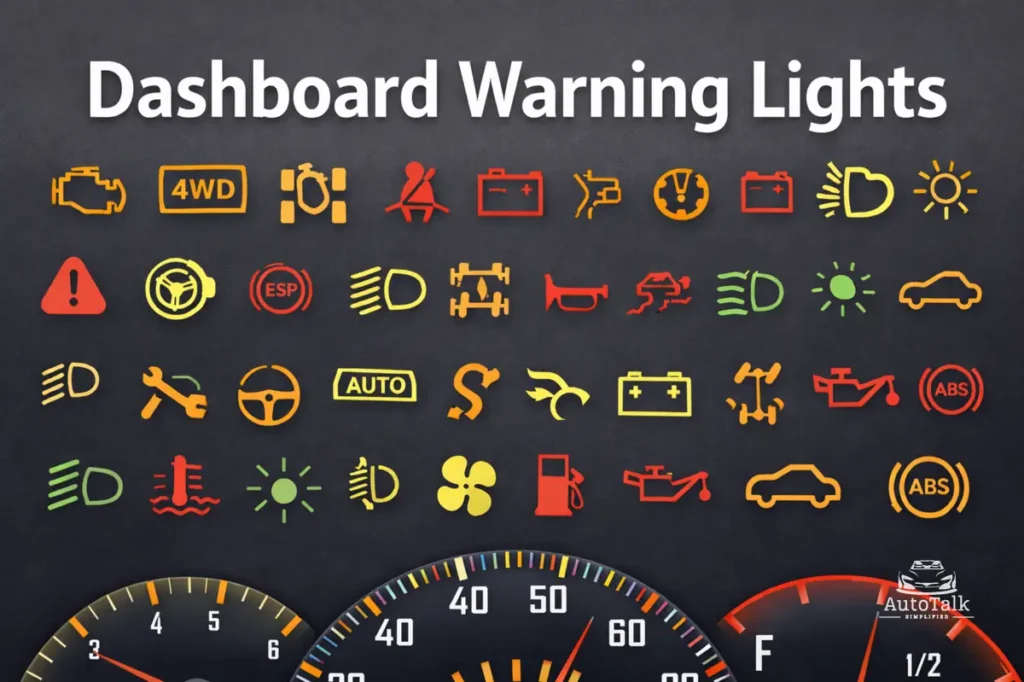
Check Engine Light
The check engine light is one of the most common warnings drivers see. It can turn on for many reasons, ranging from minor sensor issues to more serious engine concerns.
If the light stays on, the car should be checked soon. If it flashes, the issue may be urgent and should not be ignored.
Engine Overheating
If the engine overheats, the driver is usually alerted through a temperature warning on the dashboard. In most scenarios the issue turns out to be related to the cooling system like low coolant, a faulty radiator, or a failed cooling fan.
Warning signs include:
- Rising temperature gauge.
- Steam from under the hood.
- Burning smells.
Driving an overheating car can cause severe engine damage.
Rough Idling or Loss of Power
If the engine shakes, vibrates, or feels weak while driving, it may be rough idling or losing power. This can be caused by issues such as worn spark plugs, fuel delivery problems, or air intake issues.
Changes in how the car feels often indicate that the engine is not running efficiently.
Unusual Engine Noises
Knocking, clicking, or grinding sounds from the engine should not be ignored. These engine noises can signal problems with internal components or lubrication issues. Any new or persistent noise is a good reason to have the engine inspected.
Difficulty Starting the Engine
If the car struggles to start or fails to start entirely, the issue may involve the battery, starter, or engine-related components. Understanding why cars fail to start can help you recognize these situations early.
What to Remember
Not every engine problem means a major repair. Many issues start small and become serious only when ignored. Paying attention to warning signs can help you protect the engine and reduce repair costs over time.
If something feels off, it’s better to have the car checked early than to wait for the problem to grow. Having the right things to keep in your car can also help you handle small issues safely if something unexpected happens.
Frequently Asked Questions About Car Engines
How long does a car engine usually last?
A well-maintained car engine can last 200,000 miles or more. Regular engine maintenance, timely oil changes, and proper servicing play a major role in engine lifespan. Your driving habits and maintenance consistency matter more than the car brand you own or the size of your engine.
What happens if engine oil runs low?
Low engine oil reduces lubrication and increases friction. This can cause overheating and serious internal damage if ignored. If the oil level drops too low, the engine may suffer permanent damage. That’s why checking oil levels regularly is important.
Is it normal for an engine to make noise?
Some engine noise is normal, especially when starting the car. However, loud knocking, grinding, or clicking engine noises are not normal and should be checked. Any new or unusual sound is a sign that something may need attention.
Can I drive with the check engine light on?
It depends. A steady check engine light usually means the car should be inspected soon. A flashing light may indicate a serious issue and should not be ignored. Checking the issue early can prevent costly repairs later.
Do electric cars have engines?
No. Electric vehicles do not use traditional engines. They use electric motors powered by batteries. And since EVs have fewer moving parts compared to gasoline vehicles, they require less routine maintenance.
Does engine size affect fuel efficiency?
Yes. Smaller engines often provide better fuel efficiency, especially for city driving. Larger engines may offer more power but usually consume more fuel. For most beginners, engine efficiency matters more than engine size.
Conclusion
Understanding how a car engine works helps you make better sense of how your car behaves on the road. Even a basic understanding can make it easier to notice when something feels off and take action early.
You do not need technical knowledge to benefit from this. Knowing the basics helps you connect what you see, hear, and feel with what is happening inside your car.
As you continue learning about maintenance and common problems, this foundation will help you understand your car more clearly and make better decisions over time.