Dashboard warning lights are built-in alerts. They tell you when something in your car’s basic systems needs attention. These lights usually appear on the instrument panel. They use symbols and colors to communicate different types of information.
For many beginners, warning lights are confusing. It is mainly because they appear suddenly and often without explanation. Some lights signal serious problems that require you to stop driving. Others indicate issues that can be checked later or are simply informational.
Not knowing which is which can cause panic. But do not worry. This beginner-friendly guide covers dashboard warning lights meanings, what the different colors indicate, and what actions to take.
What Are Dashboard Warning Lights?
Dashboard warning lights are symbols on your car’s instrument panel that alert you to a condition, system status, or problem. They are designed to get your attention while driving, without requiring technical knowledge.
These lights turn on when a sensor detects something outside normal operation. In some cases, the issue is minor. In others, it can affect safety or cause damage if ignored. That is why understanding these lights is important for every driver, especially beginners.
Why Cars Use Warning Lights
Modern cars rely on electronic systems to track how different parts are working. Warning lights are the fastest way for the vehicle to communicate that information to the driver.
To ensure you do not end up with a sudden breakdown, your car alerts you early. It not only prevents larger problems but also reduces repair costs and improves safety on the road.
Why Symbols Are Used Instead of Words
Car brands around the world use symbols in cars. It is because they are easy to recognize and work across different languages. A simple icon is easier and faster to understand than text, especially while driving.
Once you learn what the common symbols of your dashboard mean, you can react calmly and correctly. You do not need to memorize every light. You only need to understand the most important ones and what action they require.
Dashboard Warning Light Colors Explained
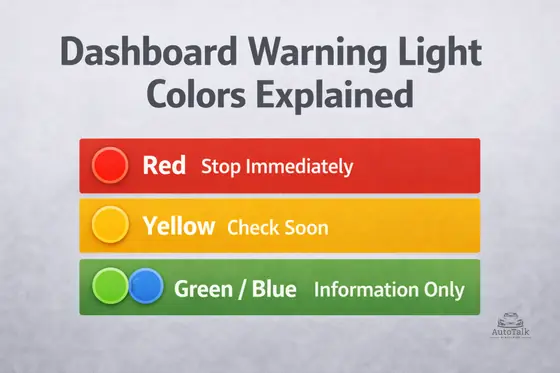
Dashboard warning lights colors help you understand how serious an issue is. The color gives you a quick level of urgency, even before you know what the symbol means.
Most cars use the same basic color system. And learning this system makes it easier for you to make decisions. You can immediately decide whether you should stop driving or continue with caution.
Red Warning Lights
Out of all the dashboard warning lights, red ones signal a serious problem. These lights usually mean you should stop driving as soon as it is safe to do so.
Examples include oil pressure warnings, engine temperature alerts, and brake system warnings. Ignoring a red light can lead to engine damage or unsafe driving conditions.
If a red light appears, reduce speed, pull over safely, and turn off the engine when appropriate. If needed, seek professional help before driving again.
Yellow or Amber Warning Lights
Yellow or amber dashboard warning lights indicate caution. They mean something in your car is not working as expected, but it is usually not an immediate emergency.
Common examples include the check engine light or tire pressure warning. With yellow or amber warning lights, you can often continue driving for a short time. However, it is wise to get the issue checked soon to avoid bigger problems. Understanding basic car maintenance can help you address these issues early.
Green and Blue Indicator Lights
Green and blue lights are informational. They show that a system is active or functioning normally. Examples include headlights, high beams, or cruise control indicators. These lights do not signal a problem and do not require any action.
Understanding these colors helps reduce panic and confusion. Once you know the urgency level, you can focus on what the symbol actually means.
Common Dashboard Warning Lights and Their Meanings
Some dashboard warning lights appear more often than others. It is mainly because they monitor crucial systems of the vehicles. Engine operation, safety features, and basic driving functions are primary examples. These systems are checked constantly while the car is running. When a problem is detected, the warning light turns on to alert the driver.
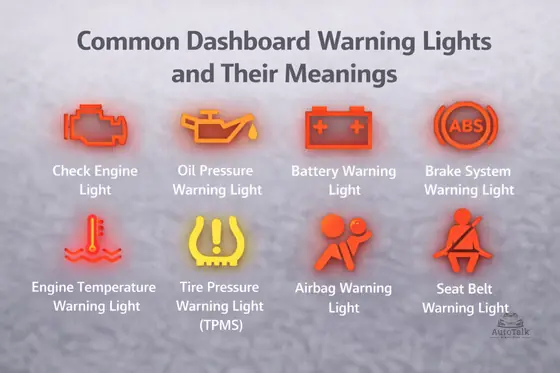
Here are some of the most common car warning lights explained, along with their symbols and meanings. Knowing what each one signals helps you respond calmly and avoid unnecessary damage or unsafe driving.
Check Engine Light
The check engine light indicates a problem with the engine or emissions system. The issue can range from minor to serious. Common causes for this dashboard warning light coming on include a loose gas cap, a faulty sensor, or engine performance issues related to how the engine works. In many cases, the car may still drive normally.
If the light is steady, you can usually continue driving for a short time and have the car checked soon. If the light is flashing, stop driving as soon as it is safe. A flashing light often signals a serious problem that can cause engine damage.
Oil Pressure Warning Light
The oil pressure warning light means the engine is not receiving enough oil pressure. Oil pressure is necessary to keep engine parts properly lubricated.
Low oil pressure can result from low oil levels, leaks, or internal engine problems. Driving with this light on can cause severe engine damage.
If this light turns on, stop driving as soon as it is safe and turn off the engine. Do not continue driving until the issue is addressed. It is wise to call roadside assistance.
Battery Warning Light
The battery warning light indicates a problem with the car’s charging system. It does not always mean the battery itself has failed.
Common causes include a failing alternator, loose belts, or electrical system faults. When this light is on, the car may continue running for a short time using stored battery power.
If the light remains on, reduce electrical usage and have the system checked as soon as possible. The car may eventually stall if the battery is not getting charged.
Brake System Warning Light
The brake system warning light indicates a problem related to braking. This can involve low brake fluid, worn brake components, or an issue with the braking system itself.
In some cars, this light also turns on when the parking brake is engaged. If the parking brake is fully released and the light stays on, the issue should be taken seriously.
If this light appears while driving, reduce speed and avoid sudden braking. Take your ride to a professional and get it inspected. Braking problems affect your safety on the road, so do not ignore the warning.
Engine Temperature Warning Light
If the engine temperature warning light comes on, it means your engine is overheating. Engines operate within a specific temperature range. Exceeding that range can cause serious damage.
Common causes include low coolant levels, cooling system leaks, or radiator problems. Overheating can escalate quickly if ignored.
If this light turns on, pull over safely and turn off the engine. Allow the engine to cool before checking anything. Do not continue driving while the engine is overheating.
Tire Pressure Warning Light (TPMS)
The tire pressure warning light indicates that one or more tires have low air pressure. Proper tire pressure is important for effective handling, braking, and fuel efficiency.
Low tire pressure is often caused by temperature changes, slow leaks, or normal air loss over time. Driving with underinflated tires can increase tire wear and reduce control.
When this light appears, immediately check tire pressure. Refer to your owner’s manual and inflate the tires to the recommended level. If the light remains on, have the tires inspected for leaks or damage.
Airbag Warning Light
The airbag warning light signals a problem with the airbag or restraint system. When this light is on, the airbags may not deploy properly in a crash.
It can be due to sensor issues, wiring problems, or others. In some cases it occurs because of previous airbag deployment that was not fully reset. What’s concerning is that the system may appear normal even when the light is on.
If this light appears on your dash, have the vehicle inspected as soon as possible. Airbags are a critical safety feature. And driving with a fault increases injury risk during an accident.
Seat Belt Warning Light
The seat belt warning light reminds the driver or passengers to fasten their seat belts. This light usually turns on when the car is moving and one or more seat belts are not properly secured.
In most cars, the light may appear along with a chime or alert sound. The warning continues until the seat belt is fastened. This is a safety reminder, not a system fault.
If this warning light stays on even after all seat belts are in place, there may be an issue with the seat belt sensor. In that case, get the system checked, as seat belts are a critical safety feature.
Can You Drive With a Warning Light On?
Knowing what to do when a dashboard warning light comes on helps you respond calmly and make better decisions while driving. Not all warning lights mean the same level of risk. Whether you can keep driving depends on what system the light represents and how urgent the problem is.
Red warning lights signal conditions that can become dangerous very quickly. These lights are often linked to oil pressure, engine temperature, or braking systems. Continuing to drive can cause severe damage or put you at risk on the road.
Yellow or amber warning lights indicate caution. The car can usually be driven for a short time, but the issue should be checked soon. Ignoring these lights often turns small problems into expensive repairs.
Green and blue lights are not warnings. They simply show that a feature or system of your car is active and working as intended.
When a warning light appears, also pay attention to how the car feels. Strange noises, reduced power, overheating smells, or warning messages are signs of trouble. They mean you should stop driving and seek help, even if the light is not red.
Common Warning Light Mistakes Beginners Make
Warning lights are present to prompt timely action for an issue. But many beginners are unsure how to respond when one appears. Lack of understanding often leads to delayed decisions or incorrect responses. It not only increases repair costs but also sometimes compromises safety.
Common mistakes include:
- Ignoring warning lights: Some warning lights turn off after a restart or short drive, creating a false sense of safety. In many cases, the underlying issue still exists and can worsen if not addressed.
- Resetting a warning light without fixing the cause: Clearing a warning light removes the alert but does not repair the problem. This can prevent you from noticing ongoing issues and may lead to more serious damage over time.
- Confusing similar warning symbols: Many warning lights look alike, especially for engine, braking, or traction systems. Misinterpreting a symbol can result in you continuing to drive when stopping or seeking help would have been the safer choice.
Frequently Asked Questions
Why does a dashboard warning light turn on and then turn off?
Some warning lights turn off if the system temporarily returns to normal. This can happen with loose connections, temperature changes, or intermittent sensor readings. Even if the light turns off, it is a good idea to check the car and have it checked if the light returns.
Is it safe to ignore a warning light if the car feels normal?
Not always. Many problems do not affect driving immediately. A car can feel normal while a system is slowly failing. Ignoring warning lights increases the risk of breakdowns or costly repairs later.
Can weather or temperature changes trigger warning lights?
Yes. Cold or hot weather can affect tire pressure, battery performance, and sensor readings. This is common with tire pressure warning lights. If the light stays on after conditions stabilize, it should be checked.
Will a warning light always mean an expensive repair?
No. Some warning lights are caused by simple issues such as low fluid levels, loose gas caps, or minor sensor faults. Addressing warning lights early often keeps repair costs lower.
What should I do if multiple warning lights turn on at once?
Multiple warning lights can indicate a broader electrical or system issue. In this situation, reduce driving, avoid high speeds, and have the car inspected as soon as possible. If the car behaves unusually, stop driving and seek help.
Final Thoughts
Dashboard warning lights are designed to help you, not scare you. They provide early signals about how your car is operating and when attention is needed.
Understanding warning light symbols and colors helps you take appropriate actions. You remain calm and respond correctly. You do not need technical expertise to make safer choices. You only need clear information and timely action.
Paying attention to warning lights protects your car, your wallet, and your safety. Over time, this knowledge also builds confidence and makes car ownership less stressful.