Driving a car requires more than just an engine. While the engine creates power, a car also needs a way to handle that power at different speeds.
In everyday driving, a car must start from a stop, move slowly in traffic, and drive faster on open roads. The engine alone cannot manage all this smoothly. That is why cars use a transmission.
Many beginners have heard about the transmission but are not exactly sure what it does. It often sounds complicated, even though the basic idea is simple. If you are new to car ownership, learning how a car works can help you understand where the transmission fits and why it matters.
In this guide, you will learn car transmission basics for beginners. We will explain what a transmission is, what it does, and why cars depend on it. Everything is explained in clear language, without technical terms or mechanical knowledge.
What Is a Car Transmission?
A car transmission is a system that helps control how the engine’s power is used to move the car. It sits between the engine and the wheels and acts as a link between the two.
The engine’s job is to make power. It does this by spinning very fast. But the wheels cannot always spin at the same speed, especially when the car is starting or moving slowly. The transmission helps solve this problem by adjusting how that power is sent to the wheels.
You can think of the transmission as a middle helper. The engine keeps running, but the transmission decides how much power each wheel should receive at any moment. This helps your car move smoothly instead of suddenly jumping or struggling.
Without a transmission, the engine would try to push power directly to the wheels all the time. This would make it hard for the car to start moving. Also, it would be difficult for you to control speed. Furthermore, it would be uncomfortable to drive. The car would also wear out faster.
In simple terms, the transmission makes sure the engine and wheels can work together in harmony. It allows the engine to handle different driving situations, from slow traffic to faster road speeds.
What Does a Car Transmission Do?
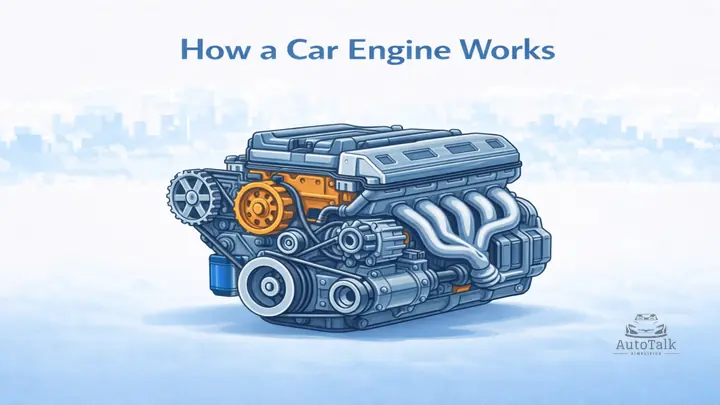
The main job of a car transmission is to help the car move smoothly at different speeds. The engine makes power by spinning fast, but driving does not always need the same amount of power. Understanding how a car engine works helps explain how this power is created before it reaches the transmission.
When a car is stopped, the wheels are not moving at all. If engine power went straight to the wheels at this moment, the car would jerk or stall. The transmission helps manage this by sending power slowly and smoothly when the car starts moving.
As the car begins to roll, the transmission changes how power is delivered. This allows the car to speed up without putting too much strain on the engine. At higher speeds, the transmission helps the engine work efficiently instead of spinning too hard.
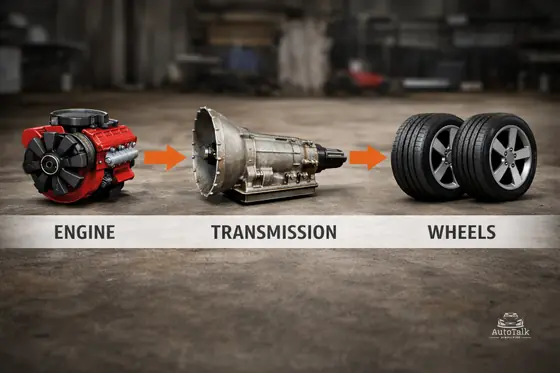
Here is how a car transmission works during normal driving:
- When starting from a stop, the transmission helps the car move gently.
- When driving in traffic, it adjusts power so the car can move smoothly at low speeds.
- When driving faster, it changes how power is passed along so the engine stays stable.
Without this control, driving would feel rough and uncomfortable. The engine would struggle, fuel use would increase, and parts would wear out faster. This is why car transmission explained in simple terms focuses on smooth power control, not just speed.
In short, the transmission helps match engine power to what the car needs at any moment. This makes everyday driving possible, safe, and comfortable.
Why Do Cars Need a Transmission?
Understanding why cars need a transmission starts with how an engine works within a certain speed range. It cannot run very slowly or very fast all the time without problems. This is the main reason why cars need a transmission.
Driving requires many different speeds. A car must start from a complete stop, move slowly in traffic, and drive faster on open roads. The engine alone cannot handle all these situations smoothly. The transmission helps the engine stay within a safe working range while the car’s speed changes.
Without a transmission, the engine would face two major problems:
- At low speeds, the engine would stall because it cannot spin slowly enough.
- At higher speeds, the engine would spin too fast and wear out quickly.
The transmission prevents both of these issues. It allows one engine to support many driving conditions without damage. This is a key idea in car transmission basics for beginners.
In simple terms, cars need a transmission so the engine can work properly while the car changes speed. Without it, everyday driving would not be possible.
Basic Types of Car Transmissions
Most cars use one of two main car transmission types. Both types do the same job. They help the car move smoothly at different speeds. The main difference is how much work the driver has to do while driving. Understanding these basic types helps beginners know what to expect behind the wheel and why some cars feel easier to drive than others.
Automatic Transmission
An automatic transmission changes speeds on its own. The driver does not need to choose gears. The car decides when to change speed based on how fast it is moving and how much the gas pedal is pressed.
This is why automatic car transmission basics are easier for most beginners. You can focus on steering, braking, and watching traffic instead of thinking about gear changes.
Automatic transmissions are very common in the United States. They are especially helpful in:
- stop-and-go traffic
- city driving
- long daily commutes
For new drivers, automatic transmission is the best choice. It reduces stress and makes driving feel smoother and more predictable.
Manual Transmission
A manual transmission requires the driver to change speeds by hand. This is done using a gear stick and a clutch pedal. The driver decides when to change speed instead of the car doing it automatically.
Learning manual car transmission basics takes more time and practice. The driver must coordinate the clutch, gear stick, and gas pedal. This can feel challenging for beginners, especially in traffic or on hills.
Some drivers prefer manual transmissions because they offer more control. However, manual transmissions are less common in newer cars in the U.S. and are usually not the easiest choice for first-time drivers.
Common Signs of Car Transmission Problems
Transmission issues often show early warning signs while driving. These signs usually feel small at first, but they should not be ignored. Understanding basic car maintenance can help you notice these issues early and take action accordingly.
Delayed Movement When Starting or Speeding Up
One common sign of car transmission issues is delayed movement. You press the gas pedal, but the car takes a moment longer than usual to move or speed up. This can happen when starting from a stop or when trying to accelerate. The delay means the transmission is not passing power smoothly to the wheels.
Rough or Jerky Driving
Another sign is rough or jerky movement. Your car may shake, lurch forward, or feel uneven when changing speed. This makes driving uncomfortable. This is especially noticeable in traffic or at low speeds. Smooth driving depends on whether your car transmission is working properly. So, if you experience jerking or shaking, it might be due to a transmission issue.
Unusual Noises While Driving
Some drivers notice strange sounds coming from the car. These may include whining, humming, or grinding noises that were not present before. While noises alone do not always mean serious damage, they can be early signs of car transmission problems and should not be ignored.
Trouble Driving Uphill or Accelerating
If the car feels weak when driving uphill or during acceleration, the transmission may be struggling. Even when you press the gas pedal, the car may not respond as expected. This can make the car feel underpowered and harder to control in certain driving situations.
Warning Lights Turning On
In some cases, a warning light may appear on the dashboard. This light is designed to alert the driver that something needs attention. A warning light does not always mean a major problem, but it is a sign that the car should be checked.
Simple takeaway for beginners
If your car starts feeling different than normal while driving, it may be showing early car transmission related problems. Paying attention to these signs early can help prevent bigger issues and keep the car driving safely.
Frequently Asked Questions
Is the transmission the same as the engine?
No, they are not the same. The engine creates power by burning fuel. Whereas the transmission controls how that power is used to move the car. The engine makes power, but the transmission makes that power usable for driving. Both parts work together, but they do very different jobs.
Does every car have a transmission?
Yes, every regular car has a transmission. Without a transmission, a car would not be able to start smoothly, change speed, or drive safely. Even electric vehicles use a form of transmission, although it works differently than in gasoline cars. A transmission is essential for controlled movement.
Can a car drive without a transmission?
No, a car cannot drive normally without a transmission. The engine alone cannot handle starting, stopping, and changing speed in a safe way. Without a transmission, the car would stall, jerk, or become very hard to control. This is why the transmission is a required part of any working car.
Is an automatic transmission better for beginners?
For most beginners, yes. An automatic transmission changes speeds on its own, so the driver does not need to manage gears. This makes driving easier and less stressful, especially in traffic. That is why automatic car transmission basics are often recommended for new drivers.
What Happens If a Transmission Has a Problem?
If a transmission has a problem, the car may not move or respond the way it normally does. You might notice delayed movement, rough driving, or trouble speeding up. In some cases, a warning light may turn on. These signs do not always mean serious damage, but they should not be ignored.
Does the transmission affect fuel use?
Yes, the transmission can affect fuel use. A properly working transmission helps the engine stay efficient at different speeds. When the engine does not have to work harder than needed, the car can use fuel more effectively during everyday driving.
Conclusion
Car transmission basics for beginners helps you understand what the transmission does and why. You do not need mechanical knowledge to grasp the basics.
The transmission works with the engine and other car systems to control how power is delivered during driving. It helps the car start smoothly, drive comfortably, and handle everyday driving without damage.
With this basic understanding, the transmission no longer feels confusing. It becomes just another car system you can recognize and understand as an owner.