A car needs to do more than move forward. It also needs to slow down and stop in a safe and controlled way. This function is the job of the brakes.
Every car, no matter how new or old, uses brakes to help the driver stay in control. When you press the brake pedal, the car begins to slow down. You use brakes at traffic lights, in traffic, while parking, and when something unexpected happens on the road.
Some people already drive but do not fully understand what happens when they press the brake pedal. Others may be learning to drive for the first time or getting ready to start driving soon. In both cases, brakes can feel confusing because the system works quietly in the background.
In this guide, you will learn car brakes basics for beginners. We will explain how cars stop safely, what brakes do, and why they are so important for everyday driving. Everything is explained step by step, so you can understand how brakes work even if you are new to cars.
What Are Car Brakes?
Car brakes are one of the important basic car systems that helps slow down and stop a moving car. They work by controlling how fast the wheels are turning.
When a car is moving, its wheels are spinning. To slow the car down, those spinning wheels need to be slowed. Brakes do this by working at the wheels, not at the engine. As the wheels slow down, the car slows down too.
Every car has brakes on all four wheels. This helps the car stop in a balanced and controlled way. Without brakes, a driver would not be able to slow down for traffic, stop at signals, or avoid danger on the road.
In simple terms, car brakes are what allow a driver to stay in control when the car needs to slow down or stop.
What Happens When You Press the Brake Pedal
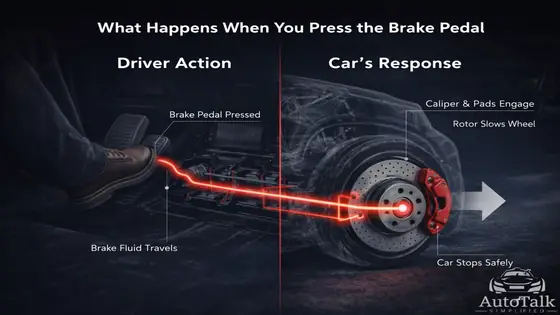
When you press the brake pedal, you are asking the car to slow down. The car responds right away. The brake system sends a signal to all four wheels. This tells the wheels to start slowing down instead of spinning freely.
The harder you press the brake pedal, the stronger the slowing effect becomes. Pressing gently helps the car slow down slowly. Pressing harder helps the car stop more quickly. This gives the driver control over how fast the car slows down.
From the driver’s seat, braking feels simple. You press a pedal, and the car responds. Behind the scenes, the brake system is working to make sure the car slows down in a safe and controlled way.
How Do Car Brakes Work?
Car brakes work by slowing down the wheels, not by stopping the engine. The engine creates power, but it is the wheels doing the movement.
When a car is moving, the wheels are spinning. To slow the car down, something needs to reduce that spinning. Brakes do this by creating resistance at the wheels. This resistance makes it harder for the wheels to keep moving at the same speed.
As the wheels slow down, the car slows down with them. This is why braking feels smooth instead of sudden. The brake system is designed to control movement, not stop it instantly unless needed.
In simple terms, brakes work by reducing wheel movement. This way the car slows down safely and stays under control.
Basic Types of Car Brakes
Most cars use more than one type of brake to help slow down and stop safely. These brake types do the same job, but they work in slightly different ways.
You do not need to remember technical details or parts. As a beginner, it is enough to know that different brake types exist and that they are designed to help the car stop in a safe and controlled way.
The two most common types you will hear about are disc brakes and drum brakes. Many cars use a combination of both.
Disc Brakes
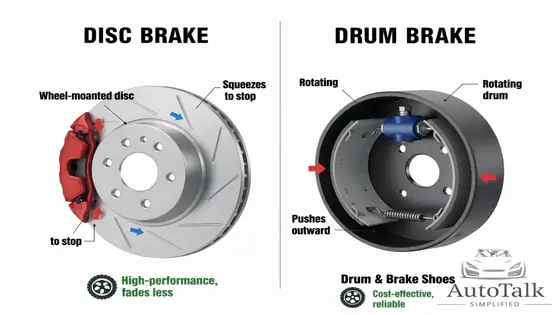
Disc brakes are very common in modern cars. They are often used on the front wheels and, in many cars, on all four wheels. Disc brakes slow the car by pressing brake parts against a flat, round metal surface that spins with the wheel. When these parts press together, the wheel begins to slow down. As the wheel slows, the car slows down too.
Disc brakes are widely used because they provide steady and reliable stopping. They continue to work well even when brakes are used often, such as in traffic or on long downhill roads. In everyday driving, disc brakes help the car slow down smoothly and respond quickly when the brake pedal is pressed.
Drum Brakes
Drum brakes are usually found on the rear wheels of some cars. They have been used in cars for many years and are still common today. Drum brakes work by pressing brake parts outward against the inside of a round drum that spins with the wheel. This contact slows the wheel down, which helps the car slow down as well.
Many cars continue to use drum brakes because they are reliable and work well for normal driving. They are often paired with disc brakes, with each type supporting safe and balanced stopping. In everyday driving, drum brakes quietly help control the speed of your car. They also support smooth stopping, especially during regular city driving.
Why Are Brakes Important for Safety?
Brakes are one of the most important safety systems in a car. They give the driver the ability to slow down or stop whenever needed. In everyday driving, situations can change quickly. Traffic may slow suddenly. A light may turn red. Another vehicle or a person may move into the road. Brakes allow the driver to react to these situations and stay in control.
Sometimes, the car may also alert the driver when something related to braking needs attention. A warning light can appear on the dashboard to signal a serious issue. When this happens, it often means the car should not be driven until the problem is checked.
Good brakes also help the car stay stable. When the wheels slow down evenly, the car remains balanced and easier to control. This is especially important when driving in traffic, on wet roads, or at higher speeds.
Without properly working brakes, even a short drive can become dangerous. That is why brakes play a key role in keeping both the driver and others on the road safe.
Common Signs of Car Brake Problems
Brakes often give warning signs before a serious problem happens. These signs usually appear during normal driving, especially when slowing down or stopping. Knowing what to notice helps a driver react early and stay safe. Having the right things to keep in your car can also help you stay prepared for unexpected situations.
Squeaking or Grinding Sounds
When you press the brake pedal, the car should slow down quietly. If you hear squeaking, squealing, or grinding sounds, it means something is not working as smoothly as it should.
These sounds often happen when the car is slowing down at low speeds or coming to a stop. If the noise happens once and goes away, it may not be serious. But if the sound happens often or becomes louder over time, it should not be ignored.
Unusual brake noises are one of the most common early signs that the braking system needs attention.
The Car Pulls to One Side While Braking
When brakes are working properly, the car should slow down in a straight line. If the car pulls to the left or right when you press the brake pedal, it means the braking force is not balanced.
This can make the car feel unstable, especially during sudden stops or when driving at higher speeds. Pulling to one side can also make the steering feel harder to control.
Any noticeable pulling while braking is a sign that something is not working evenly.
The Brake Pedal Feels Different Than Usual
The brake pedal should feel firm and predictable every time you use it. Over time, drivers become used to how the pedal normally feels.
If the pedal suddenly feels softer, harder, or moves farther down than usual, it can mean the braking system is not responding the same way as before. A pedal that feels different is often one of the first signs drivers notice.
Changes in pedal feel should always be taken seriously, even if the car still seems to stop.
The Car Takes Longer to Stop
A car should begin slowing down as soon as the brake pedal is pressed. If the car needs more distance than usual to slow down or stop, braking performance may be reduced.
This can be especially noticeable in traffic or during emergency braking. A longer stopping distance increases the risk of accidents, even at lower speeds.
If stopping feels slower than normal, it is one of the clearest signs that the brakes are not working as they should.
Frequently Asked Brake Questions
Are brakes the same as tires?
No. Brakes and tires work together, but they do different jobs. Tires help the car grip the road. Brakes help slow down the wheels. Even strong brakes cannot stop the car safely if the tires do not have good grip.
Do brakes wear out over time?
Yes. Brakes are used every time a car slows down or stops, so they slowly wear out over time. This is normal for all cars. How quickly they wear depends on driving habits and conditions, such as traffic and road use.
Can a car be driven without working brakes?
No. A car cannot be driven safely without working brakes. Without brakes, the driver would not be able to slow down or stop when needed, which makes driving dangerous.
Do automatic and manual cars use the same brakes?
Yes. Automatic and manual cars use the same type of brake systems. Braking works the same way in both. The difference between automatic and manual cars does not affect how the brakes slow the car.
Conclusion
Brakes are what allow a car to slow down and stop in a safe and controlled way. Every time you press the brake pedal, the brake system works at the wheels to reduce speed and help you stay in control.
Understanding car brakes basics for beginners does not require technical knowledge. It simply means knowing what brakes do, why they are important, and what warning signs to watch for during everyday driving.
When you understand how cars stop safely, driving feels less confusing and more predictable. Brakes become something you can trust and recognize as one of the most important safety systems in your car.