Tires play a bigger role in driving than many beginners realize. They affect safety, fuel use, and how your car handles on the road. Every time you brake, turn, or drive in different road conditions, your tires are doing the work.
Many new car owners feel unsure about tires. The terms sound technical. The choices feel confusing. But understanding tire basics does not require mechanical knowledge.
This guide explains tire basics for beginners in a clear and simple way. If you are new to car ownership, understanding basic car parts and systems can make tire care easier and less confusing
Knowing how your tires work helps you make better decisions. It can improve safety, reduce costs, and prevent common mistakes. With a few simple habits, tire care becomes easy and manageable.
Why Tires Matter for Safety and Daily Driving
Tires play a direct role in how safe your car is on the road. Many beginners focus on the engine or brakes, but tires are just as important. They help your car stay stable, respond to your actions, and handle everyday driving situations. Understanding this helps explain why tire care should never be ignored.
Tires Connect Your Car to the Road
Tires are the only part of your car that touches the road surface. All movement depends on this contact. When tires have good grip, the car can respond as expected. When tires are worn or damaged, that connection becomes weak. A weak connection makes driving less predictable. Even a well-maintained car cannot perform safely if the tires are in poor condition.
Tires Affect Braking and Turning
When you press the brake pedal, your tires help slow the car down. When you turn the steering wheel, your tires help guide the car in that direction. This means tires directly control how your car stops and turns. If tires are worn or underinflated, they lose grip. This increases stopping distance and affects how well the braking system can slow the car down. It also makes turning feel less stable, especially at higher speeds.
Poor Tires Increase Safety Risks
Driving with poor tires increases the risk of losing control. The car may take longer to stop. It may also skid more easily. These problems often happen without warning. Many drivers do not notice tire issues until a problem occurs. Regular tire checks help reduce these risks and improve everyday safety.
Types of Car Tires Explained for Beginners
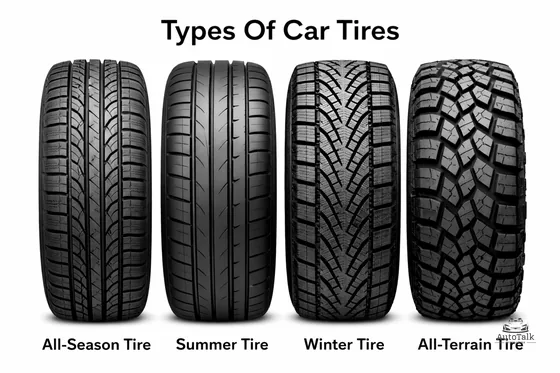
Choosing the right tires is an important part of tire basics for beginners. Many new car owners assume all tires work the same way. In reality, tires are designed for different driving needs and conditions. Understanding basic car tire types helps beginners make safer choices. It also reduces the risk of buying tires that do not match daily driving habits.
All-Season Tires (Best for Most Beginners)
All-season tires are the most common choice for everyday driving. They are built to handle normal road conditions throughout the year. This includes city roads and highways. For most beginners in the U.S., all-season tires are a practical and safe option.
They provide a balance of grip, comfort, and durability. If you want a simple solution without changing tires often, these usually work well. All-season tires fit well into basic tire safety tips and routine car care.
Summer Tires
Summer tires are designed for warm-weather driving. They offer better grip on dry roads and improve handling at higher speeds. These tires are not meant for cold temperatures. When the weather cools down, their grip decreases.
For beginners looking for simple, year-round use, summer tires are often not the best choice. Understanding this difference is part of learning tire basics for beginners.
Winter Tires
Winter tires are made for cold weather, snow, and icy roads. They use softer rubber and deeper tread to improve grip in low temperatures. These tires are useful in areas with long, harsh winters. In warmer regions, they are usually unnecessary.
Knowing when winter tires are needed helps beginners avoid confusion and extra cost. This knowledge supports safer decisions around car tire types.
All-Terrain Tires
All-terrain tires are designed for both paved roads and light off-road driving. They are commonly used on SUVs and trucks. For most beginners who drive mainly on city roads, these tires are not required.
They can feel noisier and may lower fuel efficiency. Choosing them without a clear need is a common mistake among new drivers. Learning which tires match your driving style is a key part of tire basics for beginners.
What Tire Pressure Means and Why It Is Important
Tire pressure controls how your tires support your car. It affects how the car feels on the road and how safely it responds when you brake or turn. Many beginners overlook tire pressure because it is not visible.
However, it plays a major role in everyday driving. Incorrect tire pressure is one of the most common tire-related problems. It often goes unnoticed until it causes uneven wear or handling issues.
What Tire Pressure Actually Means
Tire pressure is the amount of air inside each tire. This air carries the weight of the car. It also helps the tire keep its proper shape while moving. Think of air as a cushion. With the right amount of air, the tire stays firm but flexible. This balance allows the tire to grip the road properly.
If the air level is wrong, the tire cannot do its job well. Each car has a recommended pressure level. This number is chosen to match the car’s weight and design. It is not the same for every vehicle.
What Happens When Tire Pressure Is Too Low
Low tire pressure means the tire does not have enough air to support the car correctly. The tire spreads out more on the road. This creates extra resistance while driving. As a result, the engine works harder, and fuel use increases. In addition, inbuilt car safety features like anti-braking system are unable to perform in their best capabilities.
The tire also wears out faster along the edges. More importantly, the car takes longer to stop. Steering may feel slow or heavy. Driving this way for long periods can damage the tire from the inside. In some cases, it can lead to sudden tire failure.
What Happens When Tire Pressure Is Too High
High tire pressure means the tire is too stiff. Only the center part of the tire touches the road properly. This reduces grip and makes the ride feel harsh. Over time, the middle of the tire wears out faster than the rest.
The tire also becomes less able to absorb bumps. This increases stress on the tire when hitting potholes or rough roads. Too much air can make the car feel unstable during sudden movements. This reduces control when it is needed most.
How to Check and Maintain Correct Tire Pressure
Checking tire pressure is a simple habit that makes a big difference. It does not require tools you do not understand or frequent visits to a repair shop. With a few basic steps, most beginners can manage this on their own. Regular checks help your tires wear evenly and keep the car feeling stable. They also help you catch small problems before they turn into expensive ones.
Where to Find the Correct Tire Pressure for Your Car
Every car has a recommended tire pressure. This number is set by the manufacturer and is meant for normal driving. You can usually find it on a sticker inside the driver-side door. It may also be listed in the owner’s manual. This number tells you how much air each tire should have.
Do not rely on the number printed on the tire itself. That number shows the maximum limit, not what your car needs for safe driving.
How Often You Should Check Tire Pressure
Tire pressure should be checked about once a month. It should also be checked before long trips. Air slowly escapes from tires over time. Temperature changes can also affect pressure. Even if the tire looks fine, the pressure may not be correct. Regular checks help keep pressure within a safe range.
How to Check Tire Pressure Step by Step
First, make sure the tires are cold. This means the car has not been driven recently. Remove the cap from the tire valve. Press a tire pressure gauge onto the valve. The gauge will show a number.
Compare this number to the recommended pressure for your car. If the pressure is low, add air using an air pump. Many gas stations have air pumps. Check the pressure again after adding air. Repeat until it matches the recommended level.
What the Tire Pressure Warning Light Means
Many cars have a tire pressure warning light on the dashboard. This light turns on when one or more tires are low on air. The warning light is helpful, but it is not exact. It does not tell you which tire is low or how much air is missing. It also does not replace regular pressure checks. If the light turns on, check all tires as soon as possible.
Understanding Tire Tread and Wear
Tire tread is one of the easiest ways to judge tire safety. You do not need special tools or technical knowledge to notice major tread problems. A quick look can often tell you if a tire is still safe to drive on. Worn tires reduce grip and make the car harder to control. This is especially important during braking and turning. Learning how tread works helps beginners know when tires need attention or replacement.
What Tire Tread Is and Why It Matters
Tire tread is the patterned surface you see on the tire. These grooves help the tire grip the road. They also help move water, dirt, and debris away from the tire. When the tread is deep and healthy, the tire can hold the road better.
However, when the tread wears down, the tire becomes smoother. A smoother tire has less grip, which increases the risk of slipping or losing control. Good tread helps the car respond properly when you brake or turn.
How to Check Tire Tread at Home
You can check tire tread by looking at it closely. If the grooves look shallow or uneven, the tire may be worn. Many tires also have built-in tread wear indicators. These are small raised bars inside the grooves.
When the tread wears down to the same level as these bars, the tire needs replacement. A simple coin test can also help. Insert a coin into the tread groove. If much of the coin remains visible, the tread may be too worn for safe driving.
Signs Your Tires Need Replacement
Some signs of worn tires are easy to spot. These include smooth tread, cracks on the sidewall, or bulges on the tire surface. Uneven wear is another warning sign. If one part of the tire is more worn than the rest, the tire may not be safe even if some tread remains.
Driving on worn tires increases stopping distance and reduces control. Replacing tires at the right time helps maintain safety and confidence on the road.
Common Tire Mistakes Beginners Make
Many tire problems happen because of small, repeated mistakes. These mistakes are easy to make when you are new to car ownership. The good news is that most of them are also easy to avoid. Understanding common mistakes helps you protect your tires and drive more safely. It can also save money over time.
Driving With Low Tire Pressure
One of the most common mistakes is driving with low air pressure. Tires slowly lose air, even when there is no visible damage. Low pressure causes tires to wear faster and unevenly. It also makes the car harder to control and increases stopping distance. Many drivers do not notice this problem until it affects how the car feels.
Ignoring Tire Tread Wear
Some beginners focus only on whether a tire looks flat. They forget to check tread depth. Worn tread reduces grip and increases the risk of slipping. This is especially dangerous during braking or sudden turns. Tires may still hold air but no longer be safe to drive on.
Mixing Different Tire Types or Sizes
Using different types or sizes of tires on the same car can cause handling problems. Each tire may respond differently while driving. This can make the car feel unstable, especially when turning or stopping. For safety and balance, tires should match in type and size whenever possible.
Waiting Too Long to Replace Tires
Delaying tire replacement is another common mistake. Many drivers wait until a tire fails before taking action. Worn or damaged tires often show warning signs long before failure. Replacing them early helps avoid sudden problems and improves overall safety.
Simple Tire Safety Tips for Beginners
Tire safety does not require expert knowledge. A few simple habits can greatly reduce risk and improve how your car feels on the road. These tips focus on what beginners can realistically do and maintain. Small checks done regularly are more effective than ignoring tires until a major problem appears.
Check Tire Pressure Regularly
Make it a habit to check tire pressure about once a month. It only takes a few minutes. Regular checks help keep the car stable and prevent uneven tire wear. They also help catch slow air loss early.
Look at Your Tires Before Long Drives
Before a long trip, take a quick look at all four tires. Check for low air, visible damage, or very worn tread. This simple step can prevent problems during the drive. It also gives peace of mind before getting on the road.
Replace Tires Before They Become Unsafe
Tires do not fail suddenly in most cases. They show signs of wear over time. Replacing tires before they are completely worn helps maintain control and braking ability. Waiting too long increases risk and stress while driving.
Get Tires Checked During Routine Service
When your car goes in for routine service, ask for a quick tire check. This includes pressure, tread condition, and visible damage. Regular checks during service visits help keep tires in good shape without extra effort.
Frequently Asked Questions About Car Tires
How often should beginners check tire pressure?
Beginners should check tire pressure about once a month to make sure tires are properly inflated. It’s also important to check before long trips or when the weather changes, as temperature can affect air pressure. Even if a tire looks fine, it can slowly lose air over time. Keeping the correct pressure helps improve safety, fuel efficiency, and tire life.
How do I know when my tires need to be replaced?
Tires may need to be replaced when the tread appears worn, smooth, or uneven. You might also notice cracks, bulges, or damage on the sidewalls, which are signs the tire is no longer safe. Reduced grip, longer stopping distance, or frequent loss of air can also indicate worn tires. If you’re unsure, a professional inspection at a service center can help confirm whether replacement is needed.
Are all-season tires good enough for beginners?
For most beginners, all-season tires are a practical and reliable choice. They are designed for everyday driving and perform well in a variety of normal weather conditions, including light rain and mild cold. All-season tires are easy to maintain. They drop the need for frequent seasonal tire changes, making them a convenient option for new drivers.
Is it safe to drive if the tire pressure warning light is on?
A tire pressure warning light means one or more tires may be underinflated. While you can usually drive a short distance, it’s best to check and adjust the pressure as soon as possible. Driving for long periods with low tire pressure can reduce handling, increase braking distance, and cause extra wear or damage to the tire. Addressing the issue early helps keep driving safe.
Can I replace just one tire if the others look fine?
Replacing only one tire is sometimes possible, but it’s not always recommended. Differences in tread depth or tire type can affect balance, traction, and overall handling. This can be especially important for vehicles with front-wheel drive, rear-wheel drive, or all-wheel drive. In many cases, replacing tires in pairs provides better stability and a smoother driving experience.
Conclusion
Tires play an important role in how safe and comfortable your car feels on the road. You do not need technical knowledge to take good care of them. Small steps, done regularly, make a real difference.
Understanding tire basics for beginners, including types, air pressure, and tread wear, helps you make better decisions. It also helps you avoid common mistakes that can lead to unsafe driving or unnecessary costs.
By paying attention to your tires, you improve control, stability, and confidence while driving. Tire care does not have to be complicated. With a few simple habits, it becomes part of everyday car ownership.