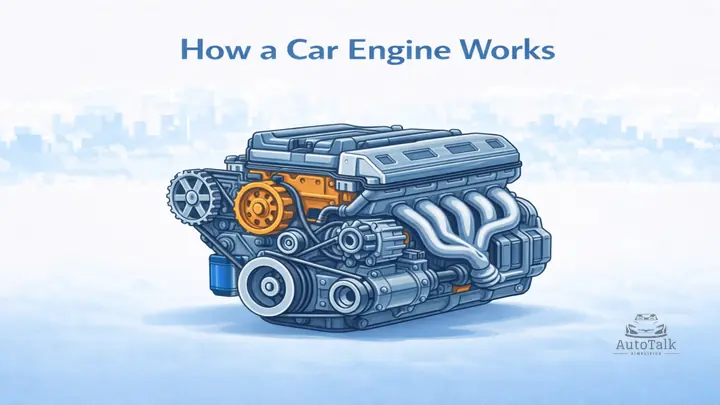
Many beginners learn about car parts one at a time. However, a car does not work as separate pieces. It works as a group of systems that depend on each other. When one system has a problem, it often affects other systems as well.
Understanding these connections matters. Knowing what one part does is helpful, but it is not enough. You also need to understand how different systems support each other while the car is running, turning, stopping, and driving at different speeds.
In this article, “car systems explained” means looking at the bigger picture. Instead of focusing on one part in isolation, the focus is on how the main car systems work together during everyday driving.
If you are new to car systems basics, it helps to first understand how a car works as a whole. That bigger picture makes individual systems easier to understand and easier to remember.
We will look at four major car systems and explain how they depend on each other to keep the car moving, stable, and safe.
Car Systems Explained and Why They Matter
A car system is a group of parts that work together to perform one main job. These systems are not independent. Each one relies on others to function properly. This is why problems in a car often feel bigger than a single broken part.
For example, when you turn the steering wheel, more than just the steering system is involved. The tires must respond correctly. The suspension must keep the car stable. The brakes must still work smoothly if you slow down during the turn. One action affects multiple systems at the same time.
This is where car systems explained become important for beginners. Instead of memorizing parts, it is more useful to understand how systems interact. That understanding helps you make sense of common driving issues and warning signs.
Once you see how systems connect, it becomes easier to understand things like how tires affect control and safety. You already know where that system fits in the bigger picture.
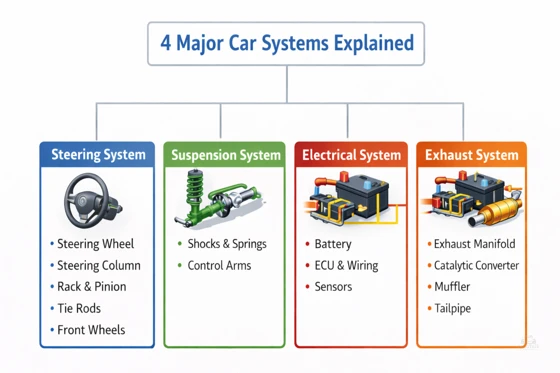
Steering System
The steering system controls the direction of your car. It allows you to turn left or right and keep the vehicle moving where you want it to go. Even small steering inputs can change how the car behaves on the road.
When the steering system is working properly, the car responds smoothly to your hands on the steering wheel. The car feels stable during turns and easy to control on straight roads. When something is wrong, steering may feel loose, heavy, or uneven.
Steering does not work alone. Every time you turn the wheel, other systems must respond at the same time. The wheels need to change direction. The suspension needs to keep the car balanced. The brakes must still work correctly if you slow down while turning.
This is why steering problems can feel serious even when the car is still driving. A small steering issue can affect control, comfort, and safety all at once. Understanding this connection helps beginners recognize why steering deserves dedicated attention.
Suspension System and Ride Control
The suspension system helps your car stay stable and comfortable on the road. It absorbs bumps, keeps the tires in contact with the ground, and helps the car stay balanced while driving.
When the suspension is working well, the car feels steady. It does not bounce too much over rough roads. It also feels more controlled when you turn or change lanes. A weak suspension can make the car feel shaky, unstable, or uncomfortable.
Suspension also supports other systems. During braking, the suspension helps keep the car level so stopping feels smooth and controlled. This is why issues with suspension can affect how a car slows down safely, even if the brakes themselves are in good condition.
The suspension system also works closely with steering and tires. If it cannot keep the car balanced, steering feels less precise, and tires may lose proper contact with the road. This shows how one system can influence several driving behaviors at once.
Electrical System and Car Electronics
The electrical system powers many basic functions in a car. It helps start the engine, runs lights and displays, and allows different systems to communicate with each other. In modern cars, this system plays a much bigger role than most beginners realize.
When the electrical system works properly, the car starts easily. Plus, the information flows smoothly between systems. Sensors send signals. Computers process those signals. Other systems respond based on that information. This happens constantly while you drive.
Because of this, electrical issues can show up in unexpected ways. A small electrical problem can trigger alerts on the dashboard or cause systems to behave differently than usual. This is why it is crucial to learn why dashboard warning lights turn on. It is closely connected to understanding the electrical system.
The electrical system does not replace other systems, but it supports all of them. It helps the engine run correctly, allows safety features to work, and alerts the driver when something needs attention. This makes it a key link between the driver and the car itself.
Exhaust System and Engine Support
The exhaust system carries gases away from the engine after fuel is burned. Its main job is to move these gases out safely while keeping noise and emissions under control. Although drivers rarely notice it, this system plays an important supporting role.
When the exhaust system works properly, the engine can breathe and perform as expected. Gases flow out smoothly, which helps the engine run efficiently. If the exhaust is blocked or damaged, the engine may feel weaker or less responsive.
The exhaust system is closely connected to engine operation. Problems in the exhaust can affect fuel use, performance, and even how the engine sounds. This connection becomes clearer once you understand how the engine creates power.
Even though the exhaust system works in the background, it directly supports how the car drives. This is another example of how one system, even a quiet one, can influence the overall behavior of the vehicle.
How These Car Systems Work Together
When you drive, car systems do not work one at a time. They respond together, often within seconds. A simple action like turning the steering wheel or pressing the brake pedal activates several systems at once.
For example, when you turn a corner, the steering system changes direction. At the same time, the suspension keeps the car balanced, and the tires maintain grip with the road. If you slow down during that turn, the brakes must work smoothly without upsetting the car’s balance. All this happens as one coordinated response.
The electrical system supports this process by sending signals between systems. Sensors detect movement and speed. The car’s electronics help adjust how systems respond. Even engine output and power delivery are involved. Thus, learning how power moves from the engine to the wheels matters in real driving situations.
This is the core idea behind car systems explained for beginners. The car works as a connected unit. When one system changes, others adjust to keep the car stable, responsive, and safe on the road.
How This Fits with Other Car Systems
The four systems covered in this article do not exist on their own. They work alongside other important car systems you may already be familiar with. Together, they form a complete and connected vehicle.
The engine creates power, but other systems decide how that power is used and controlled. The transmission helps deliver that power. The brakes control speed and stopping. Tires connect everything to the road. Each of these systems depends on the others doing their job correctly.
This is why car problems are often connected. A handling issue may not come from one system alone. A warning light may point to a deeper interaction between systems. Understanding these relationships helps beginners think more clearly about what their car is doing and why.
Seeing the car as a group of working systems, rather than separate parts, makes learning easier. It also helps you describe problems better. You can make smarter maintenance decisions and avoid confusion when something feels off.
Frequently Asked Questions
Why does one car problem often cause other issues?
Because car systems depend on each other. When one system is not working properly, it can change how other systems behave. For example, a stability issue may feel like a steering problem even if the root cause is elsewhere. This is why problems should be looked at as system-related, not part-related.
Do all cars use the same main systems?
Yes, most passenger cars use the same main systems, regardless of brand. Steering, suspension, electrical, and exhaust systems are found in almost all cars. The design and technology may differ, but the basic purpose of each system stays the same.
Can I drive if one system is not working properly?
It depends on the system and the severity of the issue. Some problems may only reduce comfort, while others can affect control or safety. Even if the car still moves, driving with a system issue can increase risk or cause further damage over time.
Why do modern cars feel more complex than older cars?
Modern cars rely more on electronics and sensors. Systems communicate with each other more than before. This improves safety and efficiency. But it also means small issues can trigger alerts or change how the car behaves. Understanding how systems connect makes this complexity easier to manage.
Is it necessary to understand car systems if I am not doing repairs?
Yes, understanding car systems for beginners is necessary. You do not need repair skills to benefit from basic system knowledge. Understanding how car systems work together helps you explain problems clearly. It also helps in responding better to warning signs and making informed decisions when talking to a mechanic.
Conclusion
A car works best when its systems work together. Steering, suspension, electrical, and exhaust systems are closely connected during everyday driving. Understanding these connections helps beginners make sense of how a car behaves on the road.
You do not need technical knowledge to benefit from this understanding. Seeing the car as a set of connected systems makes learning easier and reduces confusion when something feels wrong. It also helps you ask better questions and make more informed decisions about maintenance and safety.
This is the goal behind car systems explained in a connected way. Instead of memorizing parts, you now have a clearer picture of how major systems support each other to keep a car stable, responsive, and reliable.