
Buying a car is only the beginning. After the purchase, one of the most important responsibilities is following a clear car maintenance schedule. Many new owners are unsure what needs attention in the first year. They are often unsure when those services should happen. But once you learn maintenance is a crucial part of car ownership basics, the transition gets easy.
A car maintenance schedule is nothing but a timeline. It outlines when routine service should be performed. It is based on mileage and time and helps you plan ahead instead of reacting to problems. Following a schedule makes ownership more predictable. It also reduces the risk of avoidable issues.
In the first year, most cars need basic service visits, inspections, and state-related checks. Knowing what to expect during this period helps new owners a lot. They stay organized and avoid missing important maintenance steps.
Understanding your maintenance timeline early builds confidence. It keeps your vehicle running smoothly from the start.
How A Car Maintenance Schedule Works
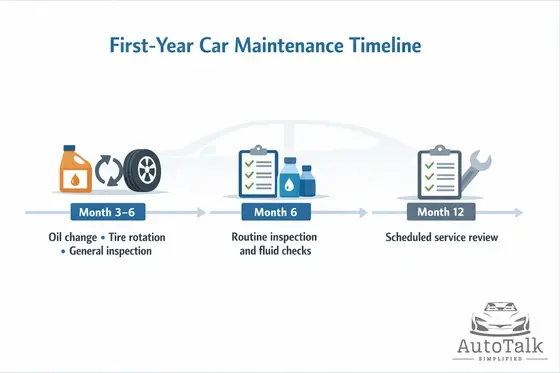
A car maintenance schedule is designed to help you plan service at the right time. It is not random. It follows specific markers based on how a car is used. Most schedules rely on mileage, time, or a combination of both.
Understanding how the schedule works makes it easy to stay organized and avoid missing important service points.
Mileage-Based Service Intervals
Many manufacturers structure a vehicle maintenance schedule by mileage. This means certain services are recommended after a specific number of miles, such as 5,000 or 10,000 miles.
Mileage markers are used because wear increases as the car is driven. Even if your car feels normal, scheduled service at these points helps maintain performance and reliability.
Drivers who travel long distances each month may reach mileage intervals quickly. In those cases, service visits happen more often.
Time-Based Service Intervals
Not all maintenance depends on miles driven. Some services are recommended after a certain amount of time, often every 6 or 12 months. This is sometimes called a time-based car maintenance schedule.
Time-based intervals matter because engine oil, brake fluid, and other fluids can break down over time, even if the car is not driven often. Even if you drive less than average, following time-based recommendations is still important. It helps keep your vehicle in good condition.
Together, mileage and time markers form the structure of a reliable maintenance plan.
What Typically Happens In The First Year
The first year of ownership is when you begin actively following your car maintenance schedule. For most new vehicles, this year focuses on routine service and monitoring rather than major replacements. The goal is to establish consistency early so future service becomes predictable.
If the car is used, the first year may look different. Some used vehicles need a baseline service visit soon after purchase. It is mainly to confirm that previous maintenance was completed. Starting with a clear schedule helps you prevent uncertainty later.
First 3 To 6 Months
During the first few months, many owners reach their first mileage-based service point. For most vehicles, this happens between 5,000 and 10,000 miles.
This visit often includes:
- An oil change
- Tire rotation
- A general inspection
Even if the car feels normal, this early visit confirms that everything is operating as expected.
For used cars, this may also be the time to verify that filters, fluids, or other routine items are up to date as per manufacturer guidance.
Around The 6 Month Mark
If mileage has not yet reached a service interval, time-based recommendations may still apply. Some manufacturers suggest inspection or fluid checks every 6 months. They recommend it for drivers who take short trips, drive in heavy traffic, or operate in extreme heat or cold.
Driving conditions can influence how quickly wear occurs. Owners who drive in more demanding conditions may reach service points sooner than expected.
Approaching 12 Months
By the end of the first year, most vehicles will have completed at least one scheduled service visit. Some may require a second, depending on usage and driving patterns.
At this stage, owners should:
- Review the manufacturer’s recommended service schedule in the owner’s manual
- Confirm upcoming mileage or time intervals
- Plan ahead for the next service milestone
For many new vehicles, the first year is relatively light in terms of maintenance cost. Major component replacements are uncommon unless mileage is unusually high. The focus is usually on routine service and consistency.
Following a car maintenance schedule for new owners during the first year is important. It builds structure and makes long-term ownership easier to manage.
Reviewing Warranty And Maintenance Coverage
Many vehicles are still under manufacturer warranty during the first year. Following the recommended service timeline helps maintain that coverage. Missing scheduled service or failing to document it can create complications if a warranty claim is needed later.
Some manufacturers also include limited complimentary maintenance during the first year. This helps you discover the manufacturer-recommended maintenance schedule for your ride. You also learn which services are already included and which are your responsibility.
Budget Planning For First Year Maintenance
First-year maintenance is usually predictable. It focuses on routine service rather than major replacements. Planning ahead for these early visits makes ownership easier to manage.
For a new car, routine maintenance in the first year generally falls in the range of $700 to $1,200 total. It majorly depends on mileage and driving conditions. Many owners choose to set aside about $60 to $100 per month to cover scheduled service.
For a used car, the first year may include catch-up maintenance. Costs are often higher, usually around $1,000 to $1,500 total. This is common if items like tires, fluids, or filters were not recently replaced. Setting aside about $85 to $125 per month can help cover these early needs.
Planning a small monthly amount helps ensure scheduled service is completed on time. It also prevents delays caused by unexpected expenses.
State Inspections And Emissions Checks
Besides routine service, some states need inspections or emissions testing as part of car ownership. These checks are separate from regular maintenance. But they should still be planned alongside your car maintenance schedule.
Not every state follows the same state vehicle inspection requirements. Some require emissions testing, while others do not need testing for most passenger vehicles.
When Emissions Testing Is Required
Emissions testing is designed to ensure that vehicles meet environmental standards. If required in your state, you may need to complete testing before renewing registration.
For example, California requires regular emissions testing for many vehicles as part of its registration process. In contrast, Florida does not require statewide emissions testing for most passenger vehicles.
These emissions testing requirements by state vary depending on where the vehicle is registered.
How Inspections Fit Into Your Maintenance Schedule
Even though inspections are regulated by the state, it helps to treat them as part of your overall maintenance planning. Scheduling inspections near a routine service visit can reduce extra trips. It helps keep your documentation organized.
Understanding your state’s inspection rules early prevents delays or last-minute stress during registration renewal.
Keeping Service Records Organized
Following a car maintenance schedule is not only about completing service. It is also about keeping clear car service records that show what was done and when. During the first year, building the habit of tracking maintenance makes future service easier to manage.
Why Service Records Matter
Clear records protect you in several ways. They support warranty claims and provide documented maintenance history for resale value.
When selling a vehicle, buyers often look for consistent maintenance documentation. Organized records show that the vehicle was cared for according to schedule.
What Information To Track
Knowing how to track car maintenance does not require special tools. The key details to document include:
- Date of service
- Mileage at the time of service
- Type of service performed
- Location where the service was completed
Many repair shops provide digital invoices. You can also store copies in a dedicated folder or digital file. The goal is consistency.
Keeping accurate records ensures your vehicle maintenance schedule remains clear and easy to follow over time.
What Happens If Scheduled Maintenance Is Delayed
A car maintenance schedule works best when it is followed consistently. Delaying service occasionally may not cause immediate damage. But repeated delays can increase wear and reduce long-term reliability.
Maintenance is designed to prevent problems before they grow. When service is postponed too often, small issues can develop into larger and more expensive ones.
Increased Wear And Higher Long-Term Costs
Routine service helps control normal wear. When maintenance is skipped, fluids may break down, tires may wear unevenly, and filters may become less effective. These changes usually happen gradually, which makes them easy to overlook.
Over time, the long-term cost of delayed car maintenance can be higher than the cost of routine service. Preventive care is generally more predictable and easier to manage than unexpected repairs.
Warranty And Resale Impact
For newer vehicles, failing to follow the recommended schedule can affect warranty coverage. Manufacturers often require proof that service was completed according to guidelines.
Delayed maintenance can also reduce buyer confidence during resale. A vehicle without a clear service history may raise questions about overall care.
Following your car care schedule consistently helps protect reliability, resale value, and ownership confidence.
Frequently Asked Questions
Do new cars follow the same car maintenance schedule as used cars?
New cars follow the manufacturer’s recommended automobile maintenance schedule. It is usually lighter in the first year. Used cars may need an initial service visit to confirm that previous maintenance was completed. Starting with a clear schedule helps avoid uncertainty.
Is maintenance different for city driving and highway driving?
Yes. Driving conditions can influence wear. Frequent short trips, heavy traffic, or extreme weather may require earlier service compared to steady highway driving. This is why many manufacturers adjust the recommended maintenance schedule for cars for severe driving conditions.
What if I drive less than average each year?
Low mileage does not eliminate the need for service. Many maintenance items are time-based. Even if miles are low, fluids and certain components can degrade over time. Following a schedule based on both mileage and time keeps the vehicle in good condition.
Can I combine inspections and service visits?
Yes, often you can combine state inspections or emissions testing with a routine service visit. This often makes scheduling easier and reduces extra trips to a service center.
But not all inspection stations perform full maintenance services. Some states need emissions testing at approved locations only. Before combining visits, you should confirm that the service center is authorized to perform both the inspection and regular maintenance.
How do I know if I am following the correct schedule?
The most reliable source is the manufacturer’s maintenance section in your owner’s manual. It outlines service intervals based on mileage, time, and driving conditions. Comparing your driving habits to those recommendations helps ensure you stay on track.
Bottomline
A car maintenance schedule gives structure to car ownership. Instead of guessing when service is needed, you follow a clear timeline based on mileage and time. This reduces uncertainty and helps you plan ahead.
During the first year, building consistent habits makes future maintenance easier. Routine service, state inspections where required, and organized records all work together to keep ownership predictable.
Following a regular car maintenance schedule does not require technical knowledge. It requires attention, planning, and consistency. When these habits are established early, long-term reliability and resale value become easier to protect.