
Many buyers think maintenance depends solely on how old a vehicle is. In reality, the strategy depends more on its condition and history. Used car maintenance often begins with questions. Was service done on time? Were small issues ignored? When there is an unknown maintenance history, risk becomes part of the equation.
This is why the difference between new and used vehicles is risk-based, not age-based. A newer vehicle usually starts with clear records, warranty coverage, and predictable wear. That structure makes planning easier during new car ownership. A used vehicle may require more attention at the beginning to restore confidence and stability.
Both ownership situations still rely on preventive thinking. The goal is long-term reliability, not just reacting to breakdowns. A strong foundation in preventive vehicle maintenance helps owners understand how strategy should adjust based on condition, not just mileage or model year.
Why Maintenance Strategy Differs in New and Used Cars
The way a vehicle is maintained depends heavily on where it starts. A new vehicle usually begins with predictable wear, clear service guidance, and limited past stress. A used vehicle may carry previous driving habits, delayed services, or hidden strain. These starting conditions shape how maintenance should be approached.
The difference is not about which type of car is better. It is about how much certainty exists at the beginning of ownership. That certainty affects how preventive decisions are made.
Starting Condition Makes the Difference
A new vehicle typically comes with a documented maintenance history, even if that history is short. The owner knows when services were performed and what parts are still early in their lifespan. Wear is gradual and easier to track.
A used vehicle may show signs of accumulated wear. Parts have already gone through heat cycles, road stress, and fluid breakdown over time. Even if the car looks fine, previous usage cycles and higher mileage wear patterns can influence its current condition. This is why starting condition plays a major role in shaping maintenance strategy.
Warranty Coverage vs Mechanical Uncertainty
With new vehicles, warranty protection reduces short-term financial risk. This structure allows owners to focus on new car maintenance using manufacturer guidance and predictable service intervals.
Used vehicles often operate without warranty protection. That creates mechanical uncertainty, especially when past repairs or delays are unclear. Because of this, the maintenance approach shifts toward closer observation and stabilization rather than simple schedule tracking.
Preventive Care in Used Cars
When ownership begins with uncertainty, the maintenance approach must adjust. Used car maintenance often starts with evaluation rather than routine scheduling. This early stage of maintenance after buying a used car focuses on reducing uncertainty and understanding the vehicle’s current condition.
Unlike a new vehicle, a used one may carry past wear, delayed services, or incomplete records. Because of this, early attention focuses on stabilization and confirming what needs attention before relying only on timelines.
This does not mean every used vehicle is problematic. It means the strategy shifts toward control and clarity. The goal is to reduce surprises and build confidence in the vehicle’s reliability.
Unknown Service History and Hidden Wear
One of the biggest factors shaping the early care for your car is mechanical uncertainty. If previous services were skipped or delayed, small issues may have progressed quietly. Fluids may be older than expected. Components may show uneven wear.
Even when a vehicle appears fine on the surface, past driving patterns and missed services can influence how systems perform. This uncertainty does not require panic. It requires awareness and a structured evaluation mindset.
Resetting the Maintenance Baseline
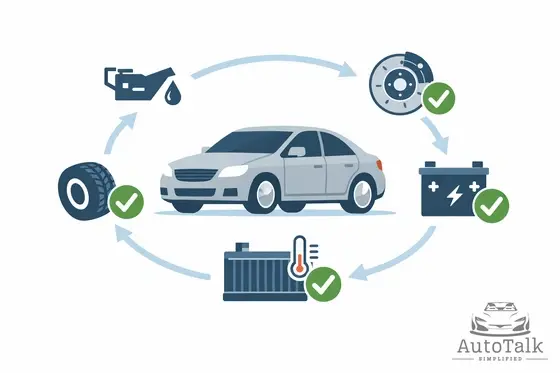
A key early step in stabilizing a used vehicle is establishing a maintenance baseline. This means identifying what has been done, what is overdue, and what should be refreshed to restore confidence.
In many cases, this process supports early-stage stabilization. Replacing aged fluids, inspecting wear components, and confirming service records help create a clear starting point. Once this baseline is set, ongoing maintenance becomes more predictable and easier to manage.
Monitoring Patterns After Purchase
After initial stabilization, attention shifts to observation. Changes in sound, vibration, or performance can reveal how the vehicle responds under regular use.
This stage is not about assuming failure. It is about recognizing patterns. Over time, awareness helps detect gradual changes before they become larger concerns. Consistent monitoring supports long-term reliability and builds confidence in ownership.
Preventive Care in New Cars
In contrast, new vehicles begin with more certainty. Service timing is predictable, and early wear patterns are easier to anticipate. Because the vehicle has not experienced long-term stress, maintenance planning often follows a timeline model. Exploring car maintenance basics for beginners can help you well on your new journey.
Understanding these new car maintenance differences helps explain why structured intervals work well in the first years of ownership. This structure provides clarity for new owners. However, predictability does not mean neglect. Even new vehicles require attention and awareness.
Manufacturer Schedule as a Starting Point
Most new vehicles come with clear manufacturer-recommended service intervals. These outline when you need to change fluids, inspect components, and perform routine checks. Following these intervals helps you support warranty compliance and long-term reliability.
This structured plan is often referred to as scheduled maintenance. It provides a timeline-based approach, where services are performed at set mileage or time markers. Because wear is still in early stages, this system works well during initial ownership.
Lower Immediate Risk, Not Zero Risk
While early ownership involves lower mechanical risk, it does not remove responsibility. Your driving style, local climate, and road conditions can still influence how parts wear over time.
Maintaining a preventive mindset helps first-time owners avoid overconfidence. Even with warranty protection, small warning signs should not be ignored. Preventive thinking ensures that minor concerns are addressed before they become larger problems.
Risk-Based Maintenance vs Timeline-Based Maintenance
At the center of this comparison is one simple question: Is maintenance guided by a schedule or by risk?
Both approaches aim for reliability. The difference is how decisions are triggered. In some cases, service happens because the calendar or mileage says it is time. In others, service happens because the vehicle’s condition signals that attention is needed.
Understanding this distinction helps owners respond to real-world wear instead of following routines automatically.
Timeline-Based Care (Common in New Cars)
Timeline-based care follows structured intervals. For example, if a new vehicle reaches 5,000 miles, the service is performed because the interval has arrived. The decision is predictable.
This works well when wear patterns are still early and documented. In many new vehicles, maintenance planning centers on consistency and warranty compliance. Because there is less past stress and clearer records, sticking to schedule is usually sufficient.
The logic is simple: follow the plan, maintain stability.
Condition-Based Preventive Care (Common in Used Cars)
Used vehicles often require risk-based maintenance. Instead of asking only, “Has the mileage reached the next interval?” the focus shifts to, “What is the vehicle showing right now?”
For example, a used vehicle with 60,000 miles may technically be within its next service window. But if fluids appear dark, shifting feels slightly delayed, or braking response changes, action may be needed sooner. This is where condition-based preventive care becomes important.
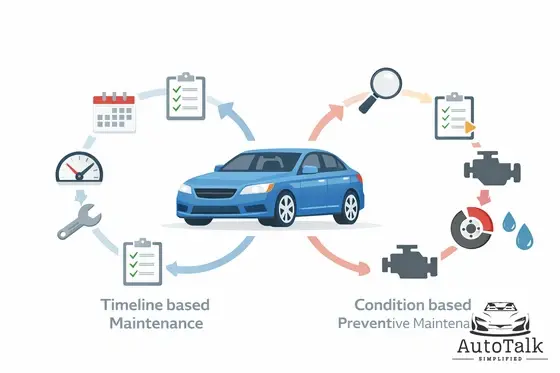
Past usage, environmental exposure, and incomplete records can influence wear patterns. By adjusting maintenance decisions based on observation and inspection, owners support long-term vehicle stability. The goal is not to ignore schedules. It is to adapt them when real-world conditions require flexibility.
Common Mistakes First-Time Owners Make
Understanding the difference between risk-based and timeline-based care helps prevent common errors. Many first-time buyers do not make mistakes because they are careless. They make them because they assume all vehicles follow the same maintenance logic.
Recognizing these patterns early can help you prevent unnecessary stress and expense.
Treating a Used Car Like It Has a Perfect History
One common mistake is assuming a recently purchased vehicle was maintained properly by the previous owner. When records are incomplete, this assumption can create gaps in early care.
Used vehicles often carry some level of uncertainty. Skipping evaluation because the car “seems fine” may delay important stabilization steps. This is where preventive care differences between new and used vehicles become important. A used vehicle may require confirmation and reset before routine scheduling alone is enough.
Relying Only on the Manufacturer Schedule
Another mistake is depending entirely on factory intervals, even when the vehicle’s condition suggests otherwise.
Manufacturer schedules are helpful guidelines. However, they are based on ideal usage patterns. When prior driving conditions, service delays, or higher mileage are involved, flexibility may be necessary. A schedule supports structure, but it does not replace observation.
Delaying Baseline Preventive Care
Some owners postpone early evaluation after purchase. They assume that if no warning lights appear, everything is fine.
Delaying a baseline check can allow small issues to grow quietly. Establishing a starting point soon after purchase reduces uncertainty and supports long-term reliability. Avoiding these car maintenance mistakes helps owners maintain control rather than reacting later to preventable concerns.
Frequently Asked Questions
Is used car maintenance always more expensive?
Not necessarily. Used car maintenance can cost more in the beginning if early stabilization is needed. Replacing aged fluids, inspecting wear items, or correcting delayed service may require upfront spending. However, once a clear baseline is established, ongoing costs often become more predictable. Expense depends more on condition and past care than simply whether the vehicle is used.
Should I replace all fluids after buying a used car?
It depends on service records and current condition. If maintenance history is unclear, confirming fluid conditions can help establish control. In some cases, replacing key fluids supports stabilization. In others, recent documented service may reduce urgency. The decision should be based on inspection and context rather than a rigid rule.
Does a new car still need preventive care?
Yes. New vehicles follow structured intervals, but preventive attention is still important. Driving style, climate, and usage patterns influence wear even in early stages. Warranty coverage does not eliminate responsibility. Preventive thinking ensures that small issues are addressed before they develop into larger concerns.
How soon should preventive maintenance begin?
Preventive attention should begin immediately after ownership starts. For new vehicles, this means following scheduled intervals and staying aware of performance changes. For used vehicles, early evaluation helps reduce uncertainty and establish a clear maintenance direction.
Is new car maintenance simpler than used car maintenance?
In many cases, yes. New vehicles often follow predictable service intervals with clearer records. Maintenance for used cars may require additional evaluation at the beginning due to past wear or incomplete history. However, both require awareness and consistent attention to maintain long-term reliability.
Conclusion
The maintenance strategy should match the vehicle’s starting condition. When prior service history is clear and wear is predictable, structured intervals often provide enough guidance. But when history is uncertain and past wear is unknown, a more flexible approach becomes necessary.
That is why used car maintenance often begins with evaluation and stabilization rather than routine scheduling alone. The difference is not about which vehicle is better. It is about understanding risk and adjusting preventive decisions accordingly. Long-term reliability comes from awareness, not assumptions.
Not sure how to approach maintenance for your used car?
Ask in the comments, and I’ll help you understand what generally matters and what to pay attention to.