Preparing your car for a long trip means checking a few important parts of your vehicle before extended driving. Long trips put more pressure on your car compared to daily use, which can make small issues more noticeable if they are not checked in advance.
Understanding how to prepare your car for a long trip helps you avoid unexpected breakdowns and stay safer on the road. When your car is properly prepared, it becomes more reliable and easier to manage during long-distance driving.
You do not need technical knowledge to do this. Simple checks are enough to make a big difference. Many beginners are not sure what to check before a long drive, but once you understand the basics, the process becomes simple and manageable.
In this guide, you will learn what to check, why it matters, and how to prepare your car for long-distance driving in a clear and practical way.
What Should You Check Before a Long Trip?
You should check your car’s basic systems, fluids, tires, brakes, battery, and safety items before a long trip. These checks help ensure your car can handle extended driving without unnecessary risk.
Preparing your car is not about checking everything in detail. It is about making sure the most important parts are working properly before you start driving. This is a key part of how to prepare your car for a long trip, especially if you are unsure what to check before a long drive.
Quick Beginner Checklist
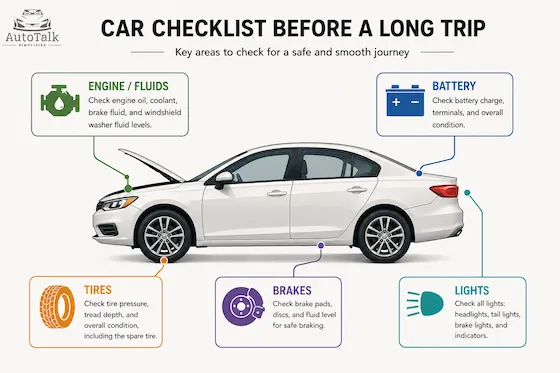
- Engine oil and other fluids
- Tire pressure and tire condition
- Brake performance
- Battery condition
- Lights and visibility
- Essential items to carry
Each of these areas supports a different part of your car’s performance. This is an important part of how to prepare car for road trip safety, especially for beginners. Fluids help systems run smoothly, tires affect control, and brakes ensure safe stopping. When all of these are checked together, your car becomes more reliable for long-distance driving.
Taking a few minutes to review this car checklist before long trip can make your trip more predictable and less stressful. It helps you focus on driving instead of worrying about what might go wrong.
Engine Oil and Other Fluids
Check your car’s fluids before starting a long trip to make sure all major systems are working properly. This includes engine oil, coolant, brake fluid, and windshield washer fluid.
These fluids help your car run smoothly and safely during long drives. Engine oil reduces friction, coolant controls temperature, brake fluid supports stopping, and washer fluid helps maintain visibility.
During long trips, fluid levels can drop over time, and small changes are not always easy to notice just by looking. If levels are too low, it can affect performance or lead to problems like overheating or reduced braking efficiency.
Checking fluid levels before you leave helps you avoid these issues and keep your car running reliably. It becomes even easier if you have a simple tool that allows you to check fluid levels quickly, especially when you are on the road and not near a service center.
Tire Pressure and Tire Condition
Check your tire pressure and overall tire condition before your trip to ensure safe and stable driving. Proper tire pressure helps maintain control, improves stability, and supports better fuel efficiency during long drives.
Tire pressure can change due to temperature and long driving hours, and these changes are not always easy to notice just by looking at the tire. At the same time, worn tread or small damage can reduce grip and increase the risk of problems on the road.
Checking your tires before you leave helps you avoid these risks and keeps your car stable during the trip. It becomes much easier if you have a simple device that lets you check and adjust tire pressure anytime, especially during long drives when pressure can change without warning.
Battery Condition
Check your car’s battery before your trip to avoid unexpected starting problems. The battery powers your car’s ignition and electrical systems, so it needs to be in good condition for reliable performance.
A weak battery may not cause issues during short drives but can fail during a long trip, especially after multiple stops. Signs like slow engine start or dim lights can indicate that the battery is not performing properly.
Checking your battery before you leave helps reduce the chances of getting stuck during your trip. Having a portable car battery jump starter can help you restart your car on your own if the battery fails, especially when help is not immediately available.
Lights and Visibility
Check your lights and visibility before your trip to make sure you can see clearly and remain visible to other drivers. This includes headlights, brake lights, turn indicators, and your windshield condition.
These help you drive safely at night and in changing weather conditions. If any light is not working properly or your windshield is unclear, it can affect both your visibility and how other drivers respond to you.
Dust, water, or fog can build up on your windshield and lights during long drives, which reduces clarity over time. This is not always noticeable right away but can make driving more difficult, especially in low-light conditions.
Checking your lights before you leave helps you avoid these issues. Keeping your windshield and lights clean becomes easier if you carry a windshield and glass cleaning solution, which helps maintain clear visibility throughout your trip.
Why Preparing Your Car for a Long Trip Matters
Preparing your car for a long trip helps prevent small issues from turning into bigger problems while you are on the road. Long drives put more pressure on your car compared to daily use, so even minor issues can become more noticeable over time.
Reduces Risk of Breakdowns
Small problems like low fluids, weak battery, or incorrect tire pressure may not affect short trips but can lead to unexpected breakdowns during long drives. Checking these in advance helps you avoid getting stuck in unfamiliar places.
Improves Safety and Control
A well-prepared car responds better to changing road conditions. Proper tires, working brakes, and clear visibility help you stay in control, especially on highways or in traffic.
Makes Driving More Predictable
When your car is in good condition, it behaves more consistently. This reduces stress and helps you focus on driving instead of worrying about sudden issues.
Knowing what to check is helpful, but being prepared for real situations makes a bigger difference during long trips.
Essential Items to Carry for Long Trips
Carry a few essential items in your car before a long trip so you can handle common situations without stress. These items help you stay prepared if something unexpected happens on the road.
Basic Emergency Tools
Tools like a tire inflator, a portable jump starter, and a flashlight can help you deal with common issues such as low tire pressure, a dead battery, or poor visibility at night. If you are not sure which ones are most useful, understanding the right things to keep in your car can help you choose tools that are simple and practical for everyday situations.
Safety Items
Safety items like a first aid kit and a warning triangle help you stay protected in case of minor injuries or if your car needs to stop on the roadside. They also make you more visible to other drivers, which improves safety.
Why These Items Matter
These items help you respond quickly when something does not go as expected. Instead of depending entirely on outside help, you can handle small problems on your own and continue your trip with more confidence.
Do You Need a Professional Check Before a Long Trip?
Get your car checked before a long trip if you notice any issues or are unsure about its condition. Basic checks are helpful, but some problems need professional attention to avoid risks during long-distance driving. If you are wondering what should I check in my car before traveling, basic checks are enough in most cases, but some situations need professional attention.
When Basic Checks Are Enough
If your car feels normal, starts smoothly, and shows no warning signs, basic checks are usually enough. Checking fluids, tires, battery, and lights can help you confirm that your car is ready for the trip.
When You Should Visit a Professional
If you notice unusual sounds, vibrations, warning lights, or any change in how your car drives, it is better to get it checked by a professional. You should also consider a check if your car is close to its service schedule.
Addressing these issues before your trip helps you avoid unexpected problems and makes your drive safer and more predictable.
Common Mistakes to Avoid Before a Long Drive
If you want to ensure a smooth road trip, you need to look beyond the car checklist before the long trip mentioned above. Some issues can still come up, often due to small mistakes that are easy to overlook.
Avoiding a few common mistakes before a long trip can help you prevent unnecessary problems and make your drive smoother and safer.
Skipping Basic Checks
Many beginners skip simple checks because the car feels fine during daily use. Small issues like low tire pressure or low fluids may not seem serious at first but can become bigger problems during long drives.
Taking a few minutes to check your car before leaving helps you avoid unexpected breakdowns and keeps your trip more predictable.
Overloading the Car
Carrying too much weight can affect how your car handles, especially during long trips. It can reduce fuel efficiency, put extra strain on the engine, and impact braking performance.
Keeping your car properly loaded helps maintain stability and ensures smoother driving over long distances.
Ignoring Early Warning Signs
Unusual sounds, warning lights, or changes in how your car feels should not be ignored before a long trip. These signs often indicate small issues that can become more serious if left unchecked.
Addressing these problems early helps you avoid bigger issues on the road and keeps your trip safer.
Frequently Asked Questions
How far can I drive without checking my car?
You should check your car before any long trip, even if it feels normal during daily use. Small issues may not show during short drives but can become more noticeable over longer distances. A quick check helps reduce the risk of unexpected problems on the road.
Do new cars need preparation before long trips?
Yes, even new cars benefit from basic checks before a long trip. While they are less likely to have issues, checking things like tire pressure, fluids, and battery condition helps ensure everything is working as expected.
What is the most important thing to check before a long trip?
Tires, fluids, and brakes are the most important to check because they directly affect safety and control. If these are in good condition, your car is more likely to handle long-distance driving reliably.
Can I go on a long trip if my car feels normal?
Yes, but you should still perform basic checks before leaving. A car can feel normal during short drives but still have small issues that may affect performance during a long trip. Checking your car helps you avoid these situations.
Conclusion
Preparing your car for a long trip helps you avoid unnecessary problems and makes your drive safer and more predictable. By understanding how to prepare your car for a long trip, you can check the most important areas and feel more confident before you start driving.
You do not need advanced knowledge or complex tools to do this. A few simple checks and basic preparation can help you handle most common situations without stress.
Over time, this becomes a habit that makes every long drive easier and more manageable.