If you are wondering what is ABS in a car, you are not alone. Many drivers are still learning how modern car safety systems work. ABS in a car is a safety system that helps prevent the wheels from locking when you brake suddenly. ABS stands for Anti-lock Braking System, and it helps your car maintain better grip and control during hard braking.
This system becomes especially important during emergency braking or while driving on wet or slippery roads. Without ABS, the wheels can stop rotating completely, which may cause the car to skid and become harder to control.
So, what does ABS mean in a car for everyday driving? It means your vehicle has a system designed to help you stay more in control during sudden braking situations. The good news is that ABS works automatically in the background, so you do not need to activate it yourself.
In this guide, you will learn what ABS does in a car, how ABS works while braking, why it is important for safety, and what can happen if a vehicle does not have ABS.
What Is ABS in a Car?
ABS stands for Anti-lock Braking System. In simple terms, what is ABS in a car comes down to one main job: helping prevent the wheels from locking during sudden or hard braking.
So, what does ABS do in a car when you press the brakes quickly? The system automatically adjusts brake pressure to help the wheels keep rotating slightly instead of stopping completely.
This is important because locked wheels can lose grip with the road. When that happens, the vehicle may start skidding, especially on wet or slippery surfaces. ABS helps maintain better tire contact with the road so you can keep more control while slowing down.
Understanding the abs brakes meaning also helps you better understand why ABS is considered one of the most important modern car safety features. The system works automatically in the background and is designed to improve stability during emergency braking situations.
This makes it easier to understand what happens when you press the brakes suddenly.
How ABS Works While Braking
Understanding how ABS works in a car becomes much easier once you know what happens during sudden braking. For example, imagine you suddenly press the brakes because a car stops in front of you or a pedestrian steps onto the road. In that moment, your tires need to keep gripping the road so you can slow down safely and still maintain control of the vehicle.
ABS is designed to help with exactly that. Instead of letting the wheels stop completely, the system helps the tires maintain traction during hard braking situations.
Why Wheels Lock During Braking
When you press the brake pedal, the braking system slows down the rotation of the wheels so the vehicle can reduce speed. Under normal braking, the tires continue rotating while maintaining grip with the road.
However, during very hard braking, the braking force can sometimes become stronger than the tire’s available grip. When that happens, the wheels may stop rotating even though the vehicle is still moving forward.
Instead of rolling normally, the tires begin sliding across the road surface. This can reduce steering control and increase the chance of skidding, especially on wet or slippery roads.
How ABS Prevents Wheel Lock
ABS uses sensors to monitor wheel movement while you brake. If the system detects that a wheel is about to stop rotating completely, it quickly adjusts the brake pressure to that wheel.
This allows the tires to keep enough grip on the road while the vehicle slows down. As a result, the driver has a better chance of maintaining steering control during emergency braking.
This happens so quickly that most drivers do not even notice it.
Now let’s see how this compares to braking without ABS.
ABS vs Normal Braking (Simple Comparison for Beginners)
The easiest way to understand the abs system in car means is to compare braking with and without ABS. Both systems slow the vehicle down, but they can behave very differently during sudden braking.
In a car without ABS, the wheels may lock if the driver presses the brakes too hard. When this happens, the tires can lose grip and begin sliding across the road. The vehicle may skid, and steering control can become much harder.
With ABS, the braking system automatically adjusts brake pressure to help the wheels continue rotating slightly. This allows the tires to maintain better traction with the road while the vehicle slows down.
| Braking Without ABS | Braking With ABS |
| Wheels can lock during sudden braking | Wheels continue rotating slightly |
| Tires may lose grip with the road | Tires maintain better traction |
| Vehicle may begin skidding | Braking stays more controlled |
| Steering can become difficult | Driver can maintain better steering control |
| Tires may slide instead of roll | Tires continue rolling while slowing down |
| Higher risk on wet or slippery roads | Better stability in difficult conditions |
For example, if you suddenly brake to avoid another vehicle, ABS can help you keep more steering control instead of sliding forward with locked wheels.
This difference is what makes ABS so important in real driving.
Why ABS Is Important in Real Driving
Understanding what is ABS in a car becomes much more useful when you look at everyday driving situations. ABS is one of the most important features discussed in car safety basics for beginners because it helps drivers maintain better control when sudden braking happens unexpectedly.
This is also why ABS is important in cars today. Roads can become slippery without warning, traffic can stop suddenly, and drivers sometimes need to react within seconds. In these situations, maintaining control of the vehicle becomes just as important as slowing it down.
How ABS Helps You Stay in Control
During sudden braking, many drivers instinctively press the brake pedal as hard as possible. Without enough traction, the tires may begin sliding instead of gripping the road properly.
ABS helps reduce this problem by helping the tires maintain better contact with the road surface while the vehicle slows down. This gives the driver a better chance of maintaining steering control instead of skidding forward with locked wheels.
For example, if a vehicle suddenly stops in front of you, steering around the obstacle may become easier when the tires continue maintaining traction during braking.
Where ABS Helps the Most
ABS becomes especially useful on wet roads, slippery surfaces, or during emergency braking situations where tire grip is already reduced.
Rain, loose gravel, or sudden obstacles can make it harder for the tires to maintain traction during hard braking. In these situations, ABS helps the vehicle remain more stable while slowing down.
This is one example of how ABS improves braking safety in real-world driving conditions. While ABS cannot prevent every accident, it can help drivers maintain better control during unexpected situations.
But what happens if your car does not have ABS?
What Happens If a Car Doesn’t Have ABS?
Understanding what happens if a car doesn’t have ABS becomes easier once you know how braking works during emergencies. Without ABS, the wheels can lock more easily during sudden or hard braking, especially on wet or slippery roads.
When the wheels stop rotating completely, the tires may begin sliding across the road instead of maintaining grip. This can increase the risk of skidding and make steering much harder while the vehicle is still moving forward.
For example, if traffic suddenly stops ahead of you, a car without ABS may become more difficult to control during hard braking. This is one reason why maintaining a safe following distance is important, especially in heavy traffic or poor weather conditions.
That does not mean vehicles without ABS are automatically unsafe. Many older vehicles were designed without it. However, ABS provides an extra layer of control during unexpected braking situations.
Even though ABS is helpful, it is important to understand its limits.
Common Limitations of ABS (Important for Beginners)
ABS is a very helpful safety feature, but it is important to understand what it can and cannot do. Knowing the limits of ABS can help you become a safer and more confident driver.
What ABS Can Do
ABS helps prevent the wheels from locking during sudden braking. This allows the tires to maintain better traction with the road while the vehicle slows down.
As a result, drivers often have a better chance of maintaining steering control and vehicle stability during emergency braking situations.
What ABS Cannot Do
ABS cannot completely overcome poor road conditions or unsafe driving habits. For example, it may not always reduce stopping distance on every surface.
It also cannot prevent every accident or replace safe driving practices like maintaining proper speed, paying attention to traffic, and leaving enough space between vehicles.
When ABS May Not Work Effectively
ABS may be less effective on loose or slippery surfaces such as gravel, deep snow, or mud. In these situations, the tires may still struggle to maintain enough traction with the road.
Extreme weather conditions or very limited tire grip can also reduce how effectively the system performs during braking.
Warning Signs to Be Aware Of
If the ABS warning light appears on the dashboard, the system may not be working properly. The normal brakes may still function, but ABS protection could be unavailable.
Drivers may also notice unusual braking feel, vibrations, or changes in how the brake pedal responds. If this happens, the vehicle should be inspected by a qualified technician.
Understanding both the strengths and limitations of ABS makes it easier to see how the system works alongside other features and fits into your car’s overall safety system.
How ABS Fits Into Overall Car Safety
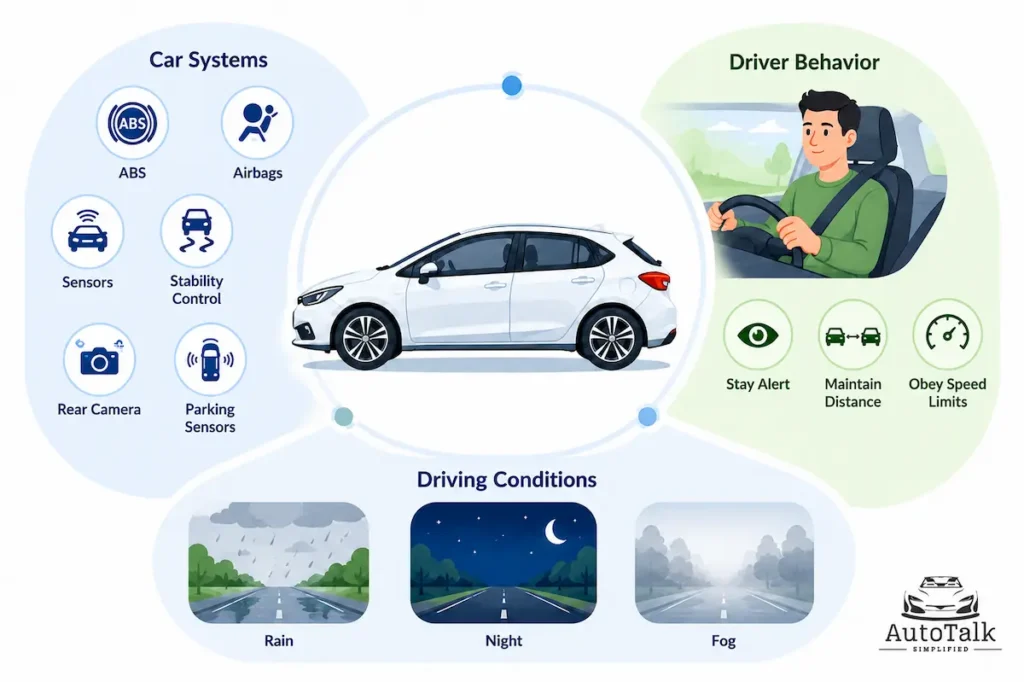
Understanding what is ABS in a car also means understanding that ABS is only one part of a larger group of modern vehicle safety systems. Many cars use multiple systems together to help drivers maintain better control in different driving conditions.
Systems That Work Together
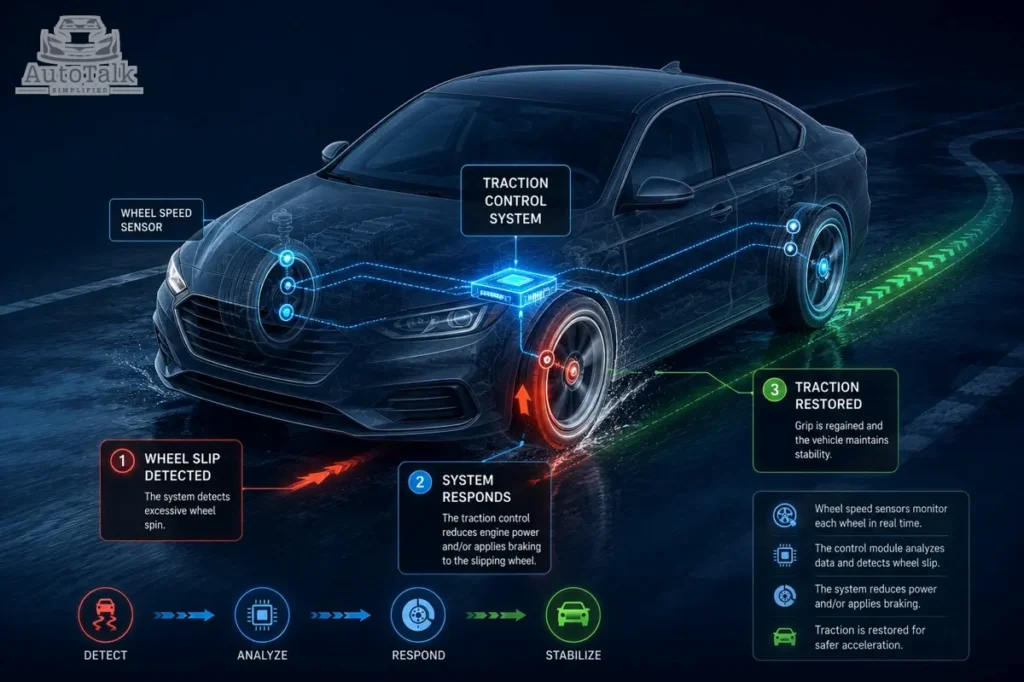
For example, traction control and electronic stability control (ESC) often work alongside ABS using some of the same wheel-speed sensors.
While ABS helps during braking, traction control helps reduce wheel spin during acceleration, especially on slippery roads. Electronic stability control helps improve vehicle stability if the car begins losing directional control during turning or sudden maneuvers.
Together, these systems play an important role in car safety basics because they are designed to help drivers maintain better traction, stability, and steering control in difficult driving situations.
Frequently Asked Questions
Does ABS make your car stop faster?
Not always. ABS is mainly designed to help drivers maintain better control during sudden braking instead of guaranteeing the shortest stopping distance on every surface.
On some loose surfaces like gravel or snow, stopping distance may even become slightly longer. However, the vehicle usually remains more stable and easier to steer.
What does it feel like when ABS is working?
When ABS activates, you may feel a pulsing or vibration in the brake pedal. Some drivers also hear clicking or grinding-like sounds during hard braking.
This is usually normal and means the system is rapidly adjusting brake pressure to help maintain traction.
Is it safe to drive if the ABS warning light is on?
In many cases, the normal brakes may still work even if the ABS warning light turns on. However, the vehicle may no longer have ABS protection during emergency braking situations.
It is best to have the system inspected as soon as possible to make sure it is working properly.
Do all cars have ABS?
Most modern vehicles now include ABS as a standard safety feature. However, some older vehicles may not have it, especially models produced before ABS became widely required in many markets.
For example, older versions or lower trims of vehicles like the Honda Civic or Toyota Corolla may not include ABS, particularly in model years from the late 1990s or early 2000s.
Should you brake differently in a car with ABS?
Yes. In most situations, you should press the brake pedal firmly and maintain steady pressure during emergency braking. Many drivers mistakenly try to pump the brakes, but ABS is already designed to adjust brake pressure automatically.
Conclusion
Understanding what is ABS in a car becomes much simpler once you know how the system helps maintain control during sudden braking. By helping the tires maintain traction with the road, ABS can improve vehicle stability and reduce the chances of skidding in many driving situations.
While ABS cannot replace safe driving habits, it can provide extra control during unexpected situations on the road. The more you understand how systems like ABS work, the easier it becomes to drive with greater confidence and awareness.