Traction control is a safety system that helps prevent your wheels from spinning when they lose grip with the road. If you are wondering what is traction control in a car, the system is designed to help your vehicle stay more stable during acceleration, especially on wet, icy, or slippery roads.
This is important because losing traction can make a vehicle feel unstable, especially during sudden acceleration or poor road conditions. Traction control helps the tires stay connected to the road surface, which is why it is considered an important part of car safety basics.
Many drivers also ask what does traction control mean in a car because the system usually works automatically in the background without requiring much attention. It becomes active when the tires begin losing traction, helping the vehicle maintain better grip and control.
In this first-time car buyer friendly guide, you will learn what traction control is, how it works while driving, when it helps the most, what happens when it is turned off, and the limitations drivers should understand.
What Is Traction Control in a Car?
Traction control is a system that helps prevent the wheels from spinning when your car accelerates on slippery or unstable surfaces. In simple terms, what is traction control in a car comes down to helping the tires stay connected with the road instead of becoming unstable during acceleration.
Understanding the traction control meaning becomes easier if you imagine pressing the accelerator too quickly on a wet road. Instead of moving forward smoothly, the tires may begin spinning because they cannot maintain enough grip with the road surface.
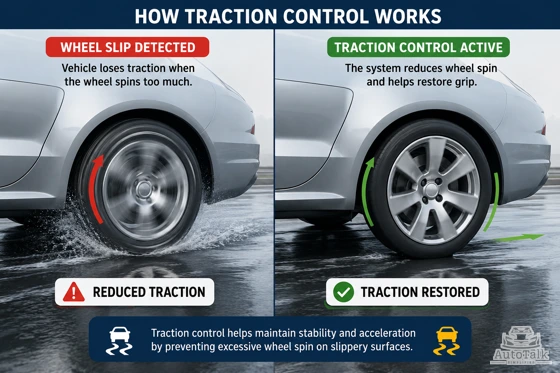
Traction control helps reduce this problem instantly by helping the tires regain traction when wheel slip is detected. This is especially useful in slippery conditions or other surfaces where tire grip is reduced.
Many drivers first notice this system when the traction control light flashes on the dashboard during slippery driving conditions. This usually means the system is actively helping the vehicle maintain stability and control.
To understand what does traction control do during these situations, it helps to first understand what happens when tires begin losing traction.
How Traction Control Works While Driving
Traction control works by monitoring how your wheels behave while the vehicle is moving. When the system detects that one or more wheels are losing grip with the road, it quickly responds to help restore control and keep the vehicle stable.
For many drivers, this happens so smoothly that the system works in the background without being noticed most of the time.
When Wheels Start Losing Traction
To understand why wheels lose traction in a car, it helps to think about situations where the tires cannot maintain enough grip with the road surface.
This commonly happens on wet or icy roads, loose gravel, muddy surfaces, or during sudden acceleration. In these situations, the tires may begin spinning faster than the vehicle can properly maintain traction.
For example, pressing the accelerator too hard on a rainy road can sometimes cause the drive wheels to spin instead of moving the car forward smoothly.
How the System Detects Wheel Slip
Understanding how does traction control work becomes easier once you know how the system detects wheel slip. Traction control uses sensors to monitor wheel speed while the vehicle is moving.
If one wheel begins spinning much faster than the others, the system recognizes that the tire may be losing traction with the road.
This detection happens very quickly and allows the vehicle to respond almost immediately.
How Traction Control Restores Grip
Once wheel slip is detected, the system takes action to help restore traction. This is how traction control prevents wheel slip during acceleration.
Depending on the situation, the system may temporarily reduce engine power or apply braking to the slipping wheel. This helps the vehicle stay stable during acceleration.
What This Means in Real Driving
In real driving situations, traction control helps the vehicle remain more stable during acceleration on slippery roads or uneven surfaces.
For example, if you accelerate while turning onto a wet road, the system can help reduce sudden loss of control and improve stability while the vehicle gains traction. This correction happens so quickly that most drivers do not even notice it.
Now that you understand how it works, let’s see when this system actually helps the most.
When Should You Use Traction Control?
Many drivers wonder when should you use traction control, but in most vehicles, the system works automatically in the background. You usually do not need to turn it on manually because it activates whenever the tires begin losing traction during acceleration.
This means understanding when the system helps is often more important than thinking about when to activate it. Traction control is designed to respond quickly when wheel slip is detected, especially in situations where the road surface has reduced grip.
Situations Where It Helps Most
Traction control is especially helpful on wet roads, snowy streets, muddy surfaces, loose gravel, or other slippery driving conditions where tires can lose grip more easily.
For example, accelerating from a stop sign during heavy rain or driving on an icy road can sometimes cause the wheels to spin unexpectedly. In these situations, the system helps the tires maintain better traction so the vehicle can remain more stable.
When Drivers Turn It Off (Basic Awareness)
Some drivers temporarily turn traction control off when trying to free a vehicle stuck in deep snow, mud, or sand. In certain situations, a small amount of wheel spin can help the tires regain movement.
However, for normal everyday driving, keeping traction control turned on is usually the safer choice because the system helps reduce sudden instability on slippery surfaces.
But what actually changes when traction control is turned off?
What Happens When Traction Control Is Off?
Understanding what happens when traction control is off becomes easier once you know how the system normally helps maintain grip during acceleration.
When traction control is turned off, the vehicle no longer makes automatic corrections when the tires begin losing traction. This means the vehicle can lose grip more easily on wet roads, snow, gravel, or other slippery surfaces.
Without the system stepping in, you, the driver must manage traction manually using careful acceleration and steering control. In some situations, this can make the vehicle feel less stable, especially during sudden acceleration or poor road conditions.
For example, pressing the accelerator too hard on a slippery road may cause the drive wheels to spin much more easily without traction control active.
This makes it easier to understand the system’s limitations.
Common Limitations of Traction Control (Important for Beginners)
Traction control is a helpful safety feature, but it is important to understand that the system also has limitations. Knowing what traction control can and cannot do helps you develop more realistic expectations while driving in difficult conditions.
What Traction Control Can Do
Traction control helps manage traction when the tires begin slipping during acceleration. By helping the tires maintain better traction with the road, the system can improve vehicle stability on slippery or uneven surfaces.
This can help you feel more controlled while accelerating on wet roads, snow, gravel, or other low-traction conditions.
What Traction Control Cannot Do
Traction control cannot create grip where there is very little traction available. For example, extremely icy roads or deep mud can still make it difficult for the tires to maintain control.
The system also cannot fully prevent skidding or replace careful driving habits. Safe speed, smooth steering, and proper braking are still important even when traction control is active.
When It May Not Work Properly
Traction control may become less effective during extreme weather conditions or on surfaces with very limited traction.
In some cases, dirty or damaged sensors may also affect how the system responds. If the sensors cannot properly detect wheel movement, traction control may not work as intended.
Warning Signs to Be Aware Of
A flashing traction control light usually means the system is actively helping maintain traction while driving.
However, if the warning light stays on continuously, the system may not be working properly. In some vehicles, traction control may become temporarily unavailable until the issue is inspected and repaired.
This is why traction control is considered an important safety feature.
Why Traction Control Matters for Safety
Traction control plays an important role in helping vehicles remain more stable during difficult driving conditions. By helping maintain control during low-grip conditions, the system can improve control when the road surface becomes slippery or uneven.
This is one reason what is traction control in a car is considered an important safety topic for modern drivers. Many vehicles use traction control to help maintain better stability when tire grip suddenly decreases during acceleration.
For example, if you accelerate while driving on a wet road or loose gravel, traction control can help reduce sudden wheel spin so the vehicle remains more stable and predictable.
While traction control cannot replace safe driving habits, it can provide extra support during situations where maintaining traction becomes more difficult.
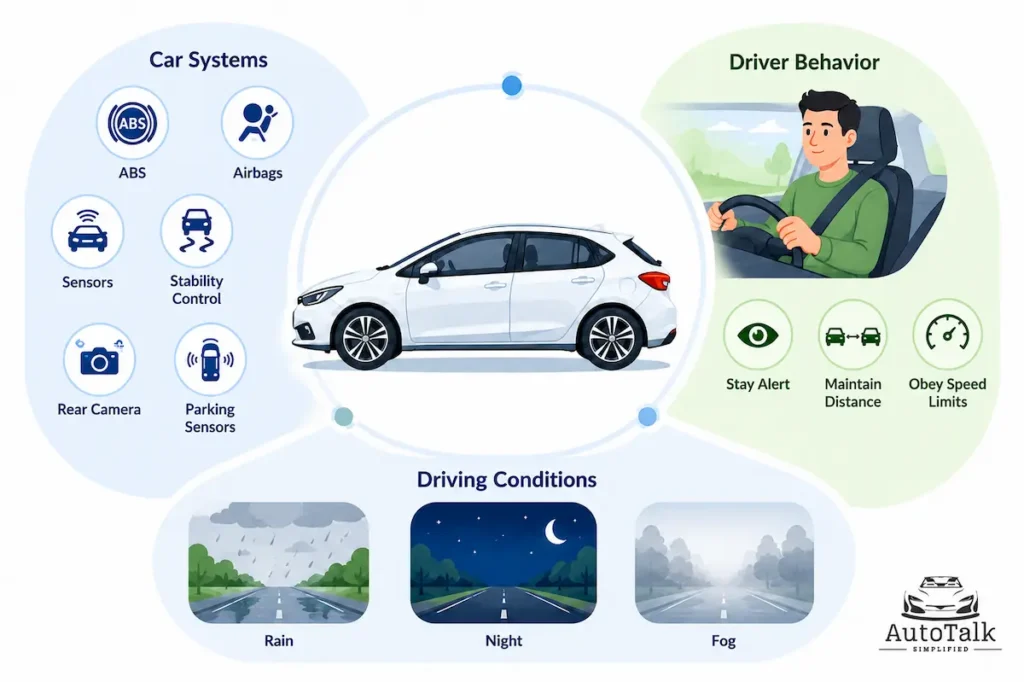
Traction control is also part of a larger safety system in your car.
How Traction Control Works With Other Safety Systems
Traction control does not work alone. In many modern vehicles, the system works together with other safety technologies to help improve vehicle stability and control during difficult driving conditions.
Understanding the overall traction control function becomes easier when you see how these systems support each other while the vehicle is moving.
Systems That Work Together
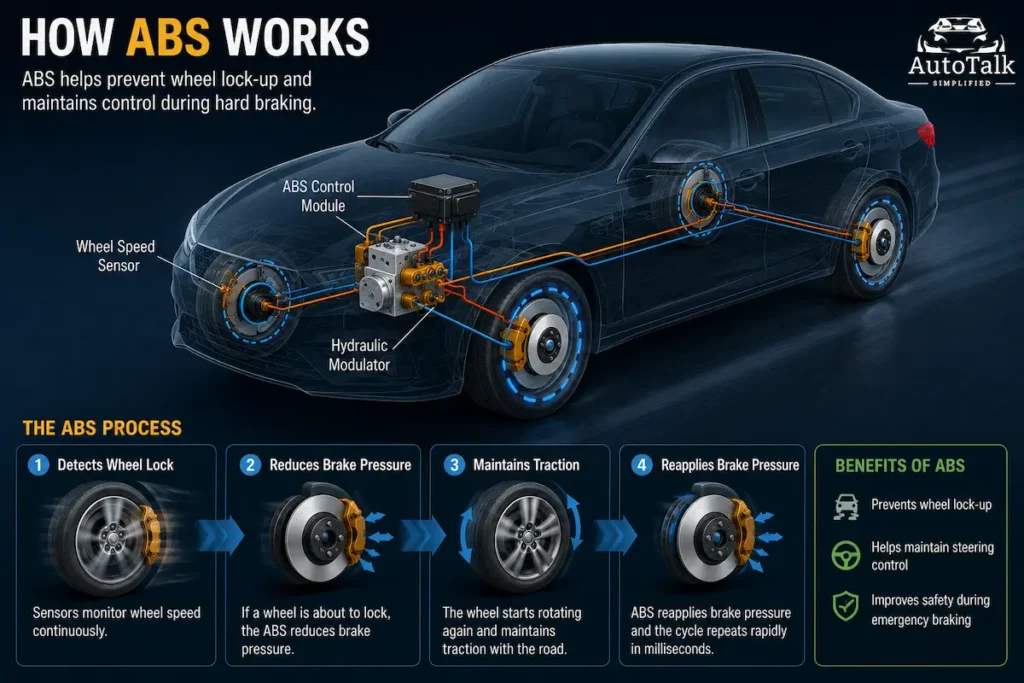
For example, the Anti-lock Braking System (ABS) helps prevent the wheels from locking during hard braking, while Electronic Stability Control (ESC) helps the vehicle remain more stable during turning or sudden steering movements.
Traction control often uses some of the same wheel-speed sensors as ABS and ESC to detect changes in wheel movement and traction. Together, these systems help improve stability, steering control, and tire grip during slippery or unstable road conditions.
Frequently Asked Questions About Traction Control
Does traction control help on wet roads?
Yes. Traction control is especially helpful on wet roads because tires can lose grip more easily during acceleration. The system helps reduce wheel spin so the vehicle can maintain better traction and stability.
Can traction control help on ice or snow?
Traction control can help improve stability in low-grip situations by reducing excessive wheel spin. However, it cannot create traction where very little grip exists, so careful driving is still important in these conditions.
Why is my traction control light flashing?
A flashing traction control light on your dashboard warning lights control panel usually means the system is actively working to help maintain traction. This often happens when the tires begin slipping on wet, icy, or uneven roads.
Is it safe to drive with traction control off?
In normal driving conditions, keeping traction control on is usually safer because the system helps reduce wheel spin and maintain stability. Some drivers temporarily turn it off in deep snow or mud to help free a stuck vehicle.
Does traction control slow the car down?
Not exactly. Traction control mainly helps manage wheel spin during acceleration. In some situations, the system may temporarily reduce engine power or apply braking to a slipping wheel to help restore traction.
Conclusion
Understanding what is traction control in a car becomes much easier once you see how the system helps improve control during acceleration. By supporting the tires in low-grip conditions, traction control helps your vehicle stay more stable on slippery or uneven roads.
While traction control cannot replace careful driving habits, it works automatically in the background to provide extra support when road conditions reduce stability. The more you understand how systems like this work, the easier it becomes to drive with greater confidence and awareness.