Owning a car comes with ongoing responsibilities. One of the most important is regular maintenance. Many problems that surprise car owners start as small issues that were easy to prevent.
Basic maintenance does not need technical knowledge. It focuses on simple checks and timely attention. When these habits are followed, cars tend to run more smoothly, feel safer to drive, and cost less to own over time.
Understanding car maintenance basics helps beginners know what deserves attention and when. It also helps separate normal upkeep from actual repairs, something that most drivers confuse with each other.
Regular maintenance supports reliability and safety. It also makes it easier to notice early warning signs before they lead to breakdowns or costly repairs.
Car Maintenance Basics Every Beginner Should Know
Car maintenance basics refer to the regular care that keeps a car running properly. It is not about fixing broken parts. It is about preventing problems before they appear. This distinction is important for beginners because maintenance and repair are often confused.
Maintenance focuses on routine attention. These are simple checks and timely actions that support safety and reliability. When done regularly, maintenance reduces the chances of sudden breakdowns and unexpected expenses. It also helps a car perform more consistently over time.
Maintenance vs Repairs
Maintenance and repairs serve different purposes. Maintenance is planned and preventive. Repairs are usually unplanned and reactive. Maintenance happens even when the car feels fine. Repairs usually happen after something goes wrong.
For example, checking fluid levels is maintenance. Replacing a damaged component is a repair. Beginners benefit from understanding this difference early. It helps them recognize what can be avoided with regular care.
Why Regular Checks Matter
Cars experience wear every time they are driven. Some changes happen slowly and are easy to miss. Regular checks help catch these changes early, when they are still minor.
Small issues are usually easier and cheaper to manage. When ignored, they can affect other parts of the car and lead to larger problems. Regular attention does not end issues completely. But it sure does reduce risk and increase control for the owner.
What to Check Regularly on Your Car
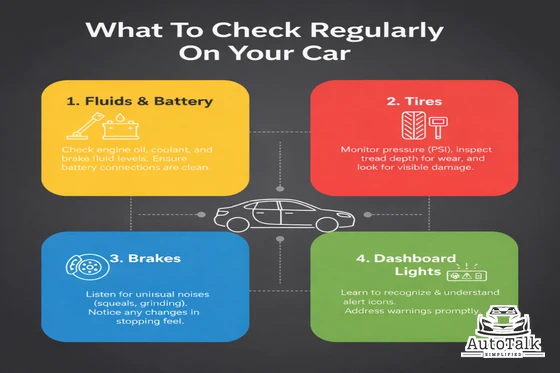
Regular checks help you notice changes before they turn into problems. These checks do not involve repairs or tools. They are about awareness and observation. Most of them can be done during normal use of the car.
You do not need to check everything every day. Some things need attention more often than others. The goal is not perfection. It is to stay informed about how your car feels and behaves over time.
Engine Oil and Other Important Fluids
Fluids play a major role in how a car runs. Engine oil helps parts move smoothly and reduces wear, which is why regular oil changes are important. Other fluids support cooling, braking, and steering functions. When fluid levels drop or fluids become dirty, performance and safety can be affected.
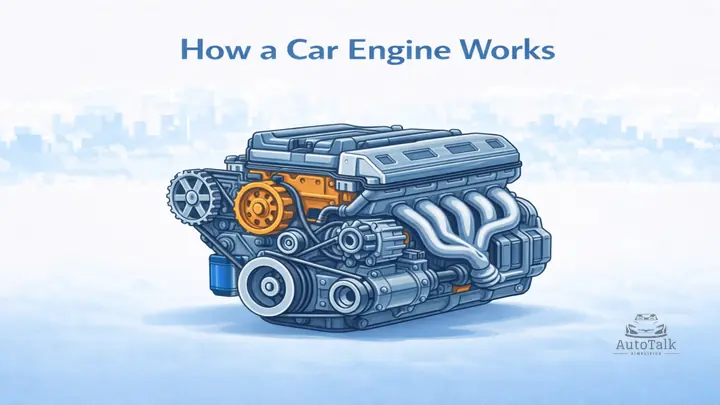
Engine oil makes more sense once you understand the working process of the engine and why moving parts need constant lubrication.
Beginners do not need to know technical details. It is enough to understand that fluids should not be ignored. Unusual smells, warning messages, or changes in how the car drives can signal that something needs attention.
Tires and Basic Safety Checks
Tires affect control, stability, and safety. Changes in tire pressure or condition can alter how the car feels on the road. Low pressure, uneven wear, or visible damage can reduce grip and increase risk.
Paying attention to tire pressure and tread wear helps maintain control, stability, and handling. Regular visual checks help catch issues early. Pay attention to how your car handles, especially during turns or braking. It can help reveal tire-related problems before they get worse.
Brakes and Driving Feel
Brakes communicate through feel and sound. A car that takes longer to stop, feels less responsive, or makes unusual noises during braking may need attention.
Changes in braking feel easier to understand when you know how car brakes work during normal driving.
You do not need to inspect brake parts. Noticing changes while driving is often enough to recognize that something has changed and needs attention.
Dashboard Warning Lights
Dashboard lights exist to alert the driver. Some indicate urgent problems. Others signal that a system needs attention soon. Ignoring these lights can allow small issues to grow.
Learning what different warning lights on the dashboard mean helps drivers respond correctly. It prevents guessing or delaying action. This knowledge allows beginners to stay calm and handle car issues confidently.
When Basic Car Maintenance Is Needed
Car maintenance does not happen all at once. Different checks are needed at different times. Knowing when to pay attention helps beginners avoid both neglect and overthinking.
Some things should be noticed often, while others only need occasional attention. Daily driving already gives many signals. Sounds, smells, warning messages, and changes in how the car feels all provide useful information. Paying attention to these signs is part of regular maintenance.
Weekly and Monthly Checks
Weekly or monthly checks are about awareness, not inspection. Looking at the tires, noticing warning lights, and paying attention to how the car starts and drives are usually enough. These habits help you spot changes early without spending much time.
You do not need a fixed schedule for these checks. The goal is consistency, not precision. Regular awareness reduces surprises.
Service Intervals in Simple Terms
Some maintenance tasks are handled during scheduled service visits. These are planned checkups where fluids, wear items, and system health are reviewed. The timing depends on usage, driving conditions, and manufacturer guidance.
Beginners do not need to memorize intervals. It is enough to know that service visits exist for a reason. And delaying them repeatedly can lead to avoidable problems. Treating service as preventive care, rather than a reaction to failure, helps keep the car reliable.
What Happens When Maintenance Is Ignored
Ignoring basic maintenance does not usually cause immediate failure. Problems often develop slowly. Small changes are missed, warnings are delayed, and minor issues are allowed to continue longer than they should.
When maintenance is ignored, wear increases. Fluids break down, parts work harder than intended, and systems lose efficiency. Over time, this can affect how the car drives, how safe it feels, and how reliable it becomes.
Small Issues Becoming Expensive
Many costly repairs begin as simple issues. Low fluid levels, uneven tire wear, or early warning signs are often easy to manage when noticed early. When ignored, they can lead to damage that affects multiple parts.
This is why delayed maintenance often costs more than regular upkeep. The problem is not the maintenance itself but the accumulation of small issues that were left unaddressed.
Safety and Reliability Risks
Maintenance also affects safety. A car that is not properly maintained may take longer to stop, feel unstable, or respond unpredictably. These changes may not feel dramatic at first, but they increase risk over time.
Reliability is affected in a similar way. Missed maintenance increases the chance of breakdowns and unexpected problems. Regular attention reduces uncertainty and helps the car perform as expected.
Why Car Maintenance Is Important for New Owners
New car owners often focus on driving and convenience. Maintenance can feel secondary, especially when the car appears to be running fine. However, early ownership is the best time to build good maintenance habits.
Maintenance helps new owners understand their car better. Paying attention to how the car behaves makes changes easier to notice. This reduces guesswork and builds confidence over time. Instead of reacting to problems, owners learn to expect them.
Better Conversations With Mechanics
Basic maintenance knowledge makes communication easier. When you understand what is being checked and why, it becomes simpler to ask questions and understand explanations. This reduces confusion and helps avoid misunderstandings.
You do not need technical language to have useful conversations. Clear observations about sounds, warning signs, or changes in performance are often enough. Maintenance awareness helps new owners describe issues more accurately.
Fewer Surprises Over Time
Regular maintenance reduces uncertainty. While it does not prevent every issue, it lowers the chances of sudden breakdowns and unexpected expenses. Problems are more likely to appear gradually, giving owners time to respond.
For new owners, this predictability matters. It makes ownership feel more manageable and less stressful. Over time, consistent maintenance creates a sense of control and trust in the vehicle.
How Maintenance Connects to Other Car Basics
Car maintenance does not exist on its own. It is connected to how the car is built and how its systems behave over time. Maintenance decisions make more sense when they are seen as part of the bigger picture, not as isolated tasks.
Every system in a car experiences wear. Fluids age, parts move, and components respond to driving conditions. Maintenance is how owners manage that wear before it affects performance or safety. This connection becomes clearer once you understand how a car works as a whole rather than thinking about parts separately.
When maintenance is ignored, the effects often appear in familiar ways. The car may feel different to drive. Warning signs may show up. Systems that usually work quietly in the background may start drawing attention. Car maintenance basics help keep these systems working as intended for longer.
Seeing maintenance as part of basic car knowledge helps beginners make better decisions. Owners learn to recognize patterns, respond earlier, and keep the car in a healthier condition.
Frequently Asked Questions
Can I skip maintenance if my car feels fine?
No. Many maintenance issues do not cause immediate symptoms. A car can feel normal while small problems are developing in the background. Regular maintenance helps catch these issues before they affect safety or reliability. Learning car maintenance basics can ensure the longevity of your ride.
Does a new car still need maintenance?
Yes. New cars still require regular checks and scheduled service. Skipping maintenance early can reduce long-term reliability and may affect warranties. Maintenance habits should start from the beginning, not after problems appear.
Is car maintenance different for city driving and highway driving?
Yes, driving conditions matter. Frequent short trips, heavy traffic, and stop-and-go driving can increase wear on certain parts. Highway driving is often easier on the car, but it still requires regular checks and service.
What happens if I delay service for too long?
Delaying service increases risk. Fluids may break down, wear can accelerate, and small issues can affect other systems. While a short delay may not cause immediate harm, repeated delays often lead to higher costs and reduced reliability.
Conclusion
Car ownership becomes easier when maintenance is treated as a regular habit, not a reaction to problems. Paying attention to small changes, following basic checks, and respecting service needs all help reduce risk over time.
You do not need technical skills to maintain a car responsibly. Awareness, consistency, and timely attention are often enough. These habits improve safety, reliability, and long-term ownership experience.
Understanding car maintenance basics gives beginners more control and confidence. Instead of guessing or waiting for something to go wrong, you are better prepared to keep your car in good condition and avoid unnecessary surprises.