
Preventive car maintenance is the routine care that you do to protect your car from unexpected problems and major repairs. It focuses on reducing risk before something fails. Instead of reacting to a breakdown, this approach helps you stay ahead of mechanical wear.
Every vehicle experiences gradual stress. Heat builds up, fluids break down, and moving parts slowly wear against each other. These changes are normal, but without attention, they can turn into larger issues. Preventive maintenance for cars helps in managing wear in a steady and predictable way.
For first-time car owners, it can feel unclear at the beginning. You might wonder if maintenance is necessary when your car seems to be running fine. The goal is not to fix damage after it appears. It is to reduce the chance of damage developing in the first place and to avoid costly car repairs later.
In this guide, you will learn what preventive car maintenance involves and why it plays such a crucial role in responsible car ownership. You will also understand how routine care protects major systems of your ride, reduces the risk of unexpected breakdowns, and so on. By the end, beginners will feel more confident about managing their vehicles over time.
What Preventive Car Maintenance Really Means
Preventive car maintenance is often misunderstood, especially by first-time car owners. Some believe it simply means taking a car in for service once in a while. Others think it only applies to older vehicles. In reality, it is about reducing risk, protecting major systems, and keeping the vehicle reliable before problems begin.
Understanding what this term truly means helps beginners avoid confusion. It also makes routine vehicle care feel more logical instead of overwhelming.
A Clear Definition for Beginners
Preventive maintenance for your car is nothing but planned and consistent care. It is designed to reduce the chance of mechanical failure. It includes routine services, inspections, and part replacements that support long-term vehicle stability.
This does not mean repairing something that has already broken. Instead, it focuses on protecting components while they are still functioning properly. Preventive maintenance for automobiles is proactive. It is meant to manage wear before it turns into damage.
Preventive Maintenance Is Not the Same as Repairs
It is important to understand the difference between preventive care and reactive repairs. Repairs happen after a problem appears. Preventive care happens before that point. Many beginners also confuse this with manufacturer-recommended service intervals, which follow a fixed schedule. While scheduled maintenance is important, preventive care focuses on recognizing wear before it becomes visible.
When drivers wait for warning signs, wear has often progressed further than expected. Taking early action helps prevent costly car repairs and reduces the likelihood of sudden breakdowns. The timing is what separates the two approaches.
It Applies to Both New and Used Cars
Another common misunderstanding is that new cars do not require much attention. While newer vehicles are built for durability, they still experience heat, friction, and fluid aging from the first drive.
Routine preventive vehicle maintenance supports performance from the beginning. For used car owners, it helps stabilize systems that may already have experienced wear. The approach to preventive care for new and used cars is not always identical. However, in both cases, it helps protect reliability and reduce long-term mechanical stress.
Why Preventive Auto Maintenance Matters Mechanically
Even when a car feels normal, small changes are happening inside it every time you drive. These changes are not dramatic, and they do not happen all at once. But over time, they affect performance, efficiency, and reliability. This is where preventive car maintenance becomes important from a mechanical point of view.
Understanding how wear develops helps beginners see why routine care is necessary.
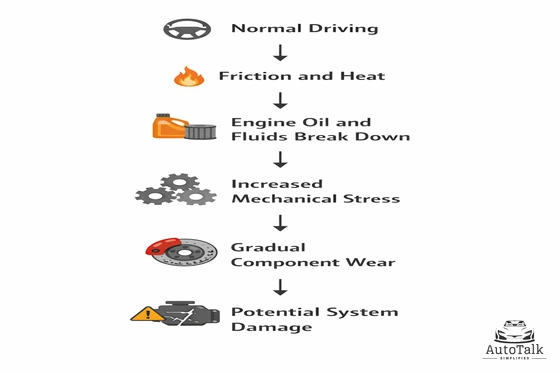
Every Drive Creates Gradual Wear
A car is made up of moving parts that constantly interact with each other. When metal parts move, they create friction. When friction increases, heat builds up. Over time, fluids that are designed to reduce friction begin to break down.
This process is known as mechanical wear and tear. It happens slowly and quietly. You usually do not notice it until performance begins to change.
Regular attention helps manage this wear before it spreads to other components.
How Small Issues Turn Into Larger Damage
Minor issues often start small. For example, old or contaminated engine oil can lose its ability to lubricate properly. When lubrication decreases, internal parts experience more friction than they should. Understanding how engine oil breaks down and why timely oil changes matter helps prevent this gradual damage.
That extra friction increases stress inside the engine. Over time, this can lead to overheating or internal damage. This situation is something that could have been avoided through routine vehicle maintenance.
The same pattern applies to other systems. Low fluids, worn filters, or delayed inspections allow strain to build. Small neglect can slowly affect connected components.
Why Problems Rarely Appear Overnight
Many beginners believe a breakdown happens suddenly. In reality, most failures develop in stages. The early signs are often subtle and easy to ignore.
Consistent care helps reduce the risk of serious issues and supports vehicle system protection. It allows you to address minor concerns before they escalate into expensive repairs.
And as soon as you understand this, preventive maintenance for cars stops feeling like an extra task. You finally see it as a practical way to protect the reliability of your ride.
Why Preventive Car Care Matters Financially
Mechanical wear is not the only reason routine care matters. For beginners, the financial side of preventive car maintenance is often equally as important. Small, planned services usually cost far less than major repairs that happen after damage has progressed.
Understanding this difference, along with the overall cost of owning a car, helps first-time car owners make calmer and more confident decisions.
Routine Service Costs vs Major Repair Bills
Routine service typically involves inspections, fluid replacements, and minor part changes. These are predictable and manageable expenses. They are part of responsible car ownership.
Major repairs are different. When wear is ignored, damaged components can affect surrounding parts. What begins as a small issue can turn into engine damage, transmission failure, or cooling system problems. These repairs are far more expensive and often unexpected.
Taking early action helps prevent costly car repairs and reduces the likelihood of large, sudden expenses.
Why Delaying Service Can Increase Costs
Delaying maintenance may feel like saving money in the short term. But when fluids degrade or worn parts are left unchanged, stress builds inside important systems.
Over time, that stress can lead to emergency situations. Many drivers searching for how to avoid car breakdowns discover that early maintenance is one of the most effective ways to reduce risk.
When you stay consistent with basic care, expenses tend to remain smaller and more predictable. This reduces your risk of long-term repair costs.
Financial Predictability Builds Confidence
For first-time car owners, unexpected repair bills can feel overwhelming. Preventive care creates structure. It replaces uncertainty with a plan.
Instead of reacting to sudden problems, you manage wear gradually. This approach supports long-term reliability and helps reduce repair costs over time.
Understanding the financial side of preventive care makes it easier to see why it is not an extra expense. It is a strategy for protecting your budget and your vehicle at the same time.
How Preventive Car Maintenance Protects Your Vehicle
Understanding preventive car maintenance becomes easier when you see both what it protects and how it does that. Preventive care works at the system level, but it follows a structured approach.
For beginners, this connection removes confusion. You are not maintaining random parts. You are protecting major systems through consistent, targeted attention that reduces long-term strain.
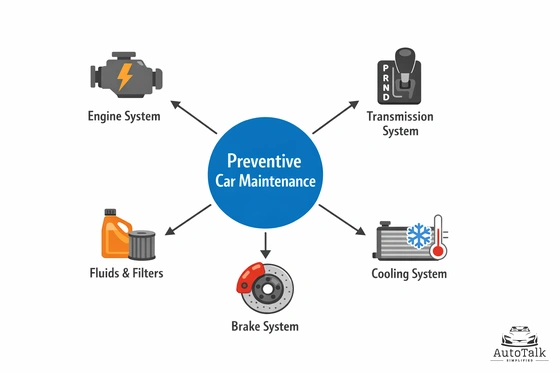
The Major Systems It Protects
Preventive care supports several core systems that work together every time you drive. These systems operate under pressure, heat, and constant movement. Over time, that stress accumulates.
Engine
The engine is one of the most demanding systems in a vehicle. It operates under high temperatures. For smooth operation, it relies on precise movement between tightly fitted components. Lubrication reduces friction, and cooling regulates heat.
When lubrication weakens or internal stress increases, small inefficiencies begin forming. These changes are often invisible at first. However, over time, they can affect performance, fuel efficiency, and reliability. Consistent attention protects internal components before wear spreads.
Transmission
The transmission manages power delivery from the engine to the wheels. It depends on stable internal pressure and clean fluid to operate smoothly.
When strain builds over time inside the transmission, shifting may feel less precise. Heat and internal friction can increase without immediate warning. Preventive attention helps maintain smooth operation. It also reduces the likelihood of complex internal damage developing over time.
Cooling System
The cooling system regulates temperature across the engine and surrounding components. Engines naturally generate heat during operation. Without effective temperature control, heat stress begins affecting internal materials.
Overheating rarely starts as a dramatic event. It often begins with gradual imbalance. Preventive care supports stable temperature regulation. It helps reduce the risk of heat-related damage that can affect multiple systems at once.
Brake System
The braking system converts motion into friction repeatedly during everyday driving. This friction gradually reduces material thickness in brake components.
If wear progresses without attention, stopping performance can decline slowly before becoming noticeable. Preventive attention helps maintain the responsiveness of the brakes. It also ensures safety while reducing unnecessary stress on surrounding parts.
When all these systems receive steady and consistent care, the behavior of your vehicle becomes more predictable. Instead of reacting to sudden failures, preventive care supports gradual stability.
How Preventive Care Supports These Systems
Protecting these systems does not happen randomly. Preventive care follows a structured method that reduces stress before it becomes damaged.
Fluid Stability
Fluids play a critical role in lubrication, cooling, and controlled movement. Over time, heat and contamination reduce their effectiveness.
When fluid quality declines, friction and temperature increase across major systems. Maintaining fluid stability supports smoother internal operation. It also reduces mechanical strain across multiple areas at the same time.
Wear Component Management
Some parts are designed to wear over time under normal use. But keeping a close eye on these components can help you a lot. Regular checks help you replace the parts before they fail. This one act prevents stress from transferring to connected systems.
Addressing predictable wear early keeps performance consistent. It further reduces the likelihood of more complex repairs later.
System Monitoring and Inspection
Many mechanical changes begin subtly. Inspections help identify these changes before they escalate. Early detection allows small adjustments to be made before strain compounds. This supports long-term stability and improves predictability.
Owner Consistency and Awareness
Preventive care also depends on habits. Driving style, responsiveness to unusual behavior, and regular service timing all influence durability. Building steady preventive maintenance habits helps reduce long-term mechanical stress. However, ignoring preventive car maintenance can lead to long term costs and risks.
Consistency reduces uncertainty. Instead of allowing stress to build up in the background, steady attention from you keeps your car systems balanced over time.
Consequences of Ignoring Preventive Car Maintenance
Skipping preventive car maintenance does not usually cause immediate failure. Most problems develop over time. Your car may continue to run, but internal balance slowly begins to shift. Over time, that shift affects performance, predictability, and long-term reliability. For beginners, the key issue is not sudden damage. It is gradual instability.
Loss of Mechanical Efficiency Over Time
When preventive care is delayed, systems do not fail instantly. Instead, they begin operating less efficiently. Components may need more effort to perform the same task. Temperatures may run slightly higher. Movements may become a little less smooth.
These changes are often subtle. Drivers may not notice them at first. But reduced efficiency increases strain across connected systems. Over time, this strain compounds.
Compounding Stress Across Systems
Cars are built with interconnected systems. When one area experiences more stress, its surrounding parts often absorb some of that pressure.
For example, increased resistance in one system can affect temperature control or energy transfer. Sometimes it can influence overall responsiveness. This creates a chain reaction. The longer stress continues, the more complex repairs may become.
Many long-term issues stem from repeated delays in routine attention rather than one dramatic event.
From Predictability to Uncertainty
One of the biggest consequences of neglect is the loss of predictability. A well-maintained vehicle tends to behave consistently. When preventive care is ignored, performance may become less stable.
Minor fluctuations in performance can eventually turn into unexpected interruptions. Drivers searching for how to avoid car breakdowns often discover that consistent early care reduces this uncertainty.
Preventive attention does not eliminate every risk. However, it significantly lowers the chance of facing sudden, high-impact problems.
For first-time owners, this is the real takeaway. Ignoring small maintenance needs does not just increase cost. It gradually reduces control over how the vehicle behaves over time.
What First-Time Owners Are Responsible for
Understanding preventive car maintenance is one part of the process. The next step is knowing what your role actually is. Many beginners believe they must understand technical details or perform mechanical work themselves. That is not true.
As a first-time owner, your responsibility is not to repair the car. It is to stay aware, stay consistent, and take timely action when needed.
Paying Attention to Early Changes
Cars usually show subtle signs before larger issues develop. These signs may include unusual sounds, changes in responsiveness, or dashboard warning indicators. Learning to recognize early warning signs helps you prevent minor issues from becoming big problems.
You are not expected to diagnose the cause. Your role is to notice that something feels different and respond calmly. Awareness is the most effective part of responsible vehicle care.
Ignoring early signs is one of the most common car maintenance mistakes made by beginners. Small delays may not feel serious, but repeated delays increase long-term strain.
Staying Consistent With Routine Care
Preventive care works best when it is consistent. Skipping scheduled service because the car feels fine can slowly reduce reliability.
Following a clear car maintenance schedule supports stability and reduces the risk of unexpected interruptions. This is a core part of car maintenance for beginners. It is highly important for those who are still learning how vehicles behave over time.
Consistency builds familiarity. The more you care for your car on a daily basis, the easier it becomes to recognize changes.
Keeping Basic Service Records
Maintaining simple records of service visits helps you stay organized. It also provides clarity about what has already been taken care of and what may need attention next. Creating a simple preventive maintenance plan makes this process easier. Not only this, but it also reduces confusion over time.
Clear documentation supports better conversations with service professionals. It reduces confusion and helps prevent unnecessary duplication of work.
For first-time owners, this small habit creates long-term benefits. It strengthens control and supports responsible vehicle ownership.
Common Preventive Maintenance Mistakes First-Time Owners Make
Even when beginners understand the importance of preventive car maintenance, mistakes can still happen. These mistakes are usually not careless decisions. They often come from uncertainty, delayed attention, or misunderstanding how gradual wear works.
Recognizing these patterns early helps first-time owners make steadier and more confident decisions.
Waiting for a Problem to Appear
One of the most common car maintenance mistakes is assuming that action is only necessary when something feels wrong. Many mechanical issues develop quietly, without dramatic symptoms.
By the time a warning sign becomes obvious, internal strain may have already increased. Preventive care is designed to manage wear before it becomes noticeable. Waiting for visible problems shifts maintenance from proactive to reactive, which reduces control.
Assuming Newer Cars Need Less Attention
Some beginners believe that a newer vehicle can go longer without care. While modern cars are engineered for durability, they still operate under heat and pressure from the first drive.
Delaying routine attention does not usually cause immediate damage. But it gradually reduces efficiency. Over time, this can affect long-term reliability. Preventive habits should begin early, not after the first issue appears.
Delaying Service to Save Money
It can feel practical to postpone routine service when the car appears to be running well. But repeated delays often increase long-term expenses rather than reduce them.
Routine attention helps prevent costly car repairs by addressing minor wear before it spreads. When service is consistently postponed, the financial impact tends to shift. Predictable maintenance becomes larger, less manageable repairs.
Ignoring Patterns Over Time
Small changes may not seem significant in isolation. A slight vibration, a minor delay in response, or a small performance shift can feel easy to dismiss.
However, repeated minor changes often signal gradual stress. Learning to observe patterns is an important part of car maintenance for beginners. It builds awareness and reduces uncertainty.
Relying Only on Warning Lights
Some first-time owners assume that if no warning light is active, everything must be fine. While warning systems are helpful, they are not designed to detect every early-stage issue.
Many forms of wear develop before electronic alerts appear. Preventive care is not meant to replace warning systems but to work alongside them. Relying only on dashboard signals can delay early attention that would otherwise keep the vehicle stable.
Frequently Asked Questions
What is included in preventive car maintenance?
Preventive auto care includes routine services and inspections designed to reduce the risk of failure. It may involve fluid checks, part replacements, and system evaluations, supporting long-term reliability. The goal is not to fix damage. It is to reduce the likelihood of damage developing over time.
Is preventive maintenance necessary for brand-new cars?
Yes. New vehicles still experience heat, friction, and gradual wear from the first drive. Even when everything feels smooth, internal systems need steady attention. Building consistent habits early helps protect performance and supports long-term reliability.
Does preventive auto maintenance really reduce repair costs?
In most cases, yes. Routine care helps identify minor wear before it spreads to connected components. This reduces the chance of facing major repairs later. Drivers who focus on preventive care are less likely to experience sudden failures and large, unexpected repair bills.
How is preventive car care different from regular servicing?
Regular servicing is part of automotive preventive maintenance. Preventive care refers to the overall strategy of managing wear early. Servicing is one of the tools used to support that strategy. Understanding this helps beginners see maintenance as an ongoing approach to car ownership.
Can skipping small maintenance tasks cause serious damage?
Skipping minor services occasionally may not cause immediate harm. However, repeated delays allow strain to build gradually. Over time, it increases the likelihood of system instability, dashboard warning lights, and unexpected breakdowns. Preventive attention helps reduce that risk and maintain predictability.
Conclusion
Preventive car maintenance is about managing wear before it becomes damaged. It protects major systems, reduces financial risk, and keeps your vehicle more predictable over time.
For first-time owners, the key is consistency. You do not need technical expertise. Paying attention, staying regular with service, and responding early to changes are usually enough.
When maintenance is treated as a habit instead of a reaction, car ownership becomes more stable and easier to manage.
💬 Not sure if you’re maintaining your car the right way?
Ask in the comments, and I’ll help you understand what generally matters and what to pay attention to.