
The signs your car needs maintenance often appear as small changes in how the vehicle behaves during everyday driving. Most car problems do not begin with loud noises or warning lights. Instead, they usually start quietly with subtle shifts in performance or driving feel. A slight delay in acceleration, a mild vibration, or a small change in braking response can appear long before a system failure becomes obvious.
Many drivers expect obvious alerts before taking action. In reality, the signs often show up as subtle differences in daily driving. A slight delay, a mild vibration, or a small change in response can appear long before a system fails.
Most early maintenance signs do not require immediate emergency repair, but they should not be ignored if they repeat. Calm attention makes a difference in long-term reliability.
Building preventive maintenance awareness helps you notice patterns early instead of reacting to breakdowns later. Over time, steady attention supports smoother performance and fewer unexpected repairs.
Why Early Changes Often Go Unnoticed
Small changes are easy to accept as normal. When a vehicle changes gradually, drivers often adapt without realizing it. Slight differences in sound, response, or smoothness may not feel serious at first. Over time, these car behavior changes can blend into daily driving.
Mechanical wear usually develops slowly. Parts experience heat, friction, and pressure every time the vehicle is used. This steady stress can lead to a gradual performance decline that feels almost unnoticeable from one week to the next. Because the shift is not sudden, it rarely triggers immediate concern.
Another reason early issues go unnoticed is familiarity. The more time you spend driving the same vehicle, the more likely you are to overlook subtle changes in how your car feels. A slight hesitation or mild vibration may seem minor, especially if it does not repeat right away. Awareness requires paying attention to consistency, not just obvious disruptions.
Over time, drivers adjust without realizing it. For example, acceleration that once felt smooth may become slightly less responsive over several weeks. Because the change happens gradually, it can feel normal even when it is not.
Subtle Signs Your Car Needs Maintenance
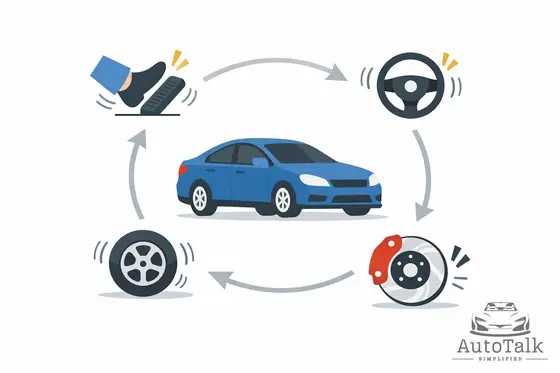
Early indicators often appear in everyday driving. These vehicle performance changes may not trigger warning lights, but they can signal that something is slowly shifting. The key is noticing small driving differences before they become obvious disruptions.
Responsiveness and Acceleration Changes
A healthy vehicle usually responds smoothly when you press the accelerator. If there is a slight pause before movement or a delayed response when accelerating, it may feel minor at first. Many drivers experience this gradually and adjust without thinking much about it.
When hesitation appears once, it may not mean much. But if it begins to repeat under similar conditions, that consistency matters. Paying attention to these small shifts helps protect a stable and consistent driving feel over time.
These changes are often easiest to notice during routine driving, such as a daily commute. When the same route feels slightly different over time, that consistency can reveal early shifts more clearly.
Vibration and Steering Feel Differences
Mild vibration differences can develop slowly. A vehicle that once felt smooth may begin to feel slightly rough at certain speeds. These slight vibration changes are often subtle enough that drivers dismiss them.
Steering can also feel different. Minor steering feel changes, such as slight heaviness or looseness, may not seem urgent. However, noticing when the vehicle no longer feels the same as it did before is part of building awareness.
Braking and Consistency Shifts
Braking should feel predictable. If the pedal feels slightly softer, firmer, or less consistent than usual, that change is worth observing. Slight braking consistency shifts can develop gradually rather than suddenly.
These shifts do not always signal immediate danger. What matters is whether the pattern continues. Recognizing differences early supports long-term stability without turning every small change into panic.
This awareness also makes it easier to follow a structured preventive maintenance plan for your car.
Patterns Matter More Than Single Events
A single unusual moment does not always mean something is wrong. Vehicles can respond differently due to weather, road conditions, or short-term stress. What matters more are repeated car maintenance signs that follow a pattern.
For example, one strange noise on a cold morning may not be serious. But if that same sound appears several times a week, it becomes one of the clearer patterns in car performance. When repeated differences develop over time, they can become early signs your car needs maintenance rather than random behavior.
The same idea applies to hesitation or vibration. Slight changes that return under similar conditions are more meaningful than isolated events. Many larger repairs begin as recurring small issues that were easy to dismiss at first. Paying attention to consistency helps reduce surprise breakdowns and supports steady vehicle reliability. Having the right things to keep in your car can also help you handle small issues safely when they happen.
The Difference Between Warning Signs and Warning Lights
Early warning signs usually appear during driving before dashboard warning lights activate. Many drivers wait for a dashboard alert before taking action. Warning lights are useful, but they are not the earliest indicators of change.
Warning Signs (Early Stage)
These appear before electronics detect a measurable fault.
- Small shifts in sound or vibration
- Slight responsiveness changes
- Minor steering or braking feel differences
- Gradual patterns that repeat over time
These are often the signs your car needs maintenance. They reflect early mechanical changes that develop before a system crosses a programmed threshold.
Warning Lights (Later Stage)
These activate after sensors detect a defined problem.
- A system has reached a specific limit
- A measurable fault has been recorded
- The vehicle’s computer triggers an alert
By the time a warning light turns on, the issue is no longer subtle. The system has already confirmed that attention is required.
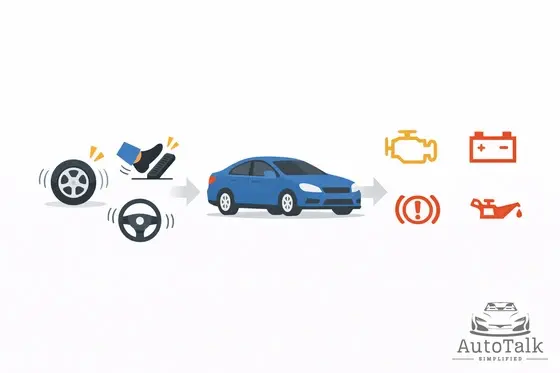
Understanding this difference helps drivers avoid waiting for a dashboard alert when gradual patterns have already suggested that maintenance may be needed.
Dashboard alerts operate differently from gradual instability. Our guide on dashboard warning lights explains how these systems respond when sensors detect specific thresholds.
Why New and Used Cars Show Early Signs Differently
Early indicators do not appear the same in every vehicle. Age, past usage, and wear history influence how changes develop. This is why car behavior changes may feel different in a newer vehicle compared to one with prior mileage history.
In Used Vehicles
Used vehicles often carry accumulated wear from previous driving conditions. Because of this history, vehicle performance changes may appear sooner or feel slightly more noticeable.
For example:
- A small vibration may develop earlier due to prior stress.
- The steering feel may shift gradually after years of use.
- Minor responsiveness changes may reflect earlier wear patterns.
These signs do not automatically mean serious damage. They reflect how wear progresses over time.
In New Vehicles
New vehicles usually begin with minimal wear. Early changes may be more subtle and slower to develop.
For example:
- Slight responsiveness differences may appear gradually.
- Small sound variations may occur under specific conditions.
- Minor braking feel shifts may be easier to overlook because expectations are high.
In both cases, awareness matters. The goal is not to assume problems. It is to recognize when patterns shift from normal consistency.
When Subtle Changes Become Action Signals
Not every small shift requires immediate action. Vehicles can respond differently on certain days due to temperature, traffic, or short-term strain. The key is recognizing when car maintenance signs move from occasional differences to consistent instability.
For example, a slight hesitation that appears once may not be urgent. But if the same hesitation repeats under similar driving conditions, it becomes more meaningful. The same applies to vibration, steering feel, or braking response. Repeated patterns suggest that wear may be progressing rather than stabilizing.
Awareness plays an important role here. When small differences become more frequent or gradually worsen, it may be time to schedule a check. This approach supports preventive maintenance awareness without turning minor changes into panic.
Scheduling a check does not mean expecting a major repair. It simply confirms whether the change is minor or part of a developing pattern.
Addressing concerns early helps reduce stress on vehicle systems and supports long-term reliability. It reflects the value of acting before breakdowns happen, especially when performance becomes less consistent over time.
Frequently Asked Questions
What are common signs your car needs maintenance?
Common indicators include repeated hesitation, mild vibration, changes in braking feel, or shifts in steering response. These differences often develop gradually rather than suddenly. When small performance changes repeat under similar conditions, they can become clear signs your car needs maintenance instead of random variation.
Can a car need maintenance without warning lights?
Yes. Warning lights usually activate after a system detects a measurable issue. Subtle performance shifts can appear before that threshold is reached. Paying attention to consistency helps identify concerns early rather than waiting for an electronic alert.
Are early maintenance signs always serious?
Not always. A single unusual moment does not automatically indicate a major problem. What matters is repetition and gradual change. Monitoring patterns over time provides better insight than reacting to one isolated difference.
How do I know if a small change is normal or a problem?
If a difference happens once and does not repeat, it may not require action. If it continues under similar driving conditions or slowly worsens, scheduling a check is a practical step. Consistency is often more important than intensity.
Do new cars show early maintenance signs too?
Yes. While newer vehicles often develop wear more gradually, small behavioral shifts can still appear. Preventive attention applies to both new and used vehicles, even when warning lights are not present.
Conclusion
Most vehicle problems do not begin with dramatic failure. They develop gradually through small differences in sound, response, or driving feel. Recognizing patterns early helps reduce surprise repairs and long-term strain on vehicle systems.
The signs your car needs maintenance are often subtle before they become obvious. Paying attention to consistency, rather than waiting for warning lights, supports steady performance and informed decision-making. Calm awareness allows drivers to respond early without overreacting to every minor change.
Not sure if a change in your car’s sound or feel is something to pay attention to?
Ask in the comments, and I’ll help you understand what generally matters and what to pay attention to.