Getting stuck on the road with a flat tire, a dead battery, or a sudden issue at night can feel stressful, especially if you are not prepared. Many beginners face this not because the problem is serious, but because they do not have the right items in their car.
This is where knowing the things to keep in your car makes a difference. A few simple essentials can help you handle common problems, stay safe, and avoid unnecessary stress when something goes wrong.
Most people assume the only option is roadside assistance. While that can help, it is not always necessary and often comes at a cost. In the United States, a single roadside service can cost around $75 to $200 depending on the situation.
If you understand what to keep in your car, you can handle many common issues on your own without waiting for help or spending money on problems that are manageable.
In this guide, you will learn seven essential items that every beginner should keep in their car so you can stay prepared and more confident on the road.
What Should You Keep in Your Car?
You should keep a few essential tools and safety items in your car to handle common situations like low tire pressure, a dead battery, or poor visibility. These items help you stay prepared and avoid unnecessary stress on the road.
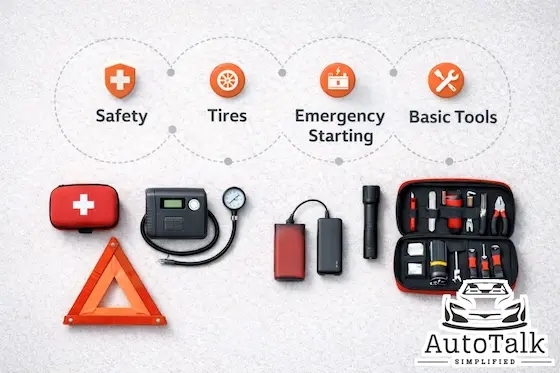
Essential items to keep in your car:
- Portable tire inflator
- Jumper cables or a jump starter
- Basic tool kit (simple tools like screwdrivers and pliers)
- Tire pressure gauge
- Flashlight
- First aid kit
- Emergency warning triangle or reflective vest
These items cover the most common problems beginners face and are easy to carry and use without technical knowledge.
Why It Matters What You Keep in Your Car
What you keep in your car matters because it determines how prepared you are when something unexpected happens on the road. The right things to keep in car can help you handle small problems quickly instead of turning them into stressful or expensive situations.
For example, a low tire or a dead battery may seem like a major issue at first. But with the important things to carry in your car daily, you can often manage these situations without waiting for help.
Being prepared also improves safety. Simple items like a flashlight or a warning triangle make you more visible to other drivers and help you deal with situations more confidently.
Essential Things to Keep in Your Car (Explained for Beginners)
The basic car essentials for beginners are items that help you handle common car-related problems safely and avoid unnecessary expenses. Not all items serve the same purpose, so it is important to understand how each one helps you in real situations. This makes it easier to use them when needed instead of feeling confused or unprepared.
Below are the most important things to keep in your car, along with how they help you handle common situations on the road.
Portable Tire Inflator
A portable tire inflator is a small device that helps you add air to your tires when the pressure drops. This is one of the most useful emergency items to keep in your vehicle, especially if you want to avoid getting stuck due to low tire pressure.
You may need it if your tire slowly loses air or if you notice reduced pressure while driving. Most inflators connect directly to your car’s 12V power outlet and can inflate a low tire within a few minutes. Driving with low tire pressure can affect control and increase tire wear over time.
When choosing a portable tire inflator, look for one that is compact, easy to store, and simple to use. Features like a digital pressure display and automatic shut-off help you inflate tires to the correct level without guesswork.
Jumper Cables or Jump Starter
Jumper cables or a jump starter help you restart your car when the battery dies. This is one of the most common situations drivers face, especially if the lights are left on or the battery is weak. Knowing what to keep in your car for such situations can save you from getting stuck unexpectedly.
A dead battery means your car will not start at all, even if everything else is working fine. In many cases, this happens without warning and is one of the most common car problems drivers experience. A jump starter allows you to restart your car on your own, while jumper cables require help from another vehicle.
When choosing between the two, a jump starter is usually the easier option for beginners because it is simple to use and does not depend on another driver. Look for a compact device with clear instructions and built-in safety features so you can use it confidently without confusion.
Basic Tool Kit
A basic tool kit includes simple tools like screwdrivers, pliers, and small wrenches that help you handle minor issues with your car. These are practical stuff to keep in your car for everyday situations, especially when small problems come up unexpectedly.
You may need a tool kit if something becomes loose, a part needs tightening, or you need to make a small adjustment while on the road. These situations are usually not serious enough to require professional help, but having the right tools makes it easier to handle them quickly.
When choosing a basic tool kit, look for one that is compact, well-organized, and easy to store in your car. A kit with essential hand tools is enough for beginners, and you do not need anything complex.
Tire Pressure Gauge
A tire pressure gauge helps you check if your tires have the correct air pressure. Keeping your tires properly inflated is important for control, safety, and overall driving performance.
You may not notice incorrect tire pressure immediately, but it can affect how your car handles and increase tire wear over time. A tire pressure gauge is placed directly on the tire valve and gives an instant reading, making it easy to check pressure anytime. Driving with proper tire pressure helps your car stay stable and reduces unnecessary strain on your tires.
When choosing a tire pressure gauge, look for one that is easy to read and simple to use. Digital gauges show clear readings and are usually easier for beginners, while a basic manual gauge can also work well.
Flashlight
A flashlight helps you see clearly in low-light conditions, especially if your car stops at night or in a poorly lit area. It is a simple but important item that helps you stay aware and handle situations safely.
You may need a flashlight if you have to check under the hood, inspect a tire, or look around your car in the dark. A compact flashlight can be easily stored in your glove box or door pocket and used immediately when needed, making it useful during roadside situations.
When choosing a flashlight, look for one that is bright, compact, and easy to carry. A rechargeable LED flashlight or one with long battery life is more reliable for regular use.
First Aid Kit
A first aid kit helps you handle minor injuries if something unexpected happens while you are on the road. It is also an important part of any car essentials checklist for beginners, especially in situations where immediate medical help is not available.
You may need it for small cuts, bruises, or minor accidents where quick care can prevent the situation from getting worse. A basic kit allows you to clean wounds, apply bandages, and manage simple injuries until proper help is available.
When choosing a first aid kit, look for one that includes essential supplies like bandages, antiseptic wipes, gauze, and gloves. A compact and well-organized kit is easier to store and use when needed.
Emergency Warning Triangle or Reflective Vest
A warning triangle or reflective vest helps you stay visible to other drivers if your car is stopped on the roadside. It is also one of the essential items every car owner should have, especially in situations where visibility is low or traffic is heavy.
You may need it if your car breaks down or you have to stop unexpectedly. In such situations, being clearly visible can help prevent accidents and keep you safer while you wait for help.
When choosing these items, look for a reflective vest that is easy to wear and a warning triangle that is stable and visible from a distance. A simple and reliable setup makes it easier to use in an emergency.
Do You Need All These Items as a Beginner?
You do not need to carry everything at once as a beginner. A few essential items are enough to help you handle most common situations on the road without feeling overwhelmed.
If you are choosing the best things to keep in your car, start with a tire inflator, a jump starter, and a flashlight first. These cover the most common problems you are likely to face.
As you become more comfortable and understand your driving needs, you can gradually add other items. The goal is to stay prepared without carrying unnecessary tools or making things complicated.
How to Choose the Right Items (Simple Beginner Tips)
Choosing the right items is not just about what you buy, but how reliable and easy they are to use when you actually need them.
If you are unsure what should I keep in my car for emergencies, focus on products that are durable, simple to use, and designed for everyday situations.
Here are a few simple tips to help you choose better items:
- Choose tools that are sturdy and built for regular use
- Look for products with clear instructions and safety features
- Avoid very cheap products that may fail when you need them
- Pick items that are easy to use without prior experience
Common Mistakes Beginners Make
Many beginners make the mistake of buying too many tools without understanding what they actually need. This often leads to carrying items that are rarely used while missing the ones that are truly important.
Another common mistake is focusing only on tools and ignoring safety items. For example, having a tool kit but no flashlight or warning triangle can make situations more difficult, especially at night or in low visibility.
Some beginners also buy very cheap products without checking their quality. These items may fail when you need them the most, which can make a simple situation harder to handle.
Frequently Asked Questions
Where should you store these items in your car?
You should store these items in places where they are easy to access but do not move around while driving. Smaller items like a flashlight or tire pressure gauge can be kept in the glove box or door compartments, while larger items like a tool kit or inflator can be stored securely in the trunk.
Can beginners safely use these tools without experience?
Yes, most of these tools are designed to be simple and beginner-friendly. Items like tire inflators, jump starters, and flashlights are made for easy use and often come with clear instructions. As long as you follow basic safety steps, you can use them without prior experience.
How often should you check the items in your car?
You should check these items every few months to make sure they are working properly. For example, check if your flashlight has a working battery, your inflator powers on, and your first aid kit is fully stocked. Regular checks help ensure everything is ready when you need it.
Do you need to replace these items over time?
Yes, some items need occasional replacement or maintenance. Batteries can drain, first aid supplies can expire, and tools can wear out over time. Replacing or maintaining these items ensures they work properly in an emergency.
Conclusion
Keeping the right things to keep in your car helps you stay prepared for common situations without feeling overwhelmed. You do not need a large number of tools. A few essential items are enough to handle most everyday problems safely and confidently.
Focus on simple, easy-to-use items that match your needs as a beginner. As you gain more experience, you can always adjust what you carry. Being prepared is not about carrying everything, but about carrying the right things that actually help when you need them.