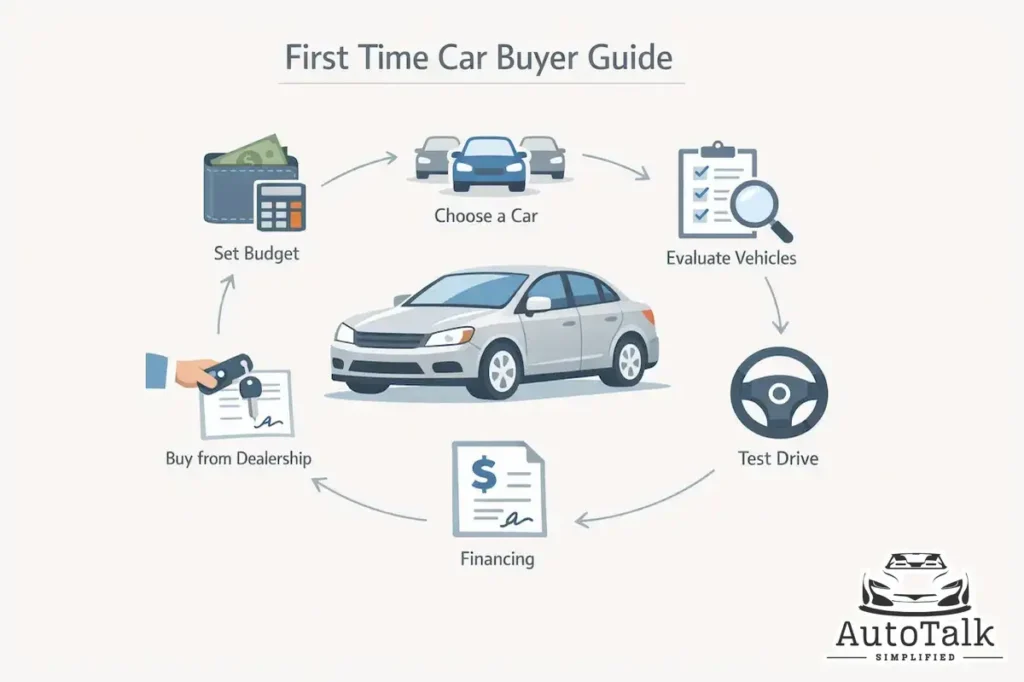
Buying a used car can feel uncertain when you are new to the process. Many buyers worry about hidden problems, past damage, or whether the price is fair. Without a clear method, it is easy to miss details that can affect your decision later.
Knowing what to look for when buying a used car helps you evaluate a vehicle with more confidence instead of relying on guesswork. Checking the car’s condition, understanding its history, and verifying seller information are all part of the first-time car buying process.
To stay organized during this process, many beginners use a used car buying checklist so they do not overlook important areas. This makes it easier to compare different vehicles and avoid rushing into a decision.
To keep things simple, focus on four key areas:
- vehicle condition
- documentation and service history
- seller transparency
- test drive performance
What to Look for When Buying a Used Car
Knowing what to look for when purchasing a used vehicle means checking a few key areas that reveal the car’s real condition. Instead of focusing on just one part, you should evaluate the vehicle as a whole so you can spot problems early.
Used vehicles may have wear, past damage, or inconsistent maintenance, which makes careful inspection more important when choosing between a new and used car.
Most buyers follow a simple structure when deciding what to check when buying a used car. This includes:
- exterior condition
- interior wear and controls
- engine and basic mechanical signs
- vehicle history and records
- seller transparency
- test drive behavior
Each of these areas gives you different information about how the car was used and maintained. For example, exterior damage can point to past accidents, while interior wear can show how heavily the car was used. Engine condition and records help you understand maintenance history, and a test drive shows how the car performs on the road.
When you understand how these checks fit together, it becomes easier to notice issues that may not be obvious at first glance.
Inspecting the Exterior Condition
The exterior of a car can reveal signs of past damage, poor repairs, or lack of maintenance. This is one of the first areas buyers check because visible issues often point to deeper problems. These visual checks help you understand how the vehicle was treated over time.
Body Damage and Paint Inconsistencies
Look closely at the car’s body panels and paint finish. Uneven paint, color differences, or rough surfaces often suggest that part of the car was repaired after damage. Misaligned panels or uneven gaps between doors and the hood can mean the structure was affected and not restored properly.
Rust is another detail to pay attention to. Small spots may seem minor, but they can spread and lead to more serious issues over time. These signs can help you identify whether the used car accident history is complete or if some damage may not have been reported.
Lights, Mirrors, and Glass
Check all lights, mirrors, and glass surfaces for cracks or damage. Broken headlights, tail lights, or side mirrors often indicate past impact or rough handling. Even minor damage in these areas can affect safety and visibility.
Inspect the windshield carefully for chips or long cracks. Even small damage can worsen over time and may require replacement. Paying attention to these details helps you confirm how well the vehicle has been maintained. This is one of the key things to check when buying a used car.
Checking Interior Wear and Vehicle Controls
The interior condition of a car shows how carefully it was used over time. Wear inside the cabin often reflects daily usage patterns and how well the previous owner maintained the vehicle. When you know how to inspect a used car before buying, these interior details can help you quickly spot signs of heavy use or neglect.
Seat Wear and Interior Damage
Start by checking the seats, floor mats, and door panels. Excessive wear, torn upholstery, or sagging seats can indicate heavy use. If the interior condition looks much worse than the mileage suggests, it may be one of the early signs of a bad used car.
Also look for stains, unusual odors, or water marks. These can point to neglect or past issues like leaks. Small details like worn pedals or a damaged steering wheel can also reveal long-term usage.
Dashboard Electronics and Controls
Test all dashboard functions to make sure they are working properly. Check the infotainment system, air conditioning, power windows, and central locking. Warning lights that stay on after starting the car should not be ignored, especially if they belong to basic car safety features like airbags, automatic emergency braking, anti-lock braking system, and others.
Press buttons and switches to see if they respond correctly. Unresponsive controls or malfunctioning systems may indicate electrical issues or poor maintenance. When you compare interior condition with mileage and features, it becomes easier to follow a used car inspection checklist and identify anything that does not match your expectations.
Evaluating the Engine and Mechanical Components
Basic engine checks can help you understand how well the car has been maintained. You do not need technical expertise to notice common warning signs. Even simple observations around the engine can reveal issues that may not be visible from the outside.
Fluid Leaks and Engine Condition
Start by looking under the car and around the engine area for any visible leaks. Spots or stains on the ground may indicate leaking oil, coolant, or other fluids. Inside the engine bay, check for wet or greasy areas around components, which can signal ongoing leaks.
Pay attention to how clean the engine looks. A very dirty engine may suggest poor maintenance, while an overly cleaned engine could sometimes hide leaks. These checks help you understand whether the vehicle has been cared for consistently, especially when you compare what you see with the used car maintenance records.
Battery and Belt Condition
Check the battery terminals for corrosion, which appears as a white or powdery buildup. This can affect starting performance and may indicate that the battery has not been maintained properly.
Look at visible belts for cracks, fraying, or looseness. Worn belts can lead to performance issues if not replaced on time. These observations help you understand what to check when buying a used car from a mechanical standpoint.
If you are unsure about what you are seeing, it can be helpful to have a professional inspect the car before making a decision. A quick inspection by a mechanic can confirm whether the vehicle is in good condition or if there are hidden issues.
Reviewing Vehicle History and Documentation
Checking documents helps you confirm the car’s past and verify the information provided by the seller. This step is important because some issues are not visible during inspection and can only be found through records.
Start by reviewing accident history, title status, and ownership details. These records can show whether the car has been involved in major incidents, how many owners it has had, and whether there are any legal concerns. When you focus on checking the service history of a used car, you can better understand how regularly the vehicle was maintained.
Service records are especially useful because they show whether routine maintenance like oil changes and inspections were done on time. Missing or inconsistent records may indicate gaps in maintenance that could lead to future issues.
Questions to Ask the Seller
Asking clear questions helps you understand how the car was used and maintained. Preparing a set of questions to ask when buying a used car can help you uncover details that may not be immediately visible.
You can ask:
- Has the vehicle been involved in any accidents?
- Are maintenance records available?
- Why is the vehicle being sold?
- Has the car required any major repairs?
The answers should align with the car’s condition and available documents. If something does not match, it may be a sign that more information is needed before making a decision.
Verifying Information with the Dealer
The questions you ask a dealer about the car’s history are only one part of the process. You still need to verify whether the information provided is complete and accurate.
Ask for supporting records, ownership details, and any available inspection reports. Compare these details with what you observed during your inspection, including the car’s condition and maintenance history.
If something does not match or feels unclear, take time to verify before moving forward. Small gaps in information can sometimes point to larger issues that may not be immediately visible.
Warning Signs Buyers Should Not Ignore
Some warning signs can point to deeper problems that are not immediately visible. These issues may not stand out during a quick inspection but can lead to expensive repairs later. Many of these problems appear as common used car red flags that buyers often overlook.
Paying attention to these early signs helps you avoid vehicles that may become difficult or costly to maintain. Understanding these indicators makes it easier to identify risks before making a final decision.
Inconsistent Mileage
Mileage should match the car’s overall condition and service records. If the interior looks heavily worn but the mileage is low, it may indicate inaccurate reporting or tampering.
Warning Lights on the Dashboard
Dashboard warning lights should not be ignored. Lights related to the engine, brakes, or airbags can signal underlying issues that need attention. Even if the car drives normally, these warnings may point to problems that require repair.
Unusual Engine Behavior
Pay attention to vibrations, delayed acceleration, or unusual noises while the car is running. These signs can indicate mechanical problems that may affect performance and reliability over time.
Signs of Water or Flood Damage
Look for a musty smell, damp carpets, or corrosion in hidden areas. These can indicate past flooding, which can lead to electrical and structural issues that are difficult to fix.
Recognizing these warning signs helps you understand what to avoid when buying a used car and reduces the risk of choosing a vehicle with hidden problems.
Why a Test Drive Is an Essential Step
A test drive helps you understand how the car actually behaves on the road. Visual checks can reveal condition, but driving the car shows how it performs in real situations. This step helps confirm whether the vehicle meets your expectations.
Start by paying attention to braking response. The car should slow down smoothly without vibration or noise. Next, observe the steering. It should feel stable and responsive without pulling to one side.
Acceleration should be smooth and consistent. Delays, jerks, or unusual sounds can indicate underlying issues. Also listen carefully for noises from the engine, suspension, or brakes while driving over different road surfaces.
These observations help you confirm what to look for when buying a used car beyond what you can see during inspection. Paying attention to these details during a drive makes it easier to evaluate the car confidently, especially when you understand the right way to test drive a car.
Simple Used Car Inspection Checklist for Beginners
A simple checklist helps you stay organized and avoid missing important details during inspection. Instead of trying to remember everything, you can follow a clear structure and evaluate each area step by step.
Many first-time buyers rely on a used car buying checklist to compare different vehicles and make more confident decisions. When you follow a structured approach, it becomes easier to notice patterns and identify potential issues.
Use this used car inspection checklist as a quick reference:
- Exterior inspection
Check for dents, uneven paint, rust, and damage to lights or glass. - Interior condition
Look for seat wear, odors, damaged controls, and overall cabin condition. - Engine and fluid condition
Check for leaks, unusual sounds, battery condition, and visible wear. - Vehicle history documents
Review accident records, ownership details, and service history. - Questions for the seller
Ask about past repairs, maintenance, and the reason for selling. - Test drive observations
Evaluate braking, steering, acceleration, and unusual noises.
Following this checklist makes the inspection process simpler and helps ensure that nothing important is overlooked.
Frequently Asked Questions
What to look for when buying a used car
You should check the car’s condition, service history, and on-road performance. Focus on the exterior, interior, engine condition, and documents to understand how the vehicle was used and maintained.
Knowing what to look for when buying a used car helps you identify potential problems early and make a more confident decision.
What are the red flags when buying a used car?
Common red flags include inconsistent mileage, warning lights on the dashboard, unusual engine behavior, and signs of water damage. These issues may indicate deeper problems that are not immediately visible.
Recognizing these warning signs early can help you avoid costly repairs and unreliable vehicles.
How can you tell if a used car is well maintained?
A well-maintained car usually has consistent service records, smooth performance, and condition that matches its mileage. Regular maintenance entries and properly functioning components are good indicators.
Comparing service history with the current condition helps you confirm whether the car was cared for properly.
What documents should you check before buying a used car
You should review the vehicle’s accident history, title status, ownership records, and service history. These documents help you verify the car’s past and identify any potential risks.
Checking these records carefully reduces the chances of buying a car with hidden issues.
Is a test drive necessary when buying a used car
Yes, a test drive is necessary because it helps you understand how the car performs in real conditions. It allows you to evaluate braking, steering, acceleration, and any unusual noises.
This step confirms whether the car meets your expectations beyond what you can see during inspection.
Conclusion
Buying a used car becomes much easier when you follow a clear and structured approach. Checking the vehicle’s condition, reviewing its history, asking the right questions, and taking a proper test drive all help you understand the car beyond its appearance.
Using a checklist and paying attention to warning signs reduces the chances of unexpected problems after purchase. Each step gives you more clarity, so you can make a decision based on facts rather than guesswork.
When you understand what to look for when buying a used car, you can avoid common mistakes and choose a vehicle that fits your needs with confidence.
Not sure if the used car you’re considering is actually a good choice?
Tell me what you’ve checked so far, and I’ll help you spot anything you might be missing.