If you are new to cars or planning to buy your first vehicle, safety is one of the most important things you should look for. One safety feature you should not overlook is electronic stability control.
If you are wondering what is electronic stability control, it is a safety system designed to help your car remain stable when it starts losing control during turns, slippery road conditions, or sudden steering movements.
For example, if your vehicle begins skidding on a wet road or starts drifting away from the direction you intended, the electronic stability control system can help bring the car back under control. This helps reduce the chances of accidents caused by loss of stability.
Most modern vehicles already include ESC as part of their built-in safety technology, which is why understanding systems like this is an important part of car safety basics.
In this guide, you will learn what does electronic stability control mean, how ESC works, when it activates, what it can and cannot do, and why it matters for safer driving. Once you understand how the system works in real driving situations, the meaning becomes much easier to understand.
What Is Electronic Stability Control?
Electronic stability control is an advanced car safety feature that helps your vehicle stay moving in the direction you intended instead of sliding or drifting during difficult driving situations. This can become especially important on slippery roads, during sudden steering movements, or while taking sharp turns.
For example, if you suddenly turn the steering wheel to avoid something on the road and the vehicle starts skidding, ESC is designed to help stabilize the car before the driver fully loses control.
Electronic Stability Control Function
The main function of the electronic stability control is to improve vehicle stability when the car begins moving differently from the direction you intended.
Instead of only focusing on braking or acceleration, ESC monitors the overall movement of the vehicle while you drive. If the system detects that the car may start sliding or drifting, it quickly responds to help keep the vehicle more stable and controlled.
Most drivers never notice the system working because these corrections happen automatically in the background within seconds.
To understand this better, let’s look at what actually happens when a car starts losing control.
How Electronic Stability Control Works While Driving
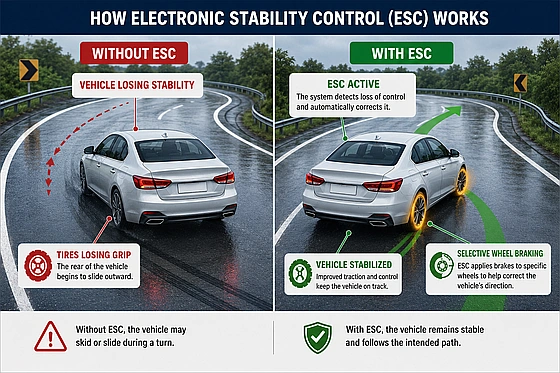
Understanding what is electronic stability control becomes easier once you see how the system works while driving and how it makes your vehicle respond. If the system detects that the car may no longer be moving the way the driver intended, it quickly steps in to help improve stability and control.
When a Car Starts Losing Control
To understand what does electronic stability control do, it helps to look at situations where a vehicle suddenly becomes unstable.
For example, imagine making a quick lane change at highway speed to avoid debris on the road. Even if you turn the steering wheel correctly, the vehicle may begin drifting or feel unstable for a moment instead of responding smoothly.
This loss of stability can happen because the tires temporarily struggle to maintain enough grip with the road during sudden movements.
How the System Detects the Problem
ESC constantly monitors steering input, wheel movement, and the direction the vehicle is actually traveling. This helps explain how does electronic stability control work in real driving situations.
The system compares where the driver intends the car to go with how the vehicle is truly moving on the road. If those movements stop matching properly, ESC recognizes that the vehicle may be starting to lose stability.
Because these checks happen continuously while driving, the system can respond very quickly when needed.
How ESC Helps You Stay in Control
Once the system detects instability, it automatically makes small corrections to help stabilize the vehicle. This is one of the main ways ESC helps prevent skidding during sudden or difficult driving situations.
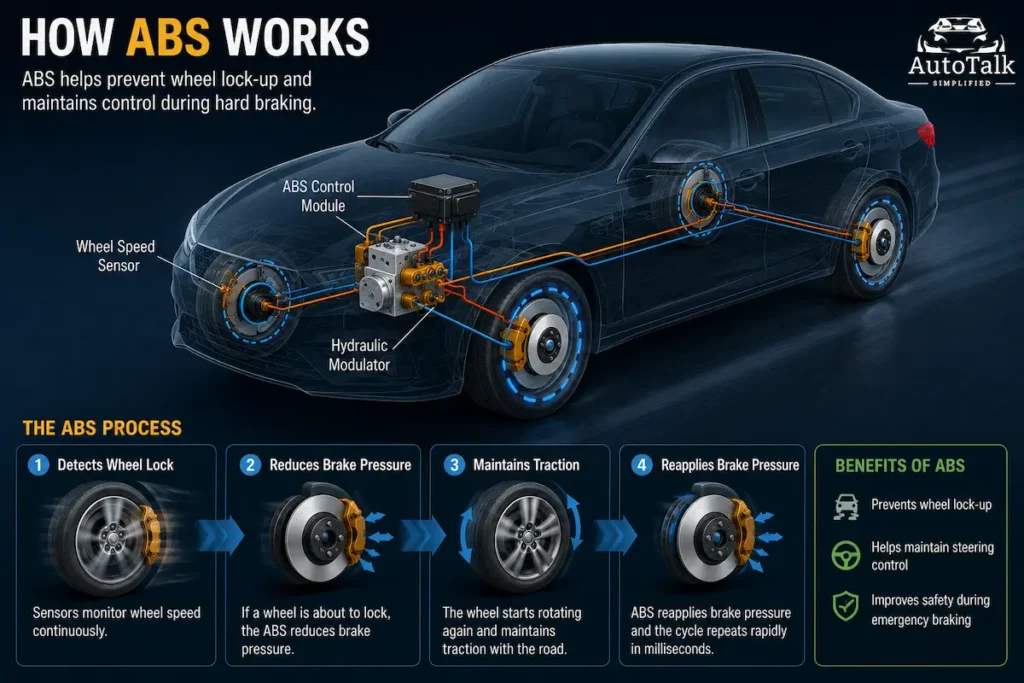
Depending on the situation, ESC may apply braking to specific wheels using systems related to the anti-lock braking system (ABS), automatic emergency braking or temporarily reduce engine power. These adjustments help the tires regain better grip so the vehicle can move closer to the direction intended by the driver.
Most of these corrections happen within moments, so the driver may only notice that the car feels more stable and controlled.
Now that you understand how esc prevents skidding during unstable situations, let’s look at when the system usually activates.
When Does Electronic Stability Control Activate?
Electronic stability control activates when the system detects that the vehicle may be starting to lose stability or move differently from the direction intended by the driver.
This usually happens during situations where the tires struggle to maintain proper grip with the road, causing the vehicle to feel unstable or harder to control.
Common Driving Situations
One common situation is taking a turn too quickly. If the vehicle begins sliding wider than expected during the turn, ESC can step in to help stabilize the car.
The system may also activate on wet or icy roads where traction becomes limited. For example, sudden steering on a slippery surface can sometimes cause the vehicle to drift unexpectedly even when the driver reacts correctly.
Another situation is a sudden lane change at higher speeds. Rapid steering movements can sometimes make the vehicle unstable for a brief moment, especially if road conditions are poor.
ESC is designed to detect these situations early and help the driver maintain better control before the instability becomes more serious.
While ESC can be very helpful during these situations, it is still important to understand the system’s limitations.
Common Limitations of Electronic Stability Control
Electronic stability control is designed to help improve your safety during situations where the vehicle may suddenly become unstable. ESC can help drivers greatly in difficult conditions, but it is still a technology with certain limitations. Knowing what this system can and cannot do helps drivers develop safer and more realistic expectations on the road.
What ESC Can Do
ESC helps improve vehicle stability when the car begins losing control during sudden steering movements or slippery driving conditions. By making small automatic corrections, the system can help the driver maintain better control and reduce the chances of severe skidding.
This extra support can become especially helpful during emergency maneuvers or unexpected road situations.
What ESC Cannot Do
ESC cannot overcome the basic limits of traction and physics. For example, driving too fast on an icy road can still cause the vehicle to slide even if the system is working properly.
The system also cannot replace safe driving habits or prevent every accident. Road conditions, tire condition, vehicle speed, and driver decisions still play a major role in overall safety.
What Happens When ESC Is Off?
When ESC is turned off, the system stops making automatic stability corrections while the vehicle is moving. This can make the car feel less stable during sudden steering movements or slippery road conditions.
For example, accelerating too aggressively on wet roads or loose surfaces can increase the chances of wheel slip or loss of control without ESC actively helping in the background.
This is why ESC is generally most effective when left enabled during normal everyday driving.
When ESC May Not Work Properly
There are situations where ESC may become less effective because the tires have very little traction available to work with.
For example, black ice, deep snow, loose gravel, standing water, or muddy roads can make it much harder for the tires to maintain proper grip. In these situations, ESC may still try to help stabilize the vehicle, but traction can remain very limited.
The system may also not work properly if important sensors become damaged or stop functioning correctly.
Warning Signs to Be Aware Of
Most vehicles have an ESC warning light on the dashboard. A flashing light usually means the system is actively helping stabilize the vehicle during difficult driving conditions.
However, if the warning light stays on continuously, it may indicate that the system needs inspection or is temporarily unavailable.
Understanding these limitations makes it easier to see where ESC helps most and why it works best alongside safe driving habits.
Why Electronic Stability Control Matters for Safety
Road conditions can change very quickly while driving. A sudden lane change, a slippery road, or an unexpected steering movement can sometimes cause a vehicle to become unstable within seconds. This is where understanding what is electronic stability control becomes important for everyday drivers.
ESC is designed to help drivers maintain better control during situations where the vehicle may otherwise begin sliding, skidding, or drifting away from the intended direction.
Some important safety benefits of ESC include:
- helping reduce severe skidding during unstable driving situations
- improving control during sudden lane changes or emergency steering
- helping the tires maintain better grip on slippery roads
- supporting more stable vehicle movement during sharp turns
These automatic corrections can help the vehicle stay more controlled during moments where stability becomes difficult to maintain. This is one of the clearest examples of how ESC improves vehicle stability during challenging driving conditions.
Although ESC cannot prevent every accident, the system can provide valuable support during situations where maintaining control becomes critical for driver safety.
You may also hear ESC compared with another safety system called traction control.
ESC vs Traction Control
Electronic stability control and traction control are closely related safety systems, which is why many drivers confuse them. However, both systems are designed to help the vehicle in different ways.
The main difference between traction control and ESC is that traction control mainly focuses on reducing wheel spin during acceleration, while ESC focuses on overall vehicle stability and directional control.
For example, if you press the accelerator too hard on a slippery road and the tires begin spinning, traction control helps reduce wheel slip and restore grip.
ESC works differently. Instead of only focusing on wheel spin, the system monitors how the entire vehicle is moving. If the car begins sliding, drifting, or moving differently from the direction intended by the driver, ESC steps in to help stabilize the vehicle.
Both systems often work together in modern vehicles because maintaining traction and maintaining stability are closely connected during difficult driving situations.
Frequently Asked Questions
Is electronic stability control always active while driving?
In most modern vehicles, ESC stays active automatically whenever the car is running. If you are wondering what does ESC do in a car while driving, the system continuously monitors vehicle movement and only steps in when it detects signs of instability or loss of control.
Can electronic stability control prevent all skidding?
No. ESC can help reduce the chances of severe skidding, but it cannot completely prevent it in every situation. Extremely slippery roads, excessive speed, or very poor traction can still cause a vehicle to lose control.
Why does the ESC warning light turn on?
An ESC warning light may turn on when the system is actively helping stabilize the vehicle during difficult driving conditions. However, if the light stays on continuously, it may indicate a system issue or that ESC is temporarily unavailable.
Is electronic stability control the same as traction control?
No. Although both systems work together in many vehicles, they serve different purposes. Traction control mainly helps reduce wheel spin during acceleration, while ESC focuses on maintaining overall vehicle stability and directional control.
Do all cars have electronic stability control?
Many drivers researching what is electronic stability control also wonder whether the system comes standard in all vehicles. Most modern vehicles now include ESC as a standard safety feature. In the United States, electronic stability control became widely required in passenger vehicles starting around the 2012 model year. However, some older vehicles produced before that time may not include ESC, especially older base-model cars or budget vehicles.
Conclusion
Electronic stability control is designed to help drivers maintain better control of the vehicle during situations where the car may begin sliding, skidding, or becoming unstable. Understanding what is electronic stability control becomes especially important once you realize how quickly difficult driving situations can happen on the road.
By helping improve vehicle stability during sudden steering movements or slippery driving conditions, ESC provides an added layer of safety support in many modern vehicles.
While the system cannot replace careful driving habits, it can help drivers stay more controlled during situations where stability becomes harder to maintain. The more you understand how ESC works, the easier it becomes to drive with greater confidence and awareness.