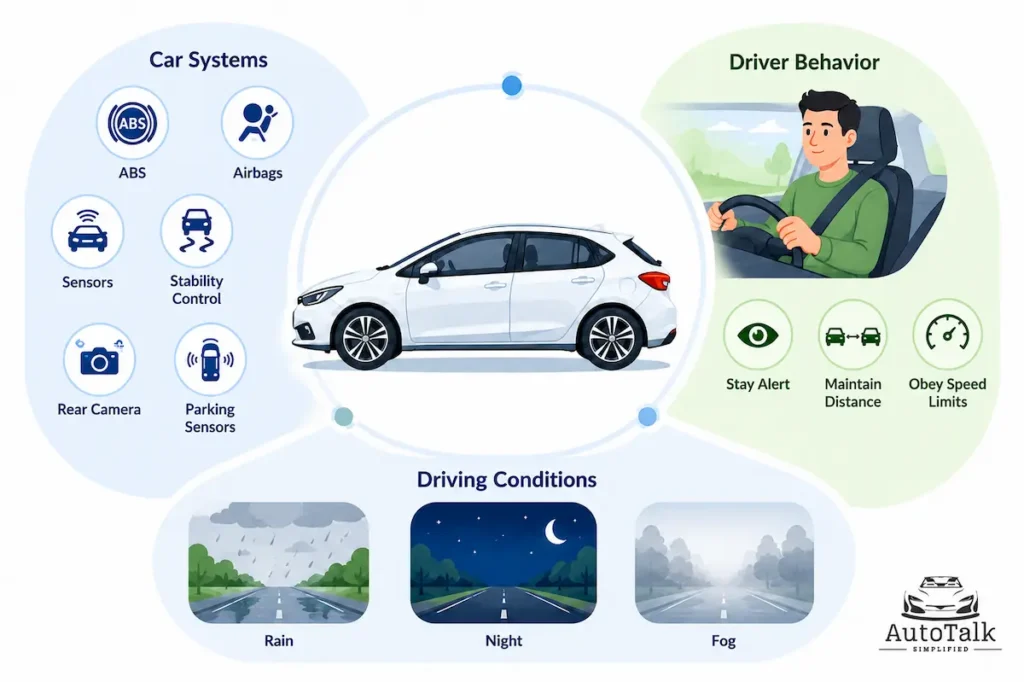
Many drivers know airbags are important, but fewer understand how do airbags work during an actual crash. Airbags are designed to inflate within milliseconds during a serious impact to help protect passengers from hitting hard parts of the vehicle.
Modern vehicles use airbags as part of a larger safety system designed to help reduce injuries during sudden accidents.
In simple terms, airbags act like protective cushions that quickly expand between passengers and hard interior surfaces during a collision. This helps reduce the force experienced by the body.
But what actually happens during a crash?
Let’s break this down in a simple way so you can clearly understand how airbags work and how they protect you.
What Are Airbags in a Car?
Airbags are built-in safety devices designed to help protect drivers and passengers during serious collisions. In most modern vehicles, airbags are placed in areas such as:
- the steering wheel
- dashboard
- side doors
- seat sides
- and roof areas near the windows
The airbag meaning in car safety systems is fairly simple. Airbags are designed to inflate extremely quickly during certain types of crashes to create a protective cushion between you and hard parts of the vehicle interior.
For example, if a car suddenly crashes into another vehicle or obstacle, the driver and passengers continue moving forward because of momentum. The airbag expands in front of the body to help soften the impact of the collision.
Modern airbags in cars protect different body areas depending on the type of impact. Front airbags mainly help protect the head and chest during frontal collisions, while side airbags can help reduce injury during side impacts.
Why Airbags Are Important
Airbags are important because they help reduce the force your body experiences during a sudden impact. Even moderate-speed collisions can move the body forward violently.
For example, if a driver suddenly hits another vehicle in stop-and-go traffic, the body can move toward the steering wheel almost instantly. Airbags help cushion that movement before the direct impact occurs.
This is one of the main reasons modern vehicles use airbags as part of a larger safety system. They are designed to help lower the risk of serious injuries during certain types of crashes, especially when used together with seatbelts.
Now that you understand what airbags are and why they matter, let’s look at how they actually work during a collision.
How Do Airbags Work in a Car?
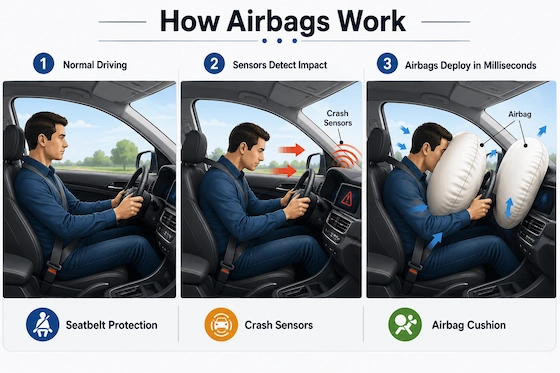
The process behind how do airbags work happens incredibly fast during a serious collision. From detecting the crash to fully inflating the airbag, the entire sequence usually takes only a few milliseconds.
To make this easier to understand, let’s look at what happens step by step when the system detects a major impact.
Step 1: Sensors Detect the Collision
Modern vehicles use sensors to monitor sudden changes in speed and vehicle movement. If the car experiences a strong impact or rapid deceleration, the system quickly determines whether the collision is serious enough to deploy the airbags.
For example, if you suddenly crash into another vehicle at an intersection, the sensors can recognize the force of the impact almost instantly.
Step 2: The Airbag Inflates Almost Instantly
Once the system detects a serious collision, the airbag rapidly fills with gas and expands outward toward the driver or passenger.
This happens because the human body naturally continues moving forward during a sudden stop. The airbag must fully expand before the person reaches hard interior parts of the vehicle.
Understanding how airbags inflate during a crash helps explain why deployment happens so quickly. The system only has a fraction of a second to cushion the impact.
This entire process happens faster than you can blink.
What Happens After Inflation
Many people assume the airbag stays fully inflated after deployment, but that is not how the system is designed to work.
After expanding, the airbag quickly releases gas and begins deflating almost immediately. This helps reduce pressure on the body and allows passengers to move more safely after the initial impact. Quick deflation also improves visibility and helps passengers exit the vehicle afterward.
Now that you understand the deployment process, let’s look at what is the purpose of airbags and how they actually help protect drivers and passengers during a crash.
What Do Airbags Do to Protect You?
What do airbags do? They help reduce injury by cushioning the force of a crash before your body hits hard parts of the vehicle. During a serious impact, airbags provide a softer surface between occupants and hard interior parts.
How Airbags Reduce Injury
Airbags reduce injury in accidents by spreading the force of impact across a larger surface of the body instead of letting one area take the full hit. This helps reduce head and chest injuries during frontal crashes.
How Airbags Work With Seatbelts
Airbags do not work alone. The airbags and seatbelt safety relationship is important because the seatbelt holds you in position while the airbag cushions the crash.
According to the National Highway Traffic Safety Administration (NHTSA), airbags are considered “supplemental protection” and are designed to work together with seatbelts rather than replace them.
If you are wearing a seatbelt properly, your body stays closer to the correct position for the airbag to protect you effectively.
Without a seatbelt, the body can move too far forward before the airbag fully deploys, which may reduce the protection the system can provide.
Understanding this makes it easier to see why airbags are designed the way they are.
When Do Airbags Deploy?
Many beginners assume when do airbags deploy simply means “any time a crash happens,” but airbags are not designed to activate during every collision. The system deploys airbags only when sensors detect a higher risk of injury.
Situations Where Airbags Usually Deploy
In most cases, airbags deploy during:
- moderate to severe frontal collisions
- certain side impacts
- strong impacts or rapid deceleration
For example, if you suddenly crash into another vehicle at higher speed or hit a solid object with significant force, the airbag system may determine that extra protection is necessary and deploy the airbags within milliseconds.
The deployment depends on factors such as:
- crash severity
- direction of impact
- vehicle speed
- and sensor readings during the collision
Situations Where Airbags May Not Deploy
Airbags often do not deploy during:
- small jerks
- low-speed bumps
- minor fender benders
- parking lot impacts
- or certain low-force collisions
For example, if a driver lightly bumps another vehicle while parking or experiences a small rear-end tap in slow-moving traffic, the impact may not be severe enough for the system to activate the airbags.
But Why Don’t Airbags Deploy in Every Accident?
Airbags are designed to balance protection with crash severity. Sensors continuously evaluate the force of the collision and determine whether deployment is actually necessary.
In smaller impacts, the seatbelt alone may already provide enough protection without needing airbag deployment.
In general, airbags are mainly designed for more serious crashes where the risk of the driver or passengers hitting hard interior parts becomes much higher.
It is also important to understand that if a vehicle experiences a major collision with significant force and the airbags still do not deploy, there could be a problem with the airbag sensors or another part of the safety system. In that situation, the vehicle should be professionally inspected to identify possible issues.
Now that you understand when airbags deploy, let’s look at what airbags can and cannot do during a crash.
What Airbags Can and Cannot Do (Important for Beginners)
Airbags are designed to reduce injury risk during serious collisions, but they are not capable of preventing every injury or protecting passengers in every situation. Understanding these limitations helps create more realistic safety expectations.
What Airbags Can Do
Airbags help cushion the body during a sudden impact and reduce direct contact with hard interior surfaces inside the vehicle.
In many serious crashes, airbags can help:
- reduce head and chest injuries
- lower the force of impact on the body
- help protect drivers and passengers during frontal or side collisions
- work together with seatbelts to improve overall protection
Understanding how airbags work to protect passengers during serious crashes makes it easier to see why they are such an important part of modern vehicle safety.
What Airbags Cannot Do
Even though airbags improve safety, they cannot completely prevent injuries during every accident.
For example, airbags:
- cannot eliminate all crash injuries
- do not deploy in every collision
- cannot fully protect passengers during extremely severe impacts
- cannot replace careful driving habits
Airbags reduce injury severity, but they cannot make crashes harmless. You can still experience bruising or minor burns during deployment because airbags inflate with significant force.
Why Proper Seating Matters
The position of the driver or passenger inside the vehicle also affects how safely airbags work.
Sitting too close to the steering wheel or dashboard can increase the risk of injury during deployment because airbags expand with significant force in a very short amount of time.
For better protection:
- drivers should maintain a comfortable distance from the steering wheel
- passengers should sit properly upright
- children should always use age-appropriate seating and restraints
These positioning habits help the airbag system protect occupants more effectively during a collision.
Airbags are only one part of a collective safety system inside your vehicle.
How Airbags Work With Other Safety Systems
Airbags are most effective when combined with other vehicle safety features designed to improve passenger protection and vehicle control. Safe driving habits and proper following distance further reduce injury risk.
The car airbag system becomes most effective when other safety systems inside the vehicle are also functioning properly.
Systems That Work Together With Airbags
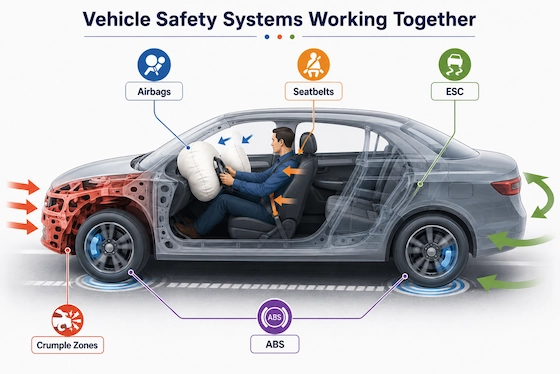
Seatbelts are one of the most important systems that work alongside airbags.
During a collision, the seatbelt helps keep you in the correct position while the airbag cushions the impact. Without the seatbelt, the body can move too far forward or shift incorrectly before the airbag fully deploys.
The overall structure of the vehicle also plays an important role. Modern vehicles are designed with crumple zones and reinforced passenger areas that help absorb and redirect crash energy away from occupants.
Understanding how do airbags work to protect passengers becomes easier when you see how airbags, seatbelts, and other vehicle safety systems are designed to work together during serious collisions.
Supporting Safety Features
Other safety technologies can also help reduce the chances of severe collisions happening in the first place.
For example:
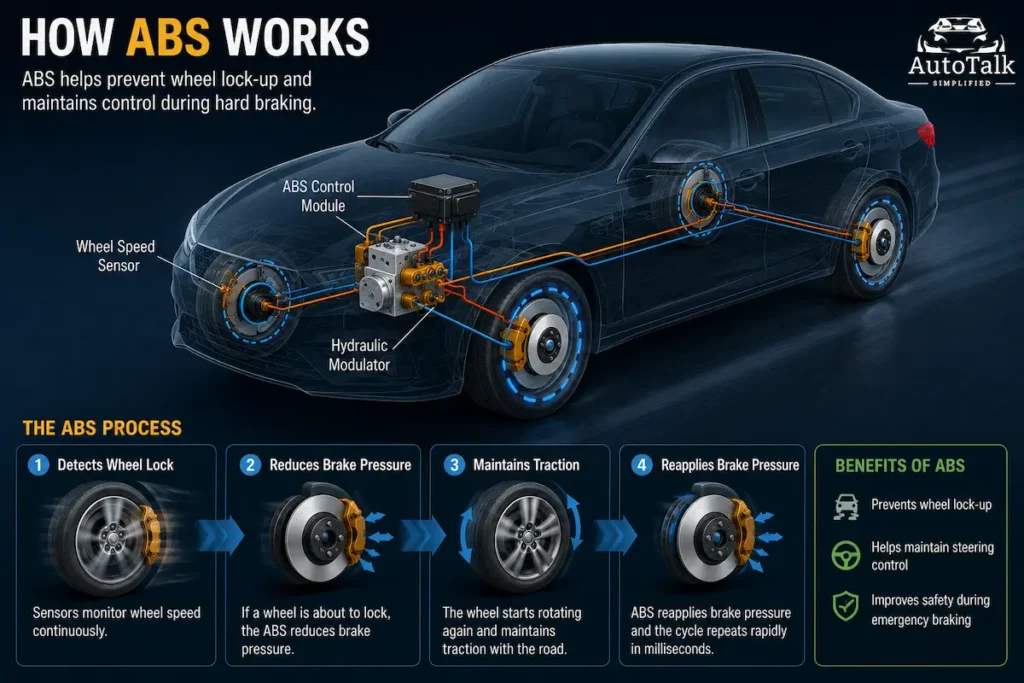
- Anti-lock Braking Systems (ABS) help drivers maintain steering control during hard braking
- Electronic Stability Control (ESC) helps reduce loss of vehicle control during sudden maneuvers or slippery road conditions
These systems do not replace airbags, but they support overall vehicle safety by helping drivers maintain better control before a collision occurs. Together, these systems improve overall vehicle safety.
Now let’s answer some common beginner questions about airbags.
Frequently Asked Questions
What Is the Purpose of Airbags in a Car?
The main purpose of airbags is to help reduce injury risk during serious collisions. They create a protective cushion between passengers and hard interior parts of the vehicle and work together with seatbelts to improve safety during an impact.
Do Airbags Deploy in Every Accident?
No. Airbags usually deploy only during moderate to severe impacts where sensors detect a higher risk of injury. Minor bumps, low-speed impacts, or small fender benders may not trigger deployment.
Are Airbags Safe for All Passengers?
Airbags are generally safe when passengers are seated properly and wearing seatbelts. However, incorrect seating positions can increase injury risk during deployment.
Can Airbags Work Without Seatbelts?
Airbags can still deploy without seatbelts, but they are much less effective. Seatbelts help keep your body in the correct position so the airbag can protect you properly during a collision.
What Happens if an Airbag Fails to Deploy?
If a vehicle experiences a major collision and the airbags do not deploy, there could be a problem with the sensors or airbag system. The vehicle should be professionally inspected after the accident.
How Fast Do Airbags Deploy?
Airbags deploy within milliseconds of a serious collision being detected. The process happens almost instantly, helping protect occupants before they move significantly during the impact.
Conclusion
Understanding how do airbags work helps you better understand how modern vehicles are designed to protect drivers and passengers during serious collisions.
But they can not prevent every injury or deploy during every accident. They are built to reduce the force of impact during more severe crashes and work together with seatbelts and other vehicle safety systems to improve protection.
Knowing:
- when airbags deploy
- how they inflate
- what they can and cannot do
- and why proper seating matters
can help you make safer decisions as a driver or passenger.
Modern vehicles include multiple safety systems designed to improve protection, but safe driving habits still remain one of the most important parts of reducing accident risk.