Car safety basics for beginners mean understanding how your car protects you and how you can drive in a way that reduces risk every time you are on the road. It is not only about avoiding accidents. It is about knowing how safety systems work, how your behavior affects control, and how road conditions change your driving.
If you are new to driving, learning these basics early helps you feel more confident and make better decisions. Modern cars already have many safety features built in, but they work best when you understand what they do and when to rely on them. This is where car safety tips for beginners become useful, as they help you apply this understanding in real driving situations.
At the same time, simple habits like staying alert and keeping a safe distance play an equally important role in how to stay safe while driving. These small actions can prevent many common driving mistakes.
In this beginner car safety guide, you will learn how car safety features, driver behavior, and driving conditions work together to keep you safe. Once you understand these three parts, it becomes much easier to stay in control in everyday driving situations.
Understanding Car Safety Basics for Beginners
Car safety basics for beginners ensure that safety is not just about what happens during an accident but about how you reduce risk every time you drive. In simple terms, safety is about staying in control, being aware of your surroundings, and making better decisions on the road.
What Car Safety Really Means
When you think about car safety basics, it helps to look beyond accidents. Safety is about reducing risk before something goes wrong. This includes being prepared, staying focused, and understanding how your car behaves in different situations.
This is where understanding car safety basics becomes important. It helps you recognize risks early and respond in a safer way instead of reacting at the last moment.
The 3 Parts of Car Safety
To understand safety clearly, it can be broken into three parts:
- Your car → the safety systems built into your vehicle
- Your driving behavior → how you react and make decisions
- Road and environmental conditions → factors like weather, traffic, and visibility
These are some of the most important things to know about car safety before driving, especially if you are just starting out. Each part plays a different role, but they all work together to shape how safe your driving experience will be.
For example, even if your car has advanced safety systems, poor driving habits or bad road conditions can still increase risk. On the other hand, good awareness and control can help you avoid many problems before they happen.
Understanding this structure gives you a clear basic car safety guide that you can apply in real driving situations.
How Cars Keep You Safe (Understanding Safety Systems)
Cars keep you safe by using built-in systems that help prevent accidents and reduce injury when something goes wrong. These systems are a core part of car safety features, and they work automatically while you focus on driving.
Braking and Stability Systems
Braking and stability systems help you stay in control of your car, especially when the road is slippery or when you need to react quickly. These systems are designed to prevent loss of control and improve how your car responds during sudden situations.
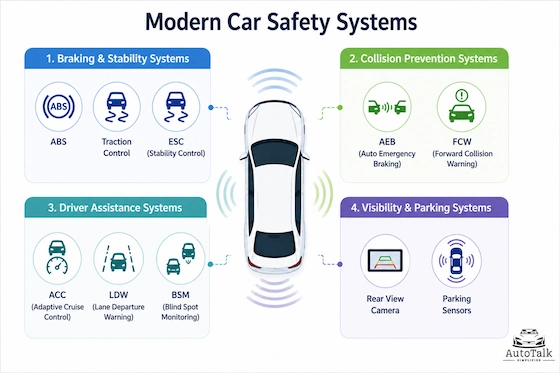
Some of the most common braking and stability systems you will find in modern cars are:
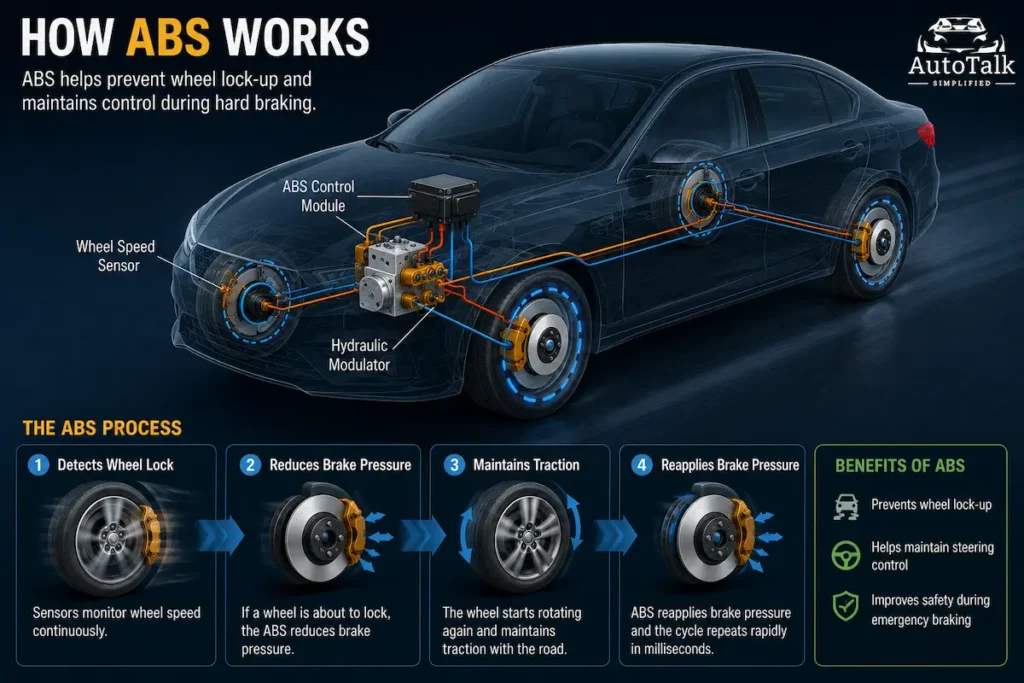
Anti-lock Braking System (ABS)
Anti-lock braking system prevents your wheels from locking when you brake suddenly. This helps you maintain steering control and reduces the chances of skidding.
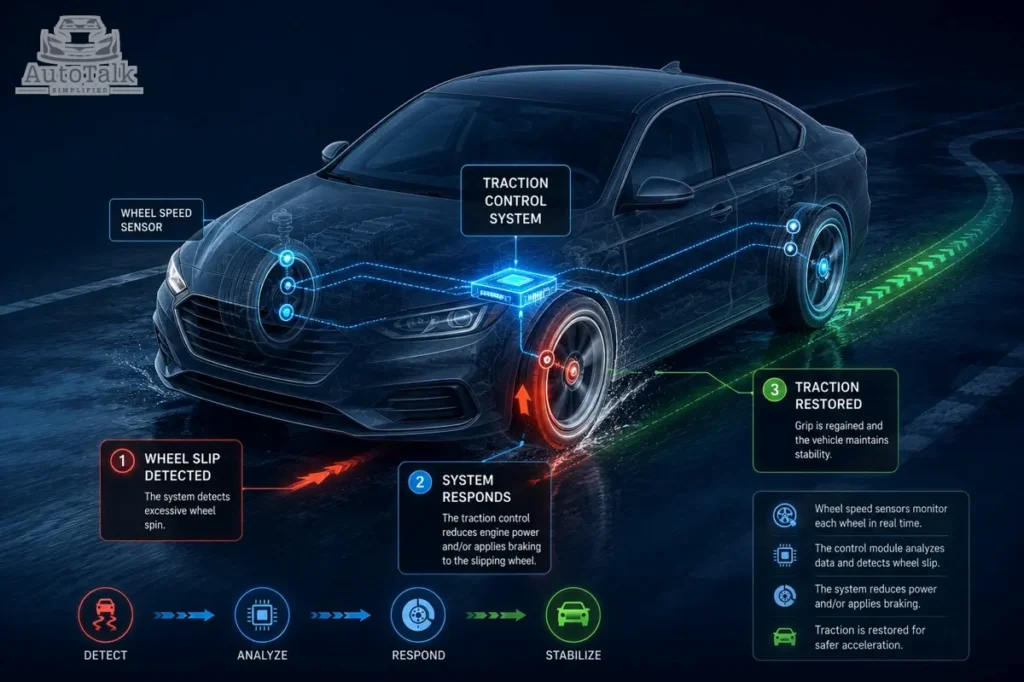
Traction Control
Traction control prevents your wheels from spinning when grip is low, such as on wet or slippery roads. It helps your car maintain better contact with the road surface.
Electronic Stability Control (ESC)
Electronic stability control helps keep your car stable during sharp turns or sudden maneuvers. It automatically adjusts braking to individual wheels to prevent the car from sliding or losing control.
These systems can work both individually and together. In many situations, they support each other to maintain traction and stability, which helps you stay in control during braking or sharp turns.
Collision Prevention Systems
Collision prevention systems are designed to detect potential risks ahead and help you avoid accidents. They either warn you early or take action when there is not enough time to react.
Some of the key systems in this category include:
Automatic Emergency Braking (AEB)
The automatic emergency braking detects a possible collision ahead and automatically applies the brakes if you do not react in time. This can help avoid a crash or reduce its impact.
Forward Collision Warning (FCW)
The forward collision warning system monitors the road ahead and alerts you if a collision is likely. It gives you time to react by slowing down or braking.
These systems often work together by first warning you and then applying brakes if needed. This layered response helps reduce the chance of a collision or lowers its impact.
Driver Assistance Systems
Driver assistance systems support you during everyday driving by improving awareness and helping you manage the car more easily. They are especially useful in traffic and long driving situations.
Some commonly used driver assistance systems are the following:
Adaptive Cruise Control (ACC)
The adaptive cruise control automatically maintains your speed and adjusts it to keep a safe distance from the vehicle ahead. It reduces the need for constant acceleration and braking.
Lane Departure Warning (LDW)
The lane departure warning system alerts you if your car starts drifting out of its lane without signaling. This helps you correct your direction before it becomes unsafe.
Blind Spot Monitoring (BSM)
The blind spot monitoring system detects vehicles in areas that are hard to see in your mirrors. It alerts you when it may not be safe to change lanes.
These systems assist you but do not replace your control. They provide extra awareness and support, helping you make safer decisions while driving.
Visibility and Parking Safety Systems
Visibility and parking systems help you see areas around your car that are difficult to notice directly. This is especially important during reversing and parking.
Some of the most common systems include:
Rear-View Camera
A rearview camera shows a live view of what is behind your car when you reverse. It helps you avoid obstacles and improves awareness in blind spots.
Parking Sensors
Parking sensors detect nearby objects and alert you with sounds or warnings. They help you judge distance and avoid hitting objects while parking.
These features improve visibility and reduce the chances of minor accidents in tight spaces. They make it easier to judge distance and avoid obstacles.
Passive Safety Systems
Passive safety systems are designed to protect you when an accident happens. Unlike other systems, they do not prevent accidents but reduce the severity of injuries.
The most common passive safety system is the following:
Airbags
Airbags deploy instantly during a crash to reduce the force of impact. They act as a cushion between you and hard surfaces inside the car.
Airbags work together with seatbelts to improve protection. They are designed to reduce injury during sudden impacts.
How These Systems Work Together
All of these systems are part of larger vehicle safety systems that are designed to work together. Instead of acting alone, they support each other based on the situation.
For example, braking and stability systems may activate together when your car starts to lose control. At the same time, collision prevention systems may warn you or assist in braking. This combined response improves safety and helps you stay in control.
Understanding how these systems connect makes it easier to see how your car helps you stay safe in different driving situations.
Safe Driving Practices Every Beginner Should Follow
Safe driving practices are the habits you follow while driving to reduce risk and stay in control. These habits are a key part of car safety basics for beginners because your decisions on the road have a direct impact on your safety.
Basic Habits That Improve Safety
Simple habits can make a big difference in how safely you drive every day. These habits help you stay prepared and respond better when something unexpected happens.
- Maintain a safe following distance from the vehicle ahead
Keeping enough distance gives you more time to react if the vehicle in front suddenly slows down or stops. This reduces the risk of rear-end collisions. - Use smooth acceleration and braking
Smooth inputs keep your car stable and easier to control. Sudden acceleration or braking can make the car unstable and increase the chances of losing control. - Stay alert and focused on the road
Staying attentive helps you notice changes in traffic, signals, or road conditions early. This improves your reaction time and helps you respond safely. - Avoid distractions like using your phone
Distractions take your attention away from driving, even for a few seconds. This increases the risk of missing important changes on the road.
Maintaining a safe following distance gives you more time to react if traffic suddenly slows down. These small actions are part of how to stay safe while driving in everyday situations.
Why Driver Behavior Matters More Than You Think
Your behavior behind the wheel plays a major role in how safe your driving is. Safety systems in your car can support you, but they cannot replace your decisions.
Learning how to drive safely for beginners is about building awareness and making better choices. Even small mistakes, like reacting late or getting distracted, can increase risk. On the other hand, good habits help prevent problems before they happen.
These habits are especially important in car safety for new drivers, as building the right foundation early makes driving safer in the long run.
Driving Conditions That Affect Your Safety
Driving conditions can change how your car behaves and how much control you have on the road. These conditions are not always in your control, so understanding them helps you adjust your driving in a safer way.
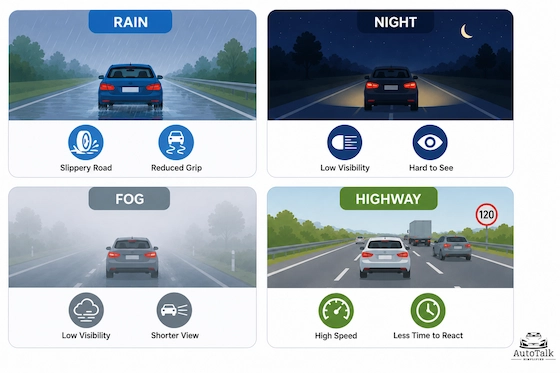
Some of the most common conditions include:
- Rain
Rain reduces tire grip, making the road slippery. This increases stopping distance and can cause your car to skid if you brake or turn suddenly. - Night
Driving at night lowers visibility, making it harder to see obstacles, pedestrians, or road signs in time. This reduces your reaction time and increases the chance of missing hazards. - Fog
Fog limits how far you can see ahead, sometimes to just a short distance. This makes it difficult to judge speed and distance, increasing the risk of sudden braking or collisions. - Highways
Higher speeds on highways mean less time to react to changes in traffic. Even small mistakes can have a bigger impact because your car is moving faster.
These are important first-time driving safety tips because beginners often need more time to adjust to changing road conditions.
Why Conditions Matter
Road and environmental conditions affect both your car and your ability to respond. Reduced grip, lower visibility, and higher speeds can increase risk if you do not adjust your driving.
This is where driving safety tips become important. You need to slow down, maintain distance, and stay more alert depending on the situation.
Understanding how conditions affect your driving helps you make better decisions and stay safer on the road.
Common Car Safety Mistakes Beginners Should Avoid
Many new drivers make small mistakes that can increase risk without realizing it. Recognizing these mistakes early helps you avoid situations that can quickly become dangerous.
Some of the most common mistakes include:
- Following too closely behind another vehicle
This reduces the time you have to react if the vehicle ahead suddenly slows down or stops. It increases the chances of rear-end collisions because you may not have enough space to brake safely. - Sudden braking or sharp acceleration
Sudden inputs can make your car unstable, especially at higher speeds or on slippery roads. This increases the risk of losing control or causing unexpected reactions from other drivers. - Ignoring road and weather conditions
Conditions like rain, fog, or heavy traffic affect how your car behaves. Not adjusting your speed or driving style in these situations can increase stopping distance and reduce control. - Using a phone or getting distracted while driving
Distractions take your attention away from the road, even for a few seconds. This reduces your reaction time and increases the chance of missing important changes in traffic.
These are examples of common car safety mistakes beginners make that often happen due to lack of experience or attention. Even though they may seem minor, they can lead to serious situations if not corrected.
Avoiding these mistakes helps you stay more in control and gives you more time to react when something unexpected happens.
How Car Safety, Driver Behavior, and Conditions Work Together
Car safety depends on how different factors come together while you are driving. Your car’s systems, your decisions, and the conditions around you all play a role in how safely you can handle a situation.
Real-World Example
For example, braking safely is not just about pressing the brake pedal. It depends on multiple factors:
- Your reaction → how quickly you notice and respond
- Your car’s system → features like ABS that help control braking
- Road condition → factors like wet or dry roads
This shows how different elements work together in a real driving situation.
Why Balance Matters
No single factor can keep you completely safe on its own. Safety systems can support you, but they cannot replace your decisions. At the same time, even good driving habits may not be enough if road conditions are challenging.
This is where car safety tips for beginners become important. You need to balance your driving behavior, understand how your car’s systems assist you, and adjust based on the conditions around you.
When all these factors work together, your chances of staying safe on the road improve.
Simple Driving Safety Tips for Beginners to Remember
Simple safety tips help you stay consistent every time you drive. These are easy to follow and can make a big difference in how safely you handle everyday situations on the road.
Some useful driving safety tips to remember are:
- Maintain a safe following distance from the vehicle ahead
Keeping enough space gives you more time to react if traffic suddenly changes. It helps you avoid sudden braking and reduces the risk of collisions. - Stay alert and focused while driving
Staying focused helps you notice signals, vehicles, and road changes early. This improves your reaction time and helps you make safer decisions. - Adjust your driving based on road and weather conditions
Conditions like rain, fog, or heavy traffic affect how your car responds. Adjusting your speed and driving style helps you stay in control in these situations. - Do not rely completely on safety systems
Safety features can assist you, but they cannot replace your attention and judgment. You still need to stay aware and make decisions based on the road.
These are practical vehicle safety tips for beginners that help you stay in control and reduce risk. Following these consistently can make your driving smoother and safer over time.
How to Build Safe Driving Habits Over Time
Building safe driving habits takes time and consistent effort. This is an important part of car safety for beginners, because good habits reduce risk in everyday driving situations and help you stay in control.
Start Slow and Build Confidence
When you are learning to drive, it is better to start in simple and less busy environments. This helps you focus on basic control without feeling overwhelmed.
Driving slowly and gradually increasing your comfort level allows you to understand how your car responds in different situations.
Practice Awareness While Driving
Awareness means paying attention to your surroundings, including other vehicles, road signs, and changing conditions. This helps you notice potential risks early. The more aware you are, the more time you have to react and make safer decisions on the road.
Consistency Matters More Than Occasional Effort
Safe driving is not about doing the right thing once. It is about doing it every time you drive. Simple habits like maintaining distance, staying focused, and adjusting your speed become effective only when you follow them consistently.
Learn From Mistakes and Improve
Mistakes are a normal part of learning, especially for new drivers. What matters is recognizing them and improving over time. Each driving experience helps you understand what to do better next time, which gradually makes your driving safer and more controlled.
Frequently Asked Questions
What are the most important car safety basics for beginners?
The most important car safety basics for beginners include understanding how your car’s safety systems work, developing safe driving habits, and adjusting your driving based on road conditions. Focusing on these three areas helps you stay in control and reduce risk while driving.
How can a new driver stay safe while driving?
A new driver can stay safe by staying alert, avoiding distractions, maintaining a safe distance, and following basic road rules. Building these habits early makes it easier to handle different driving situations confidently.
Are car safety features enough to prevent accidents?
No, car safety features are designed to assist you, but they cannot prevent all accidents. Your decisions and awareness while driving play a much bigger role in keeping you safe.
What is a common mistake beginners make?
One common mistake beginners make is not paying enough attention to their surroundings. Distractions, delayed reactions, and overconfidence can increase the risk of accidents.
Why do road conditions affect safety so much?
Road conditions affect safety because they reduce tire grip and visibility, which makes it harder to control your car and react quickly. This increases stopping distance and reduces your ability to avoid hazards.
CONCLUSION
Car safety basics for beginners come down to understanding how your car’s systems, your driving behavior, and road conditions work together. Each of these plays a role in how safely you can handle different situations on the road.
Safety improves as you become more aware of how these factors affect your driving. The more you understand your car and build safe habits, the easier it becomes to stay in control.
This car safety guide for beginners is a starting point. As you learn more about each safety feature and driving practice, you can make better decisions and drive with more confidence.