If you’ve recently been shopping for a newer vehicle, you may have come across a feature called automatic emergency braking. Many drivers searching what is automatic emergency braking are simply trying to understand whether it can help prevent an accident and how useful it really is in everyday driving.
A sudden stop in traffic can happen when you least expect it. Even attentive drivers can sometimes react a fraction of a second too late. That’s why modern vehicles now include technologies designed to provide extra support during critical situations. Understanding what does automatic emergency braking do can help you better understand the safety features available in many of today’s vehicles.
In this guide, you’ll learn what the AEB feature is, how it works, when it may activate, and the limitations every driver should know.
What Is Automatic Emergency Braking in a Car?
Automatic emergency braking (AEB) is a safety feature that can automatically apply the brakes if your vehicle detects a potential collision and you do not react in time. Its main purpose is to help avoid a front-end crash or reduce the severity of an impact when a collision cannot be prevented completely.
If you’re wondering what is AEB in cars, think of it as an extra layer of assistance that supports you during unexpected situations on the road. The feature works in the background while you drive and is designed to step in only when it detects an immediate need for braking.
Even attentive drivers can encounter situations where there is very little time to react. AEB is designed to help during those brief moments when a delayed response could increase the risk of a collision. Whether it’s heavy traffic, an unexpected stop ahead, or a momentary lapse in attention, the system can provide valuable support when every second matters.
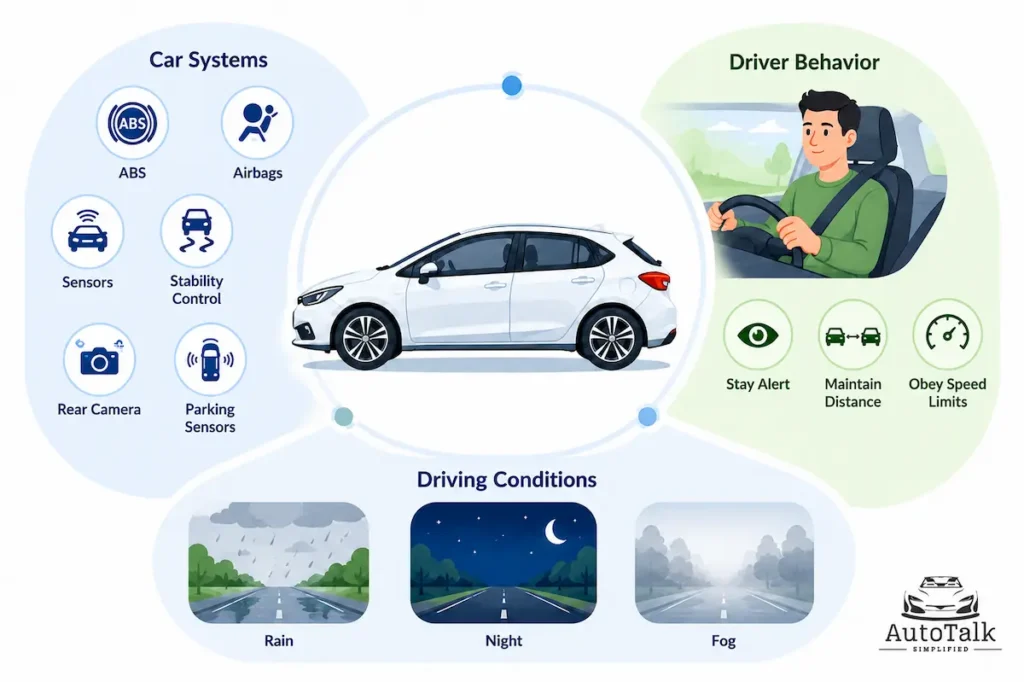
One reason modern vehicles continue to add advanced safety technologies is that many crashes happen because drivers have very little time to respond. Features like AEB are designed to help during those critical moments before a collision occurs. Along with other car safety basics, these technologies work together to make driving safer and help reduce the likelihood of serious accidents.
Simple Real-World Example
Imagine you’re driving through stop-and-go traffic on your daily commute. The vehicle ahead suddenly brakes hard because traffic has come to a standstill around a blind curve. You immediately move your foot toward the brake pedal, but your reaction is slightly delayed.
In this situation, an automatic emergency braking system may detect the danger and apply braking force before or while you’re braking yourself. Depending on the circumstances, this could help prevent a collision completely or reduce the impact speed, which may lower the severity of damage and injuries.
AEB works quietly in the background, and most drivers never notice it until a situation arises where it is needed. That is why it has become one of the most widely adopted safety features in modern vehicles.
Now that you have a basic understanding of what is automatic emergency braking, let’s look at how the system works while you’re driving.
How Automatic Emergency Braking Works While Driving
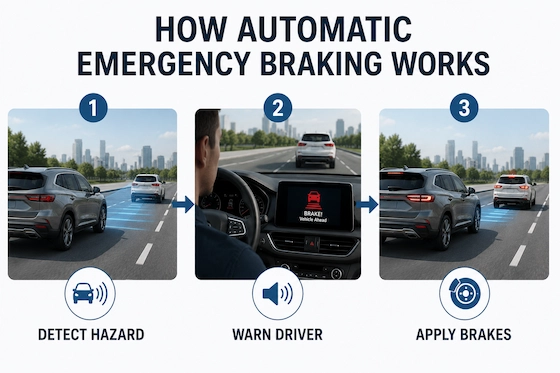
Automatic emergency braking works by constantly monitoring the road ahead and looking for situations that could lead to a collision. If the system detects a potential danger and determines that the driver may not react quickly enough, it can step in to help reduce the risk of an accident.
What Happens in Real Driving Situations
To understand what does automatic emergency braking do, imagine you’re driving through city traffic and the vehicle ahead suddenly slows down. The system first recognizes the developing risk and may alert you with a warning on the dashboard, a sound, or another visual notification.
If you respond by braking, the system may not need to intervene at all. However, if the situation becomes more serious and no action is taken, AEB can automatically apply the brakes. Depending on the circumstances, this may help avoid the collision entirely or reduce the severity of the impact.
How the System Detects Danger
If you’re wondering how does automatic emergency braking work, most systems use radar sensors, cameras, or a combination of both to monitor the road ahead. These technologies help the vehicle track nearby vehicles, pedestrians, cyclists, and other potential obstacles.
The system continuously measures factors such as distance, relative speed, and how quickly the gap between objects is changing. By analyzing this information in real time, it can identify situations where a collision may become likely and prepare to respond if needed.
How the Car Decides to Brake
Detecting a vehicle or obstacle does not automatically mean the brakes will be applied. The system must first determine whether there is a genuine risk of a collision.
To do this, it evaluates factors such as vehicle speed, closing distance, and whether the driver is already steering or braking. This is a simplified explanation of how AEB works in real driving situations. The goal is to avoid unnecessary braking while still reacting quickly when a crash appears likely.
How Braking Happens Automatically
When the system determines that intervention is necessary, it can automatically apply braking force. Some vehicles may first increase brake readiness to support the driver, while others can begin braking immediately if the collision risk is high.
Because the system can react within fractions of a second, an automatic emergency braking system may begin slowing the vehicle before many drivers would have time to fully respond. While it cannot prevent every accident, reducing vehicle speed before impact can significantly lower the severity of damage and injuries.
This entire process takes place within moments and is designed to provide extra support during situations where reaction time is limited.
Now that you understand how the system monitors traffic and responds to potential hazards, let’s look at the situations where automatic emergency braking is most likely to activate.
When Does Automatic Emergency Braking Activate?
Automatic emergency braking does not activate every time another vehicle or object appears in front of you. The system is designed to intervene only when it detects a potential collision and determines that driver action may not be enough to avoid it.
Common Trigger Situations
One of the most common situations is when traffic ahead suddenly slows down or stops. If your vehicle is approaching too quickly and the system believes a collision may occur, AEB can step in to help reduce the risk.
The feature may also activate when another vehicle unexpectedly enters your lane, when traffic comes to a sudden stop, or when an obstacle appears in the vehicle’s path. The exact conditions vary by manufacturer, but the goal remains the same: respond when a crash appears likely and reaction time is limited.
Real-World Examples
Understanding when automatic emergency braking activates in real situations becomes easier when looking at everyday driving scenarios.
For example, you may be driving in stop-and-go traffic and glance at a road sign for a moment. If the vehicle ahead brakes unexpectedly and you do not react quickly enough, the system may provide a warning and apply the brakes if necessary.
Another common example involves a pedestrian crossing the road unexpectedly. If the system detects a person in your path and calculates a high collision risk, it may intervene to help slow or stop the vehicle.
Some systems can also respond to cyclists, stationary vehicles, or other obstacles, depending on the vehicle’s design and capabilities.
Many drivers assume AEB activates whenever danger is present, but that is not always the case. Road conditions, vehicle speed, visibility, and system design can all affect how the feature responds. That is why understanding its limitations is just as important as understanding how it works.
Common Problems and Limitations of Automatic Emergency Braking
Automatic emergency braking can be a valuable safety feature, but it is important to understand that it has limits. While the system can help reduce the risk of certain collisions, it cannot detect every hazard or respond perfectly in every situation. Knowing where AEB performs well and where it may struggle helps drivers use the feature more effectively.
What the System Cannot Do
One of the biggest misconceptions about AEB is that it can prevent every accident. In reality, the system is designed to assist the driver, not replace them.
For example, AEB may not recognize every object on the road, and some situations can develop too quickly for the system to react in time. Even when the feature activates, it may only reduce vehicle speed rather than bring the vehicle to a complete stop. As a result, a collision may still occur, although the impact could be less severe.
When It May Not Work Properly
Like other vehicle technologies, AEB relies on sensors and cameras to understand what is happening around the vehicle. Certain conditions can affect how accurately those systems perform.
Heavy rain, fog, snow, glare from the sun, or poor visibility can make it harder for the vehicle to identify potential hazards. Sensors that are blocked by dirt, mud, ice, or debris may also reduce system effectiveness. In addition, higher driving speeds can leave less time for the vehicle to detect a threat and respond before impact.
These are some of the most common automatic emergency braking limitations drivers should be aware of. Because every manufacturer uses different hardware and software, performance can vary from one vehicle to another.
Important Safety Reminder
Although AEB can provide valuable assistance, it should never be viewed as a replacement for safe driving habits. Drivers still need to pay attention to the road, maintain a safe following distance, and remain prepared to brake or steer when necessary.
This is where automatic emergency braking and driver responsibility go hand in hand. The technology is designed to support the driver during critical moments, but the driver remains responsible for controlling the vehicle at all times. Treating AEB as an additional safety tool rather than a guarantee against accidents helps create safer expectations and better driving habits.
Now that we’ve covered the strengths and limitations of AEB, let’s look at what the term “AEB” means and how this feature fits into a vehicle’s broader safety system.
Can You Add Automatic Emergency Braking to Your Car?
Usually, no. Most factory-installed AEB systems are built into the vehicle’s electronics, sensors, cameras, and braking controls. Because all of these components must work together, adding a full AEB system later can be difficult and expensive.
Some aftermarket products offer collision warnings or limited braking assistance, but they typically do not provide the same level of integration or reliability as a factory-installed system.
If automatic emergency braking is a feature you want, the best approach is usually to choose a vehicle that already includes it. Many newer vehicles offer AEB as standard equipment or as part of an available safety package.
Before buying a vehicle, always check the specific trim level and safety package. AEB may be standard on one version of a vehicle but optional on another.
Now let’s look at what the term AEB actually means and how it works alongside other vehicle safety systems.
How Automatic Emergency Braking Works With Other Safety Systems
Automatic emergency braking does not work alone. Modern vehicles use several safety systems that work together during emergency situations.
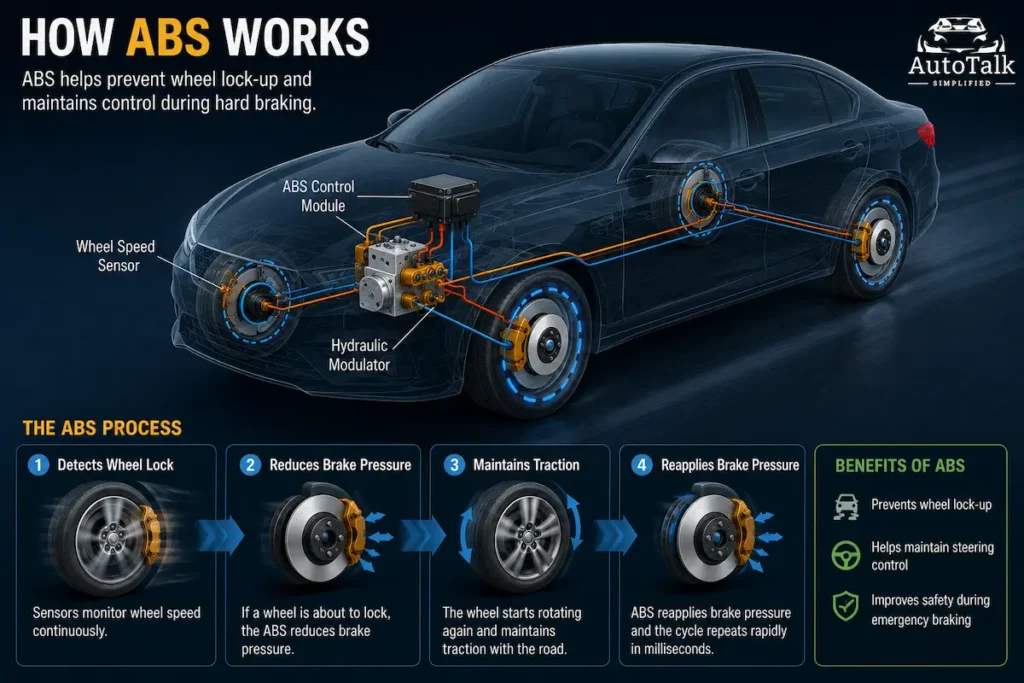
- ABS (Anti-lock Braking System) helps prevent the wheels from locking during hard braking, allowing you to maintain steering control.
- Traction Control helps reduce wheel slip on slippery surfaces such as wet or icy roads.
- Electronic Stability Control (ESC) helps keep the vehicle stable if sudden braking or steering causes a loss of control.
Think of it this way:
- AEB helps reduce collision risk.
- ABS helps you steer while braking.
- Traction Control helps maintain grip.
- ESC helps keep the vehicle stable.
Each system has a different job, but together they create multiple layers of protection that help drivers stay safer during unexpected situations.
Drivers researching what is automatic emergency braking often have questions about how the feature behaves in everyday situations. Here are answers to some of the most common ones.
Frequently Asked Questions
Can automatic emergency braking prevent all accidents?
No. Automatic emergency braking can help avoid some collisions or reduce their severity, but it cannot prevent every accident. Factors such as vehicle speed, road conditions, visibility, and driver response can all affect the outcome.
Why does my AEB warning light turn on?
An AEB warning light usually indicates that the system needs attention. Common causes include blocked sensors, dirty cameras, adverse weather conditions, or a system malfunction. If the warning remains on, consult your vehicle owner’s manual or have the system inspected.
Is automatic emergency braking always active?
In most vehicles, AEB is active whenever the vehicle is being driven. However, some manufacturers allow drivers to adjust certain settings or temporarily disable the feature. Availability and operation vary by vehicle.
Can AEB stop the car completely?
Sometimes. Depending on the vehicle, speed, and road conditions, AEB may either bring the vehicle to a complete stop or simply reduce speed before impact. Even when a full stop is not possible, reducing speed can significantly lower collision severity.
Conclusion
Automatic emergency braking is one of the most important safety features found in many modern vehicles today. By monitoring the road ahead and automatically applying the brakes when necessary, it can help reduce the risk of certain collisions and lessen the severity of others.
However, AEB is not a replacement for an attentive driver. Like any safety technology, it has limitations and works best when combined with safe driving habits and other vehicle safety systems.
Understanding what is automatic emergency braking helps you make better sense of the safety features available in today’s vehicles and what they are designed to do. Whether you’re shopping for a new car or simply learning more about your current vehicle, knowing how AEB works can help you use this technology with greater confidence and realistic expectations.