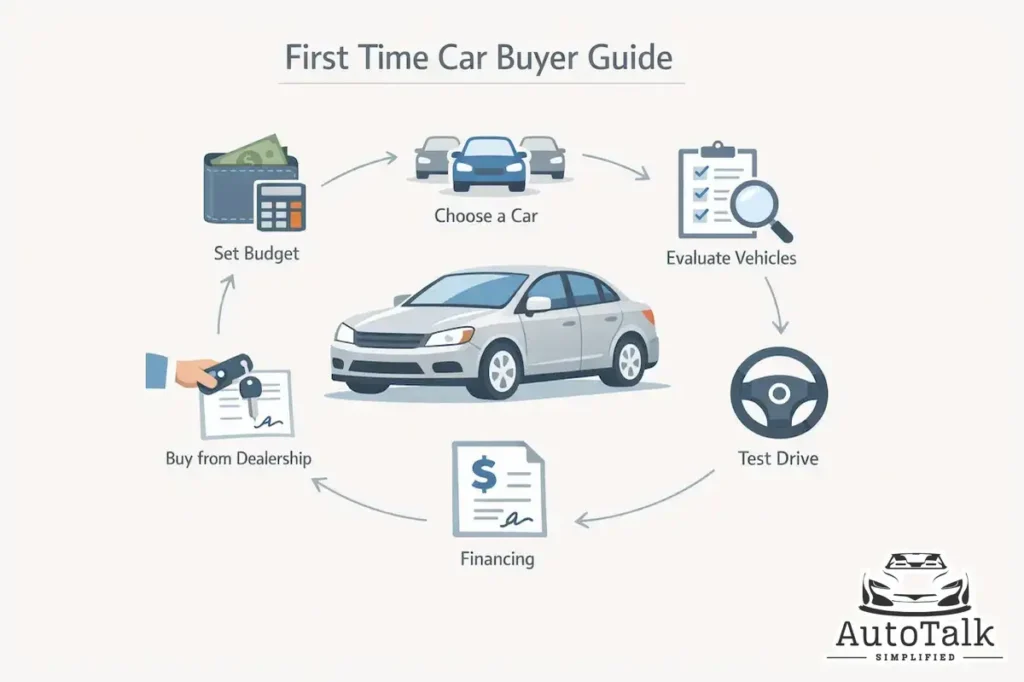
Walking into a dealership for the first time can feel uncertain, especially if you are not familiar with the steps to buying a car at a dealership. Many first-time buyers are unsure what to expect, and the process can feel confusing at first.
Dealerships, however, follow a clear and structured flow to guide you from browsing vehicles to completing the purchase. Each stage is designed to move you forward step by step, whether you are buying a new car or a used one.
Understanding how this process works helps remove that uncertainty. Instead of guessing what happens next, you can approach each stage with more clarity and confidence. This dealership experience is one part of your overall car buying journey, where each step builds toward final ownership.
This guide focuses specifically on what happens inside a dealership, from your first visit to the final delivery of your vehicle.
The typical steps to buying a car at a dealership include visiting the dealership, speaking with a salesperson, choosing a vehicle, reviewing pricing, completing the finance office process, signing paperwork, and taking delivery of the vehicle. Most dealerships follow this structured process for both new and used cars.
What to Expect Before Visiting a Car Dealership
Before visiting a dealership, it helps to understand how the experience is structured so you know what to expect when you arrive. Most dealerships organize their vehicles by type, brand, or price range, making it easier for you to explore different options in one place.
When you enter, a salesperson will usually greet you and ask a few basic questions. These questions are meant to understand your budget, driving needs, and the type of vehicle you are considering. This helps them guide you toward options that match your situation instead of showing random cars.
You are not expected to make a decision immediately. Most buyers spend time walking around, comparing vehicles, and getting familiar with available features before narrowing down choices.
The experience usually follows a clear car dealership buying process, where you start by exploring vehicles and then move step by step toward pricing and paperwork.
7 Easy Steps to Buying a Car at a Dealership
Most dealerships follow a predictable structure when guiding buyers through a purchase. While the exact experience may vary slightly, the overall flow remains consistent across different dealerships.
Understanding these stages makes it easier to follow the steps to buying a car at a dealership without feeling lost during the process. Each step builds on the previous one, helping you move from exploring vehicles to completing the purchase with more clarity.
Below are the typical stages you can expect when buying a car at a dealership.
What These Steps Look Like
- Visit the dealership and explore available vehicles
- Speak with a salesperson about your needs
- Choose a vehicle and evaluate the car
- Review pricing and dealership offers
- Complete the finance office process
- Sign paperwork and finalize the purchase
- Take delivery of the vehicle
Visiting a Car Dealership for the First Time
Visiting a car dealership for the first time usually begins with arriving at the location and getting familiar with the environment. Most dealerships have a showroom area and an outdoor lot where different vehicles are displayed for browsing.
When you walk in, a staff member or salesperson will often greet you. You are not required to start a conversation right away. Many buyers prefer to look around first and get a sense of the available options before discussing anything in detail.
This stage is mainly about exploring. You can walk through the showroom, check different models, and compare vehicle types based on size, features, or price range. This helps you understand what is available and what matches your needs.
Although the experience can feel overwhelming at first, dealerships expect buyers to take their time. Observing and comparing vehicles at this stage helps you feel more confident before moving to the next step.
Talking to a Car Salesperson and Discussing Your Needs
Talking to a car salesperson at a dealership usually begins with a simple conversation about your needs and preferences. The salesperson may ask about your budget, how you plan to use the car, and what type of vehicle you are considering.
This discussion helps narrow down your options. Based on your answers, the salesperson can suggest vehicles that match your requirements instead of showing everything available on the lot. This saves time and makes the process easier to follow.
At this stage, you are not committing to anything. The goal is to understand your choices and get a clearer idea of what fits your situation. This is also where many buyers begin to understand how to buy a car from a dealership, since they see how vehicle options are presented and explained.
Many buyers also finalize their new vs used car decision during this step, based on their needs and how much they can afford to spend.
Choosing a Car and Evaluating the Vehicle
Choosing a car at a dealership involves comparing different options before making a final decision. Most buyers look at multiple vehicles to understand differences in features, size, comfort, and price.
At this stage, you may compare trim levels, check available features like anti-lock braking system, and look at how each vehicle fits your needs. If you are considering a used car, you may also review its condition and past usage to understand its overall value.
Once you narrow down your options, the next step is usually to test drive the vehicle. Knowing how to test drive the vehicle the right way helps you evaluate how it feels on the road, including comfort, visibility, and ease of handling. A test drive gives you a better idea of whether the vehicle matches your expectations.
For used vehicles, buyers often pay closer attention to condition and details before moving forward. Knowing what to look for when buying a used car helps you evaluate the vehicle more confidently.
Discussing Price and Reviewing the Offer
Discussing price at a car dealership is the stage where you understand the full cost of the vehicle before making a decision. This usually includes reviewing the base price, dealership fees, taxes, and any additional charges that may apply.
At this point, the salesperson may also explain optional add-ons such as extended warranties or service packages. If you are trading in your current vehicle, its value may also be discussed and included in the overall pricing.
This step is important because it gives you a complete picture of what you are paying, not just the listed price of the car. Reviewing these details helps you compare options and understand how different choices affect the final cost.
It is normal for buyers to take time at this stage, ask questions, and review the offer carefully. Understanding pricing clearly is an important part of buying a car at a dealership, as it helps you make a more informed decision.
Understanding the Finance Office Process
The finance office is where you review payment options and complete the financial part of the purchase. This stage within the steps to buying a car at a dealership explains how you will pay for the vehicle, whether through full payment or financing.
If you choose financing, the finance manager will walk you through loan terms, monthly payments, and interest rates. You may also review different payment plans based on your budget. This helps you understand how your total cost is spread over time.
In addition to financing, you may be offered optional products such as extended warranties or protection plans. These are presented before finalizing the agreement so you can decide what fits your needs.
This step completes important car buying process steps before the purchase becomes official. If you are financing the vehicle, understanding how car financing works helps you review loan terms and payment options more clearly.
Signing Paperwork and Completing the Purchase
The car dealership paperwork process is the stage where the purchase becomes official. At this point, you review and sign documents related to the vehicle, payment terms, and ownership details. Taking time to read everything carefully helps you avoid confusion later.
This includes going through the purchase agreement, loan documents if you are financing, and title or registration paperwork. These documents confirm that the vehicle is legally transferred to you and that all terms of the purchase are clearly recorded through your car ownership documents.
However, knowing exactly what to bring to the dealership when buying a car helps save time and keeps the process moving smoothly. Most buyers in the U.S. need the following:
- A valid driver license
- Proof of insurance
- Payment method or financing approval
Taking Delivery of Your Vehicle
Taking delivery of your car from a dealership is the final step where you receive your vehicle and complete the process. At this stage, all paperwork has been finalized, and ownership has been transferred to you.
Before leaving, the dealership staff may walk you through basic vehicle features such as controls, safety functions, and key settings. This helps you get comfortable with the car before driving it on your own.
You will also receive important documents and confirm that everything is in order before you leave. Taking a few moments to review these details helps ensure there are no last-minute issues.
After taking delivery, it is helpful to stay aware of your vehicle’s upkeep. Following a car maintenance schedule for new owners helps you keep the vehicle in good condition and avoid unexpected issues over time.
Common Mistakes First-Time Buyers Make at Dealerships
Many first-time buyers make small mistakes because they are not familiar with the car dealership buying process. Understanding how the process works helps you make better decisions and avoid confusion.
Here are some common mistakes to watch for:
- Arriving without preparation
Buyers who do not research vehicle types or set a budget often feel overwhelmed when exploring options. - Skipping the test drive
This can lead to choosing a car that may not feel comfortable during real driving conditions. - Focusing only on monthly payments
Looking only at monthly costs can hide the total price once fees and loan terms are included. - Rushing through paperwork
Not reviewing documents carefully can lead to confusion after the purchase. - Ignoring important safety features
Buyers who overlook key safety features such as ABS, ESC, or additional airbags may face increased risks in certain driving situations.
When you understand the steps to buying a car at a dealership, it becomes easier to avoid these mistakes and approach each stage with more confidence.
Frequently Asked Questions
How long does it take to buy a car at a dealership?
Buying a car at a dealership typically takes a few hours, depending on how quickly you choose a vehicle and complete paperwork. The process may take longer if you compare multiple options, take a test drive, or review financing and pricing details carefully.
Do dealerships sell both new and used cars?
Yes, most dealerships sell both new and used cars, although some may specialize in only one type. This allows buyers to compare options based on budget, features, and condition before making a decision.
What documents are required when buying a car?
You usually need a valid driver license, proof of insurance, and a payment method when buying a car. If you are financing, you may also need additional information such as income details or credit history, depending on the lender.
Can buyers take the car home the same day?
Yes, buyers can often take the car home the same day if all paperwork and payments are completed. Delays may occur if documents are missing or if financing approval takes longer than expected.
Do buyers have to finance through the dealership?
No, buyers do not have to finance through the dealership. You can choose your own lender or pay the full amount upfront. Understanding how to buy a car from a dealership includes knowing that you have flexibility in how you pay for the vehicle.
Conclusion
Understanding the steps to buying a car at a dealership makes the entire experience easier to manage. When you know what happens at each stage, from exploring vehicles to signing paperwork and taking delivery, the process feels more structured and less overwhelming.
Taking your time during each step is important. Exploring different options, reviewing pricing carefully, and reading documents before signing helps you make better decisions. These small actions can prevent confusion and ensure that you feel confident about your purchase.
Buying a car at a dealership is a guided process, and once you understand how it works, it becomes much more straightforward.
Confused about what to expect when buying a car at a dealership?
Ask in the comments, and I’ll help you understand what generally matters and what to pay attention to during the process.